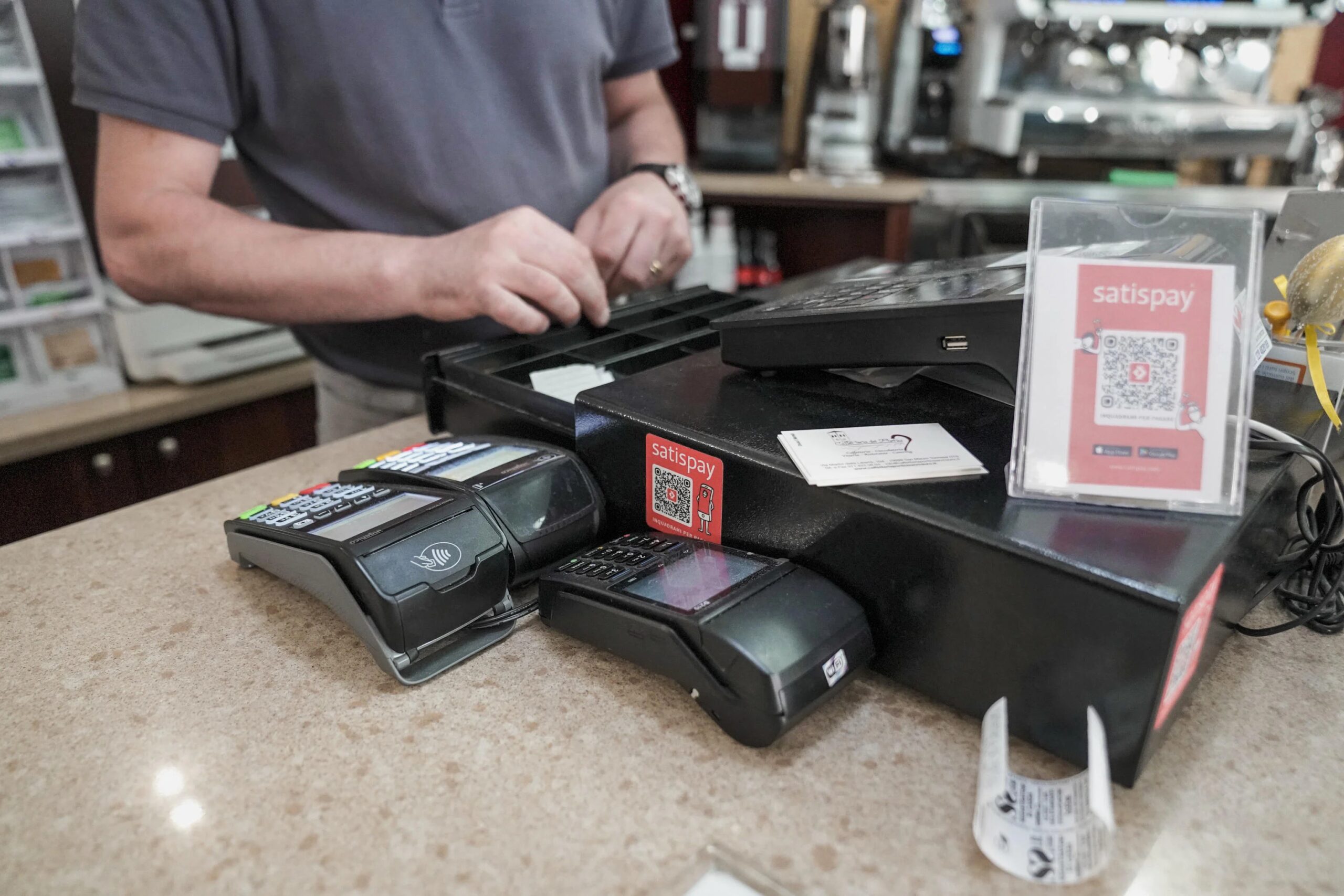
From 2026 every electronic collection will be recorded and communicated automatically, without collecting sensitive data from customers of shops and commercial activities
New step for the fiscal digitalisation of trade. From 1 January 2026, cash registers will have to be connected to electronic payment tools, such as POS, through a digital procedure managed by the Revenue Agency. The obligation will involve all Italian merchants and aims to strengthen the traceability of electronic payments and the fight against tax evasion.
Connected POS and cash register: what the new obligation foresees from 2026
The “technical” connection between the electronic recorder and the POS becomes mandatory. However, this is not a physical connection. No cables, installations or new devices. The system will be completely digital and managed by an online service in the reserved area of the Revenue Agency website. The merchant, by logging in with Spid, Cie, Cns or with his tax credentials, will be able to associate the serial number of the telematic recorder with the identification data of his POS. An operation that takes a few minutes and must be carried out only once and repeated only in the event of variations, for example for the replacement or deactivation of a terminal. Once the matching is completed, each electronic payment will be automatically recorded by the cash register and transmitted to the Revenue Agency together with the daily payments.
The system will not collect sensitive customer data but only aggregate information on the amounts, guaranteeing respect for privacy. The objective is clear: to make the data on fees and electronic payments coherent and comparable, strengthening controls and reducing the gray areas where evasion can occur.
Connected cash registers and POS: what merchants need to know
From an operational perspective, electronic payment data will continue to be stored and transmitted as before. At the time of the operation, the commercial document must correctly report the form of payment and the related amount. The information will then be sent to the Revenue Agency in a daily aggregate form, with the same methods already provided for electronic payments. The new features of the web service will be available in early March, according to forecasts. To ensure a smooth start, a transitional period is foreseen. For POSs already active on 1 January 2026, the connection must be completed within 45 days of the online service being made available. For tools activated subsequently, registration must be carried out starting from the sixth day of the second month following their actual availability and in any case by the last working day of the same month. Therefore a POS activated on February 1st will have to be connected between April 6th and 30th.
In case of transgressions sanctions are triggered. The correct indication of the payment method becomes central. Formal errors, such as the discrepancy between the actual payment and the method indicated in the commercial document, can trigger a fine of 100 euros per transmission, up to a maximum of one thousand euros per quarter, even if the error does not affect the tax due. However, the possibility of promptly correcting the error by canceling the wrong commercial document and transmitting the correct data, thus avoiding the penalty, is permitted.