The year that is coming to an end can unfortunately be defined as “the year of warsFrom the Asian borders to the heart of Africa, up to the Middle East and Eastern Europe, the common thread that united these twelve months was the use of military force as the only tool for resolving disputes.
A annus horribilis that leaves us as a legacy a more fragmented, armed and unstable world. With the awareness, alas, that the future will not necessarily bring positive consequences.
Gaza
Let’s start with the only war that finally saw its conclusion (at least temporarily), the conflict in Gaza.
The war, which began with the massacre of 7 October 2023 perpetrated by Hamas, has continued for much of the current year, claiming the lives of tens of thousands of civilians, who died, for the most part, under Israeli bombing in these two years of urban conflict in the Palestinian enclave.
Thanks to the iron will of President Trump and the work of Arab mediators on Hamas, the conflict fortunately saw its conclusion on 10 October 2025, the day on which the US-mediated ceasefire came into force.
India and Pakistan
In May, the Indian subcontinent boiled again like it hadn’t happened in decades. The “Four Day War” between New Delhi and Islamabad marked a watershed in modern military history. No more columns of tanks, but swarms of drones, missiles and aerial clashes at great distances.
The Indian air incursion, which opened hostilities in response to a terrorist attack in Kashmir, triggered a harsh Pakistani reaction, made up of missile and drone launches, to which the Indians responded with the same means.
The skies of Punjab lit up for whole nights: Pakistani Shahpar-II drones against Indian air defenses, while India responded with surgical strikes from short-range Brahmos missiles.
During the brief clash, the largest air battle of contemporary times also occurred, when more than 80 Indian and Pakistani fighters faced each other over distances of over 200 kilometers.
The conflict, although short, demonstrated how warfare has changed: rapid, technological and lethal, stopped only by the emergency diplomatic intervention of Washington and Beijing.
Israel and Iran
Not even a month later, the “shadow war” between Iran and Israel became a blinding light. The “rising lion” operation launched from Jerusalem against Tehran saw the great rivals of the Middle East clash directly for the first time.
The Israeli attack, which came like a bolt from the blue for the Iranian leaders (a good part of whom were assassinated in the very first hours of the conflict), triggered the “12 Day War”.
Tehran responded with unprecedented waves of ballistic missiles (including some hypersonic) and new generation Shahed drones, managing more than once to saturate Israel’s excellent air defenses. Israel responded by striking Iranian missile infrastructure, as well as symbolic places of power (such as state TV) and sites linked to Iran’s nuclear and missile program.
The war finally ended with the carpet bombing of Iranian nuclear sites by the United States using B-2 stealth bombers.
Thailand and Cambodia
In July, what for decades had been simmering territorial disputes around some border temples degenerated into open conflict. The border skirmishes, initially limited to light artillery exchanges, then turned into pitched battles with the entry of mechanized infantry.
Despite the uneasy ceasefire in August, the area remains militarised, with Bangkok and Phnom Penh having revived a nationalist rhetoric not heard for decades. At the beginning of this month, the two contenders returned to war, with Bangkok also starting to heavily exploit its air superiority over its rival.
Congo
Conflicts abound in Africa. One of them, however, indirectly involves two states. In the Democratic Republic of Congo, the advance of the M23 rebel movement, supported logistically and militarily by Rwanda, has been unstoppable.
The fall of Goma first, and then of Bukavu, gave the rebels effective control of two regional capitals and of the immense mineral resources of Kivu. The Congolese army, disorganized and corrupt, melted like snow in the sun, leaving Kinshasa isolated and helpless. It is no longer a rebellion; it is the de facto birth of a State within a State, under the Rwandan aegis.
Sudan
The greatest, and most ignored, tragedy is taking place in Sudan. The civil war between the SAF (Sudan Armed Forces) and the RSF (Rapid Support Forces) has reached rock bottom in Al-Fashir. The fall of the city into the hands of the RSF, which occurred in October after a long siege, triggered what the UN defined as “systematic ethnic cleansing”.
The generals fight for power over the rubble, while the population of Darfur relives the nightmares of twenty years ago, in an almost deafening silence from the international community, interrupted only by satellite images of the mass graves.
Ukraine and Russia
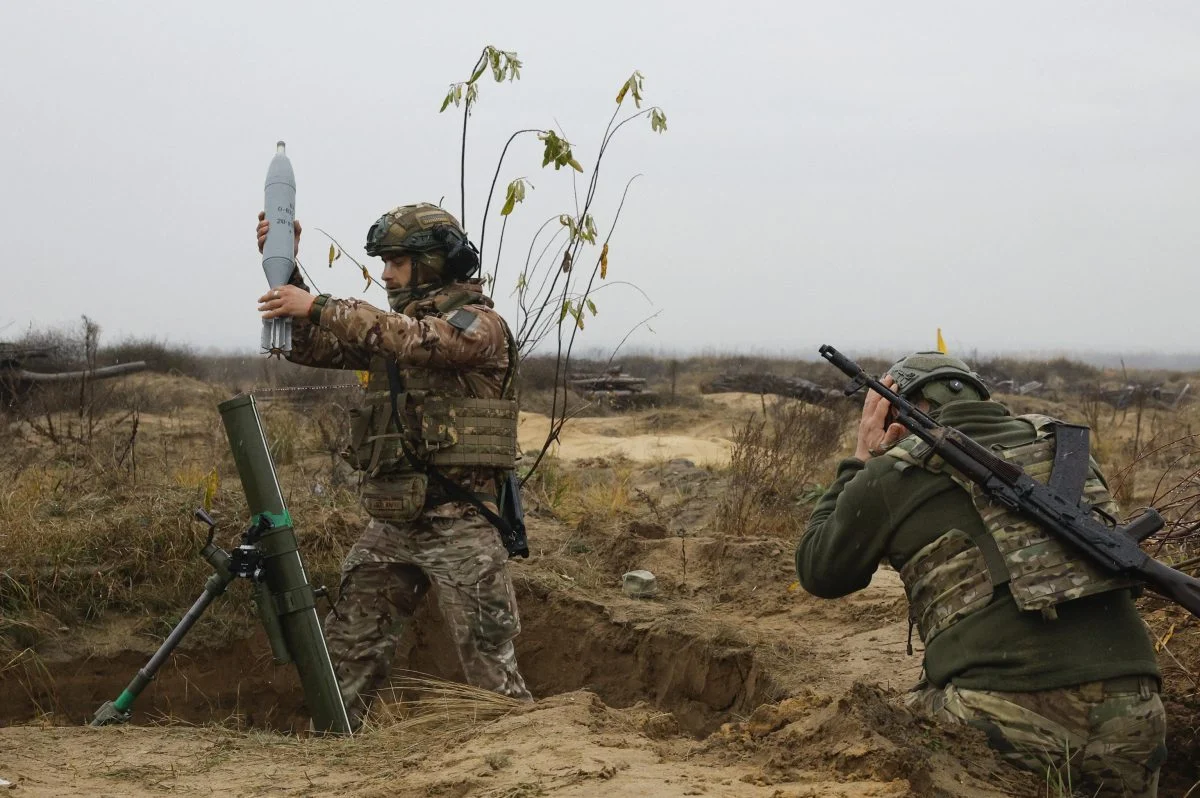
Finally, the conflict that opened this cycle of violence: the Russian-Ukrainian war. 2025 was supposed to be the year of the diplomatic turning point, but it ends with nothing done. The peace conferences in Switzerland and Türkiye failed miserably in the face of the intransigence of Moscow and Kiev, both of which remained firm on their positions.
The front line has crystallized into a war of industrial attrition, where every meter costs thousands of lives. Ukraine enters 2026 exhausted, with the West increasingly divided over military support, while Russia has permanently converted its economy into a war posture. No peace, no victory: just a bloody stalemate that continues to devour Europe.