From the Strait of Hormuz to Malacca and Suez: the key passages on which global energy, trade and security depend
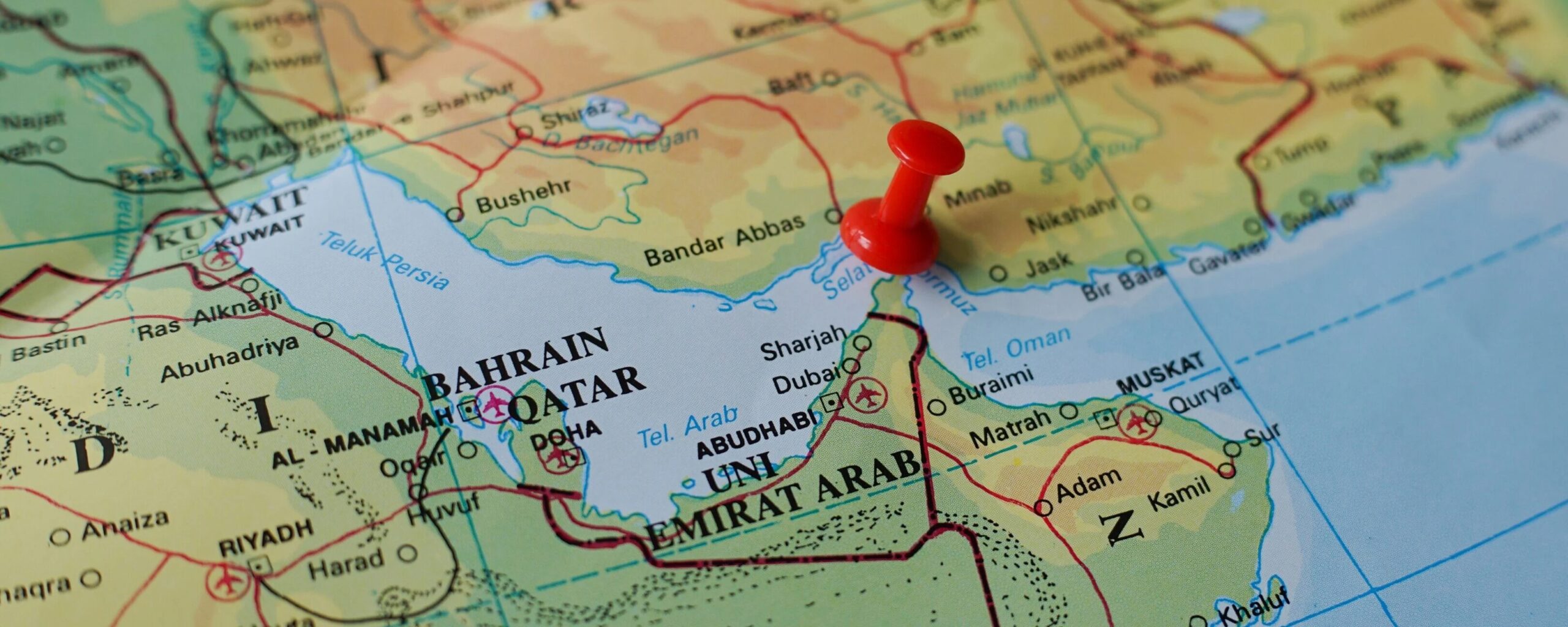
The Strait of Hormuz today is a demonstration of how much the world can depend on a narrow water passage to get energy and goods everywhere. Its blockade, caused by yet another flare-up of war in the Gulf region, has drastically cut or slowed down the transit of oil and gas connecting the major producers of the Middle East to the markets of Asia and Europe, forcing oil tankers to seek alternative routes or remain in the harbor waiting for better times. Hormuz, however, is not an exception but the rule: in the seas of our planet there are other bottlenecks where thousands of ships transit and which, in the event of international crises, could represent a problem for the transport of goods and raw materials.
Dardanelles and Bosphorus: the key to the Black Sea
The Turkish Straits – Dardanelles and Bosphorus – are the hinge between the Black Sea and the Mediterranean. During the First World War the British tried to make this transition a geopolitical weapon: force the Dardanelles, reach Istanbul, reopen the maritime connection with Tsarist Russia and force the Ottoman Empire to surrender. The Gallipoli campaign of 1915 failed, but the intuition remains valid: controlling these straits means being able to decide who enters and who leaves a closed basin, influencing commercial traffic and naval movements. Today the geopolitical risks lie above all in Turkey’s unique position. Ankara is at the same time a member of NATO, an autonomous regional power and guardian of a vital passage for the export of grain, raw materials and energy products from the Black Sea. In the event of escalation in the Russian-Ukrainian conflict or tensions between Turkey and Western allies, the management of the straits can become political leverage: restrictions on the passage of military ships, pressure on trade routes, selective use of international conventions. Here the strait is not only risky for the war itself, but because it gives those who control it a power of interdiction and blackmail.
Black Sea: a closed sea without a strait, but with many bottlenecks
The Black Sea does not have a single “funnel” like Hormuz, but it still acts as a bottleneck. Russia has tried to use it as a strategic lake: to project power from the port of Sevastopol, control the Ukrainian coasts, influence the routes of grain and industrial products towards the Mediterranean and beyond. Ukraine responded with an asymmetric war: naval and aerial drones, missiles against ships and infrastructure, repeated attacks on the Russian Black Sea fleet. The result is a sea in which freedom of navigation is at risk. Trade routes are redesigned based on the perceived threat, ports alternate as “safer” hubs, the role of insurance becomes as central as that of fleets. The main geopolitical risk is that the Black Sea will remain a gray area for a long time: neither pacified nor completely closed, but unstable enough to make risk premiums on grain, fertilizer and raw material exports chronic, with repercussions on food security and inflation across half the world.
Bab el‑Mandeb and the Red Sea: the Suez Lock
Bab el‑Mandeb is a technical name to indicate a stretch of sea which, alone, holds together the economies of three continents. It is the strait between Yemen and the Horn of Africa that opens the Indian Ocean–Red Sea–Suez Canal passage: a lock through which a huge share of containers, oil and refined products transit between Asia and Europe. Attacks on commercial ships, internal tensions in Yemen, competition between regional and global powers make it one of the most delicate points in world geography. Moreover, the attacks by the Houthis, a Yemeni militia supported by Iran, have already demonstrated since 2023 how easy it is to transform this strait into a geopolitical weapon, forcing hundreds of ships to divert via the Cape of Good Hope and causing the transit of oil and containers in the Red Sea to collapse. The Aspides mission operates in the area, the European Union naval operation tasked with protecting shipping in the Red Sea and the Bab el-Mandeb Strait.
Suez Canal: the Asia–Europe corridor
The Suez Canal is the infrastructure that makes the main sea route between Asia and Europe possible. Every interruption – even accidental – has shown how fragile this corridor is: queues of ships, stopped goods, forced diversions via Africa. If Bab el-Mandeb is the lock, Suez is the narrow corridor that everyone must cross anyway to shorten the journey between the Pacific and the Mediterranean.
Geopolitical risks are linked to three factors: Egypt’s internal stability, the security of the Sinai, and the role of external powers in ensuring navigation. An Egypt under economic or political pressure could use the canal as leverage against partners and creditors; armed groups or terrorists may aim to strike infrastructure or ships as a symbolic target; rivalries between great powers could transform the naval presence in the eastern Mediterranean into a continuous test of strength. The bottleneck here is not just geographical, but political and social.
Malacca: The East Asian Dependency
The Strait of Malacca, between Malaysia, Singapore and Indonesia, is the obligatory lane between the Indian Ocean and the Pacific for much of the traffic that supplies East Asia. For China, Japan and South Korea it’s sort of «energy artery»: oil and gas from the Middle East, raw materials from Africa and Europe pass through there before arriving in the major ports of the Pacific. It is also one of the most congested stretches of sea on the planet. The geopolitical risk is that Malacca becomes the center of a match between the United States and China. For Washington it is a potential point of pressure on Beijing, to be protected but also, ultimately, to be able to influence; for China it is the famous “Malacca dilemma”, the fear that a hostile power could close or undermine the strait in the event of a crisis, cutting supply lines. Hence both the Chinese race for bases along the maritime “new silk roads” and the attempt to diversify through oil pipelines and land corridors: a sign that a single step can influence the entire foreign policy strategy.
Panama Canal: The Bottleneck of the Americas
The Panama Canal connects the Atlantic and Pacific and remains fundamental for trade between the eastern and western coasts of the Americas and between the United States, Latin America and Asia. In recent years, more than military tensions, it has been the physical limits – drought, drop in reservoir levels, transit restrictions – that have transformed it into a bottleneck. But the geopolitical effect is similar: when the canal slows down, the entire logistics of the Western Hemisphere are affected. Panama is in a delicate position: a relatively small country with control of an infrastructure vital to much larger powers. The cross-pressures – economic, political, possibly military – of the United States, China and other actors on the management of the canal are a constant factor. In the background, the possibility that the growing competition between Washington and Beijing also translates into a battle for influence and preferential access to this passage, with repercussions on the choices of the Panamanian government and on internal stability.
Gibraltar: the threshold of the Mediterranean
The Strait of Gibraltar is the gateway between the Mediterranean and the Atlantic. In terms of energy traffic it weighs less than Hormuz or Malacca, but it is still an obligatory passage for ships entering and leaving the Mediterranean basin. The combined presence of Spain, the United Kingdom (with the Gibraltar base) and Morocco makes this stretch of sea a densely controlled space, but not immune to tensions. The geopolitical risk here is more subtle and long-term. On the one hand the controversies over the sovereignty of Gibraltar, on the other the possibility that, in a context of crisis between NATO and rival powers, access to the Mediterranean becomes a variable in the strategic game, especially for submarines and military ships. Furthermore, the growing importance of North African routes for gas and renewables could increase the political weight of the strait also for European energy supplies.