Thiel’s lectures have reignited interest in the topic. Which, however, now declines along the ridge of mass control in our technological life. But in this scenario, whose side is the Silicon Valley guru on?
But which team does Peter Thiel play for? The founder of Palantir must certainly be recognized at least one merit: he brought profound and metapolitical themes back onto the scene, and forcefully. It has imposed a new interpretation of current affairs and global conflicts, bringing them back to the level in which they should find themselves, that is, the theological one of clash between destructive forces and beneficial forces. In Rome he held, as is now known to all, four conferences on the Antichrist directly inspired by the sermons of the saint John Henry Newman, dedicated to the same topic. And, suddenly, newspapers and television, podcasts and social media started talking about the Antichrist. Apparently, a triumph for Christians, whose metaphysical questions are mostly banished from public debate. At the same time, however, there was something disturbing in all this talk about end times and biblical beasts. There has been more discussion about the Antichrist in recent weeks than in all previous decades, perhaps he had not been at the center of attention so much even when Rosemary’s Baby was released, the cursed film by Roman Polanski based on the novel by Ira Levin (released in 1967). The horror film was very successful by telling the story of an ordinary American couple who moves into what should be the house of their dreams and instead finds themselves entangled in a diabolical plot to give birth to the child of sin.
Hence the question: what team does Thiel play for? For good or for bad? The dilemma is probably destined to remain unanswered, and ultimately rightly so: it is dangerous to start playing with assumptions and trying to identify which figure best corresponds to the profile of the Antichrist.
What we can do, however, is follow Thiel at least for part of the way, understanding that his Antichrist is also and first of all a cultural and literary suggestion, which however provides us with invaluable tools for the analysis and understanding of current political and social events. One of the first references of the American technocrat is undoubtedly The Tale of the Antichrist by Vladimir Solov’ëv, a masterpiece of prophetic power composed by the Russian philosopher and man of letters right on the edge of 1900. Solov’ev’s is not a frightening beast at all. Indeed, he is a man capable of seducing the masses, who has the appearance of a saint. He is profoundly spiritual, revealing himself also in this respect to be a caricature of Christ. He is loved by many, he seems to unite humanity, conquering it by promising peace and serenity. He is placed at the head of a great unified Europe, and from there he takes the reins of the entire world. And this is the central crux of all the political discourse that can be conducted around this figure. As Marco Dotti noted when commenting on his Roman lessons, «Thiel identifies in Solov’ëv what he defines as a hole in the plot, but it is a revealing hole. How does this Antichrist manage to take world power? Does he give hypnotic speeches and people fall into the trap? An implausible demonium ex machina. And this is where Thiel inserts part of his thesis. In 1900 Solov’ëv could not imagine atomic weapons, engineered pandemics, out-of-control artificial intelligence. That is, he lacked the possibility of imagining a world in which the fear of the end was not only concrete, but also so technologically based as to make it acceptable – indeed desirable – to hand over all freedom with a post-Faustian pact to a centralized power that promises and guarantees security. What was missing in Solov’ëv’s mechanics, Thiel argues, was provided by the history of the twentieth century: the Antichrist does not take power despite the fear of Armageddon, but thanks to it. Its slogan, borrowed from the First Letter of Saint Paul to the Thessalonians (5.3), is peace and security.” Indeed, these two concepts are at the center of contemporary political discussion, which is mostly apocalyptic. Whether it was the battle against global warming capable of leading us to the end of the world, the pandemic that would destroy humanity or foreign powers ready to deprive us of all rights, a large part of the arguments of the liberal-progressive movements focused on this prospect of a final conflict of survival. Radical changes in lifestyle and even language have been forced upon us as if they were matters of life and death.
As Vincenzo Gubitosi, philosopher and essayist, explains, this insistence on which Peter Thiel hooks in regarding his Antichrist, «has always been like this throughout history. In reality, evil, true evil, the most dangerous one, always presents itself in an insidious way, not in a brutal way, but as a force capable of liberating, a saving force, which then obviously does not give up on deploying the most terrifying tools against those who refuse this liberation. But there is always an underlying narrative that is absolutely fascinating to the masses.” The oppressive forces capable of exercising coercion therefore present themselves as forces of good: here is the Antichrist. They control words and behaviors, they promise to defeat Evil by eliminating dissenting thoughts and opinions, they demand total submission and, in this way, they actually take away man’s ability to live a full life. This security obsession pushes us to isolation and confinement, and power no longer takes the form of a cruel father but of an apparently good mother who ultimately turns out to be suffocating and deadly. In this regard, Vincenzo Gubitosi cites the thoughts of Alexis de Tocqueville, who had already foreseen this drift in Democracy in America.
«In one of the last pages of this masterpiece, of this fundamental work», says Gubitosi, «Tocqueville says that there is an immense, absolute and tutelary power, which is constantly concerned with the well-being of citizens, facilitates their pleasures, satisfies their needs and would seem to resemble paternal authority. Paternal authority should have the aim of calling men to manhood, to mature age, whereas the authority that Tocqueville speaks of has the aim of fixing men irrevocably in childhood.”
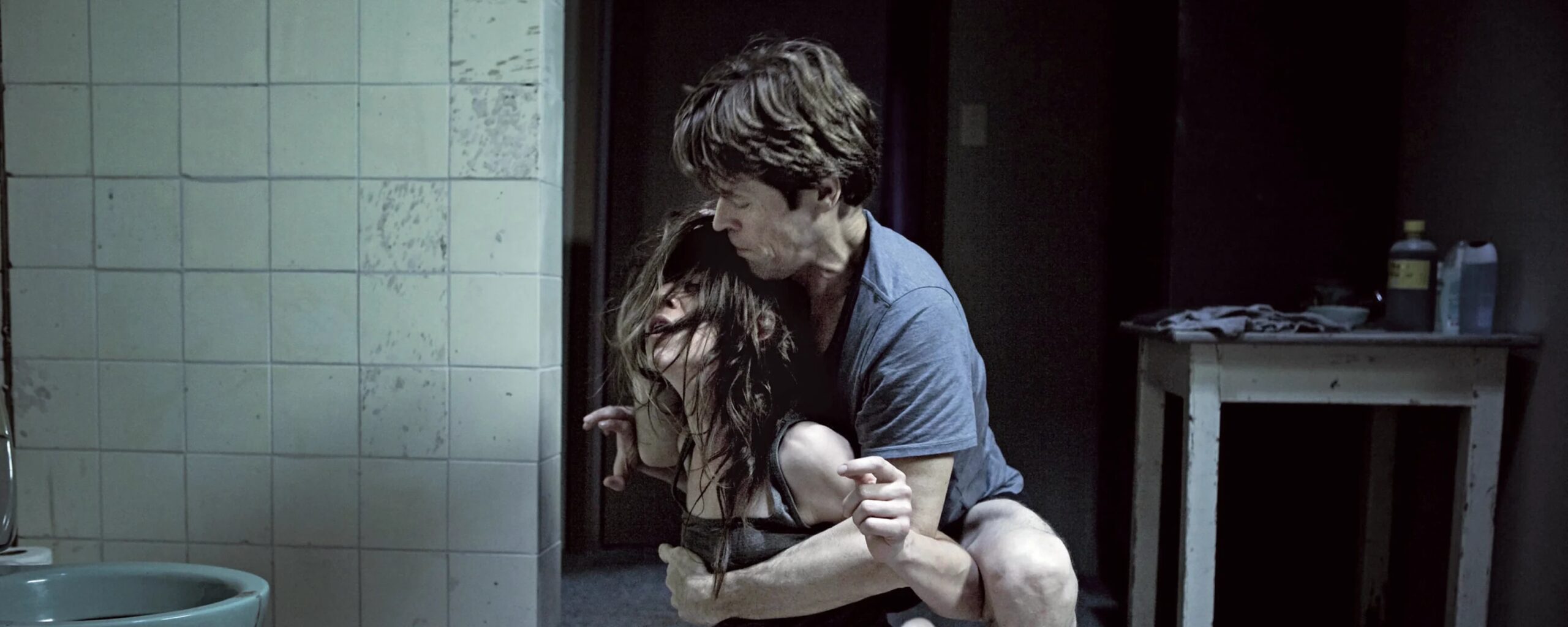
This perversely maternal authority takes away from men and women “the trouble of thinking and the pain of living”, therefore it deprives them of their humanity. And he does it with devious weapons, pretending to work for the good. As Tocqueville predicted and as Thiel partly suggests, we are in an era of Great Mothers who, behind a welcoming and beneficial appearance, reveal themselves to be terrible and devouring. Curiously, Lars Von Trier moved around this destructive aspect of the feminine in a 2009 film entitled – look at that – Antichrist. Brief review: in the film two spouses, simply called He and She, try to survive the death of their little son, who fell from a window while the couple was engaged in sexual intercourse. They retreat to a house lost in the woods of Eden (think about that). However, it is a monstrous paradise, in which male and female will soon come into savage conflict. The film stages the struggle between Apollo and Dionysus, instinct and reason, nature and artifice. (Feminine) nature indeed appears monstrous, humid, lascivious and terrible. And faced with it the male succumbs. The film ends with his emasculation: what seems protective and healing turns out to be murderous and bloodthirsty. And upon closer inspection, this is exactly how the crushing mechanism of the “therapeutic society” to which we have surrendered ourselves in recent decades has worked.
«We are living within a revolution that began a long time ago», says Vincenzo Gubitosi, «whose precursors can even be found in the Industrial Revolution: today we are only at a further level of advancement. This is a technical revolution that leads men to live an immature life, not a virile one, incapable of truly reaching full maturation. We live in a society, the technical-bourgeois society, which does everything to eliminate any form of responsibility for man. And precisely the authority that exists in these societies is a caressing, sweet authority, which would seem paternal, but is perhaps more maternal. Everything is based on the immediate satisfaction of needs, which is a typical element of childhood. Here is the mechanism that supports bourgeois society and that allows true oppression, which is that of a form of democratic totalitarianism.” This totalitarianism is what conservative movements have fought against in recent years, and it is partly the Antichrist that Thiel says he wants to fight against. But here the question arises: with the technological control exercised in the name of security by technological gurus, are we not yet, once again, in the abode of the Antichrist? So, what team does Thiel play for?