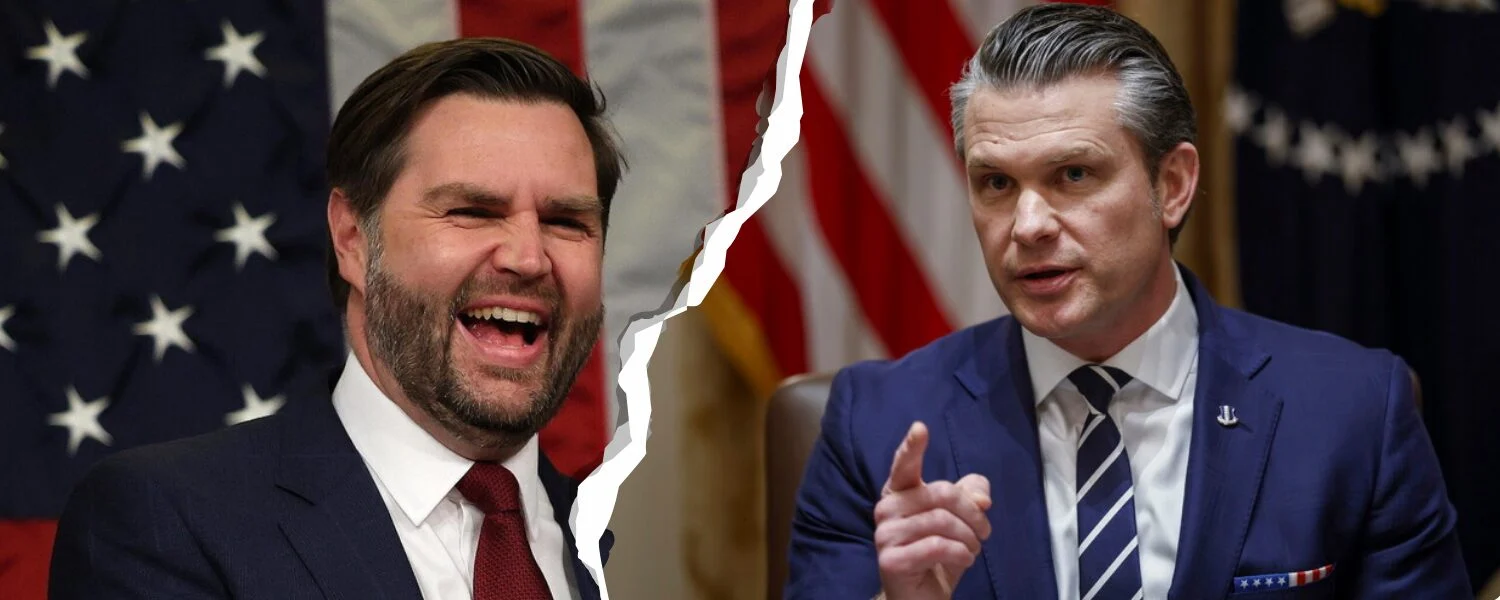
The underground tug of war between the two directly calls into question the future of the Pentagon. And it’s not just about the war against Iran
The war in Iran is increasing tensions at the top of the Pentagon. Last week, Defense Secretary Pete Hegseth ordered the firing of the Joint Chiefs of Staff, Randy George. A figure, the latter, historically very close to the current Secretary of the Army, Dan Driscoll: that Driscoll who is a close friend, as well as a close political ally, of the American vice president, JD Vance.
Warning: the fact that relations between Hegseth and Driscoll were tense is nothing new. Already in September, CNN reported that the head of the Pentagon was rather impatient with the secretary of the Army. In particular, it seems that Hegseth fears that, sooner or later, he may be replaced at the top of the ministry he currently leads. Not only that. The Secretary of Defense did not take too kindly to the fact that, last year, the White House gave Driscoll a primary role in the Ukrainian diplomatic process.
The point, however, is that the tensions between the two seem to have intensified following the conflict with Iran. It is clear that, by firing George, Hegseth aimed to weaken Driscoll, thus indirectly dealing a blow to Vance himself. A Vance who, let us remember, was historically skeptical of a large-scale war operation against the Khomeinist regime and who, especially in the last two weeks, has returned to the fore, after Donald Trump decided to give him a leading role in the diplomatic initiative aimed at ending the war against Tehran.
In this respect, it is known that Hegseth was not a supporter of the ceasefire with Iran. The fact that Trump finally reached him, putting his deputy at the head of the American negotiating team, must not have pleased the head of the Pentagon too much. Moreover, even Marco Rubio himself, who is less hostile to military interventions abroad than Vance, feared from the beginning the possibility that, for Washington, a large-scale conflict against the Islamic Republic could turn into a quagmire. In this sense, it should not be overlooked that Rubio and the current American vice president are the main possible contenders in view of the nominations Republican presidential election in 2028: it follows that neither has a real interest in ensuring that the United States risks remaining entangled indefinitely in the Iranian crisis.
This makes it clear why, despite their rivalry, Rubio and Vance are closer on the Tehran dossier than is often believed. Both do not look with excessive sympathy on Hegseth and his coldness towards the diplomatic initiative. From this point of view, it is significant that, yesterday, Driscoll ruled out resigning from his position. “Serving under President Trump has been the honor of a lifetime, and I remain steadfastly focused on providing America with the most powerful land fighting force the world has ever seen,” he said even as reports mounted of pressure to force him to step back.
This means that Vance is ready to do battle not only over Iran but, more generally, over the very future of the Pentagon. “Driscoll, a close ally of Vice President Vance, has long been considered a potential successor to Hegseth, should the latter be fired,” he reported a few hours ago, TheHillaccording to which the current Secretary of Defense would be particularly worried after the recent dismissals of Kristi Noem and Pam Bondi. The game, as we have seen, began well before the outbreak of the war in Iran. Yet, the conflict against Tehran seems to have accelerated it in some way. Who knows, therefore, whether the balance at the top of the Trump administration will change significantly in the coming months.