From the traffic stop in the Strait of Hormuz to the enriched uranium issue, passing through sanctions, missiles and 100 billion in blocked assets: the talks between Washington and Tehran open in a climate of maximum tension, with global repercussions on energy, food and technology.
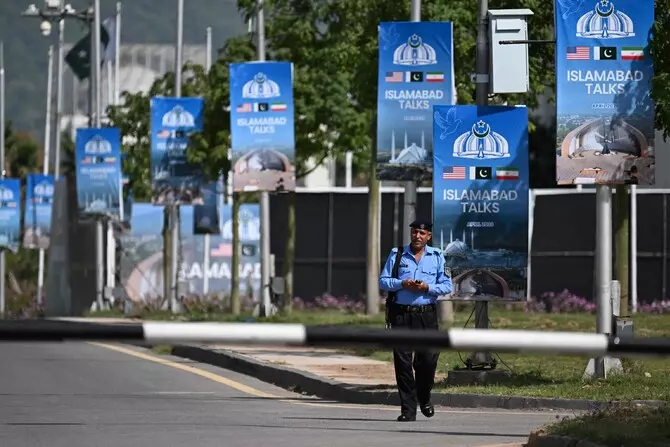
A very high tension game is being played between Islamabad and the Strait of Hormuz. Between today and tomorrow, talks between the United States and Iran should begin in the capital of Pakistan, a confrontation that promises to be complex and full of unknowns. The nuclear issue remains at the center of the negotiations, where the positions still appear distant. Washington, supported by Israel, insists on the complete elimination of uranium enrichment activities, deemed functional to possible military development. Tehran, however, continues to claim the exclusively civilian nature of its program.
The Strait of Hormuz crisis
The most urgent dossier, however, is that of the Strait of Hormuz, which has become the true epicenter of the crisis. Iran claims control over this strategic route, claiming that it falls within its territorial waters along with those of Oman. Since the beginning of the conflict, the passage has been effectively interrupted: traffic reduced by 95%, transits blocked, attacks against ships and laying of mines. The United States responded with a naval blockade, triggering a spiral of tension that culminated in the seizure of the Iranian cargo ship Touska in the Gulf of Oman by the US Navy. Tehran called the operation “armed piracy” and threatened retaliation. For the Islamic Republic, Hormuz represents a decisive negotiating lever, while Washington does not seem willing to ease the pressure without an overall agreement. A particularly sensitive chapter concerns fertilizers. A significant share of the world trade in urea and ammonia passes through the Strait of Hormuz, fundamental components for agricultural production. A prolonged blockage of supplies would risk directly affecting harvests, with knock-on effects on food prices and food security, especially in the most fragile countries. A further critical factor is added to the energy and agricultural dimension: that of helium. Since last March, between the closure of the Strait and the attacks on infrastructure in the Persian Gulf, around 30% of the global supply of this strategic gas has been suspended. An Iranian drone hit the Ras Laffan site in Qatar, one of the world’s main hubs, causing a temporary interruption of exports. Helium is essential for the production of semiconductors and for cooling the machinery used in chip lithography, making the entire global technology supply chain vulnerable.
The clash over uranium
Another crucial point is the fate of enriched uranium. According to estimates from the International Atomic Energy Agency, before the 2025 attacks Iran had about 440 kilograms of uranium enriched to 60%, a level below the military threshold but technically close to the 90% needed to make a nuclear weapon. Donald Trump has hypothesized joint management of the material, with the transfer to the United States, speaking of “side by side” work between the two countries. A prospect immediately rejected by Tehran, which ruled out any possibility of transferring stocks. The precedent of 2015 weighs significantly: then Iran agreed to limit enrichment to 3.67% in exchange for the lifting of sanctions, but the unilateral withdrawal of the United States from the agreement in 2018 undermined mutual trust. The sanctions regime itself represents a further battleground. Iran is calling for the total cancellation of the restrictive measures as a precondition for any opening, while the United States intends to maintain them as the main instrument of pressure until the agreement is concluded. Two approaches that are difficult to reconcile, which risk paralyzing the negotiation.
The issue of blocked funds
On the military front, the question of ballistic missiles also remains open. Before the outbreak of the war, Washington had indicated stringent limits on Iran’s missile program as an essential requirement. However, with the start of talks in Islamabad, the topic has gradually disappeared from public debate. Tehran reiterated that its capabilities in this area are not the subject of negotiation and, according to several sources, during the truce the Revolutionary Guards would have used the pause to rebuild arsenals of missiles and drones. Another key element fits into this scenario: that of Iranian assets frozen abroad. This is a central financial leverage in the confrontation between Washington and Tehran. The most accredited estimates speak of around 100 billion dollars blocked, a figure equal to around three times Iran’s annual revenue from the energy sector. Funds accumulated over time thanks to oil exports and international commercial activities, then frozen following sanctions. Their distribution is global and fragmented: approximately 1.5 billion dollars in Japan, 6 billion in Iraq, 20 billion in China, 7 billion in India, 2 billion in the United States and 1.6 billion in Luxembourg. A dispersion that complicates any coordinated intervention but which, at the same time, offers room for diplomatic maneuver. It is precisely on these funds that a decisive part of the negotiation is being played: their possible release could represent the key to a compromise, but also yet another breaking point between two positions that remain, at least for now, profoundly distant.