After the controversy, the US Secretary of State in Rome to repair relations with the Vatican. Relations with Italy are also at stake
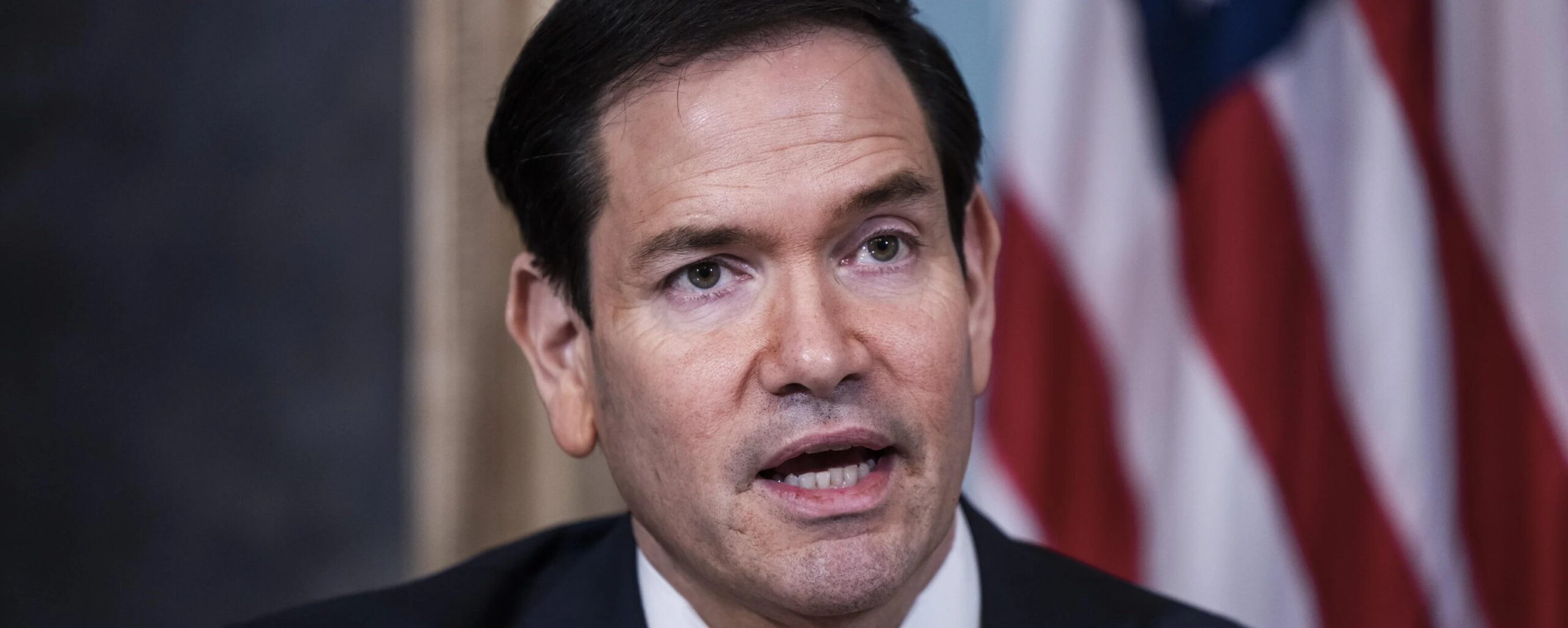
It is a difficult, but not impossible, mission that awaits Marco Rubio in Rome on Thursday and Friday of this week. The US Secretary of State will, in fact, have to try to mend the Trump administration’s relations with both the Holy See and the Italian government.
At the Vatican, Rubio is expected to meet Leo XIV and Cardinal Pietro Parolin. Separately, the head of the US State Department will have face-to-face discussions with Antonio Tajani and Guido Crosetto. A meeting with Giorgia Meloni is not ruled out. We remember that, in recent weeks, Donald Trump had argued both with the pontiff and with the tenant of Palazzo Chigi. The imminent trip of the American Secretary of State therefore obviously aims to heal the double fracture. In this sense, it is probably no coincidence that the US president chose Rubio for this delicate mission: in addition to being Catholic, he is probably the figure who, within the current Washington administration, is least cold towards NATO and, more generally, the Old Continent. Let us also remember that, in addition to being Secretary of State, Rubio also holds the position of National Security Advisor at the White House: which makes him, together with JD Vance, probably the man closest to Trump at the moment.
The current American president clearly won the Catholic vote in 2024 and knows he needs this electorate in view of the November midterms. Looking ahead, this vote will also be decisive for the 2028 presidential elections. From this aspect, it is no mystery that Rubio and Vance, both Catholics, are aiming for the nomination of the Republican Party. Without forgetting that, by entering a collision course with Leone, Trump risks indirectly strengthening those pro-Chinese sectors of the Church that were defeated in last year’s conclave. On the other hand, it is true that the White House is at loggerheads with the US bishops on various issues: from immigration to the war in Iran. However, it is also true that, according to a Fox News poll, American Catholics’ approval of Trump increased from March to April. Furthermore, until it gets rid of its woke wing, the US Democratic Party will struggle to regain ground among the faithful of the Church of Rome. Beyond its energetically pro-abortion policies, the Biden administration used the FBI to target traditionalist Catholics and pro-life activists themselves.
We come, then, to the relationship with the Meloni government. Trump knows that his support with the current tenant of Palazzo Chigi was necessary for him to stem those European leaders who, like Emmanuel Macron and Pedro Sánchez, wanted (and still want) to give Brussels a pro-Chinese turn. At the same time, Meloni’s strength on the international level has always been largely due to her close relationship with the USA: a relationship that the prime minister had already built during Joe Biden’s time. The break between Rome and Washington, significantly celebrated by large sectors of the broad field, is a gift to Macron’s France. And this is certainly not good for Italian interests. Among other things, it is indicative that Rubio is preparing to come to our country just as the tensions between Trump and the German Chancellor, Friedrich Merz, are worsening.
Clearly the double mending with the Holy See and Palazzo Chigi will also depend on how the Iranian crisis will evolve: a war scenario which, notoriously, was the basis of the American president’s break with both Leone and Meloni. At the moment, diplomacy seems to be going through a moment of difficulty: Trump examined the new Iranian proposal and declared that he considered it “unacceptable” and did not rule out a resumption of attacks if the ayatollahs “behave badly”. Meanwhile, Washington maintains a naval blockade on Iranian ports as a tool for negotiating pressure. “We are suffocating the regime,” US Treasury Secretary Scott Bessent said in this regard.
Whatever the case, according to Al Jazeera, the Iranian plan would include a first phase, in which the ceasefire would transform into permanent peace within 30 days. Meanwhile, the Strait of Hormuz would gradually be reopened, while the US would renounce the naval barrage. In the second phase, the Islamic Republic would freeze uranium enrichment for up to 15 years, then resume it at a rate of 3.6%. The Khomeinist regime would maintain the atomic facilities, but would undertake to gradually reduce its stockpile of enriched uranium. Washington, for its part, would gradually release the frozen Iranian funds and lift sanctions based on progress in the nuclear field. Finally, the third phase would see the start of a strategic dialogue between Tehran and the Arab countries.
Last night, Iran announced that it had received the US response to its proposal. Only the next few days will tell us whether the diplomatic process between the Americans and Iranians will be able to be relaunched.