the biopic tries to tell the man behind the myth: an artist who reinvented music without ever ceasing to remain an enigma.
Michael Jackson is the greatest enigma in the history of music: the more you try to fix his identity, the more it multiplies and contradicts itself. And it is precisely this unclassifiable nature, this impossibility of closing it in a definitive version, that continues to fuel its presence in contemporary culture. The release of the biopic Michael brings the theme back to the foreground, bringing to center stage a figure who, with each attempt at a story, both withdraws and expands.
To understand Michael Jackson we must start from a matrix that is anything but neutral. In Gary, Indiana, under the guidance of his father Joseph Jackson, talent is not a discovery but a construction: iron discipline, obsessive control, fear as a method. In the Jackson 5, Michael is formed as a performer before even as an individual.
Childhood is compressed, replaced by strict training and continuous practice that produce both excellence and fragility. The biopic insists precisely on this phase, favoring the metamorphosis rather than the news. Jackson’s growth is told as a progressive transformation: from an almost muffled childhood, closed in protected yet isolating spaces, to an increasingly urgent search for autonomy. Figures move around him who open gaps in the wall of discipline imposed by his father: the brilliant producer Quincy Jones, architect of the transition to artistic maturity; and above all the lawyer John Branca, the man who formalizes the break with paternal control. It is here that the story finds one of its most solid lines: the attempt to become an adult without ever having really had a childhood.
In the 1980s, this tension translated into revolution. With the Thriller album, Jackson redefines pop: the video clip becomes cinema, dance becomes a global language, performance becomes a total system. The moonwalk establishes itself as a universal gesture, while its success on MTV contributes to breaking down cultural and racial barriers. Jackson doesn’t just dominate pop: he rewrites it on a global scale.
But this rise is crossed by deep fractures. In 1984, during a commercial for Pepsi Cola, an accident caused burns to his scalp. From that moment, the pain and treatments introduce an addiction to painkillers which intensifies over the years. The body becomes unstable ground, also marked by vitiligo, which alters the pigmentation of the skin, creating even very large lighter patches, a fact that fuels an obsessive public narrative on the so-called “voluntary whitening”.
Relationships also reveal this complexity. The relationship with Paul McCartney is emblematic: after receiving advice from the former Batles on financial investments, Jackson purchased the ATV Music catalog in 1985 for 47.5 million dollars, also including the Beatles’ songs that McCartney and Yoko Ono had tried in vain to obtain. A brilliant operation which however marks a personal rupture.
The private dimension retreats into the Neverland Ranch amusement park estateboth a refuge and a symbol, where the King of Pop hosts children with their families. But that refuge was violated during the investigation when the police raided the villa-playground in 2003. The accusations of sexual molestation of minors marked the point of maximum exposure. The trial, which lasted months and preceded by years of investigations, ended with a full acquittal. However, the verdict does not close the case in public perception, reactivated by narratives that revive accusations of harassment such as that of the documentary Leaving Neverland.
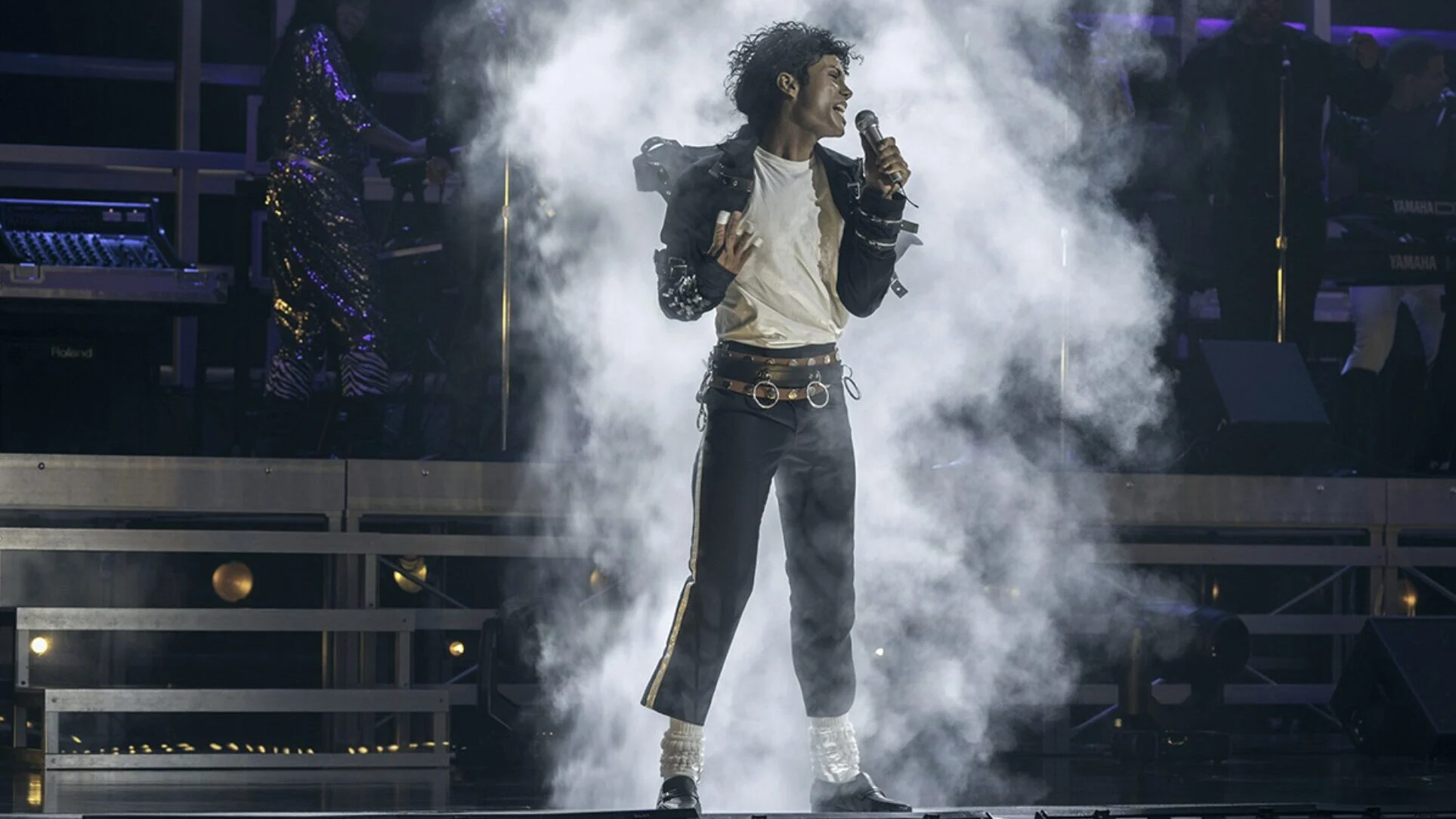
Directed by Antoine Fuqua and starring Jaafar Jacksonson of Jermaine, one of Michael’s older brothers, the biopic released in recent days focuses entirely on physical and performative reconstruction: rehearsals, obsessive study of gestures, an almost obsessive mimesis that conveys stage presence with great effectiveness. And here the weight of hereditary talent comes into play once again, the one with which Jaafar replicates his uncle’s body. Jaafar does not simply imitate him, but reproduces his posture, gestures and charisma with impressive precision. His interpretation, suspended between replication and internalization, is one of the most convincing elements of the film.
But it is on the narrative level that tensions emerge. The film stops short of the fall, avoiding accusations and trial: a choice seen by many as prudent, if not overtly protective. Behind this approach also weighs the involvement of the Jackson brothers in the production, an element that contributed, according to various critical readings, to orient the story towards a more controlled dimension. The absences are also striking: sister Janet and above all her lifelong friend, Diana Ross, a decisive figure in the early years, who disappears completely. Not simple details, but voids that redraw the map of relationships.
Michael Jackson thus remains a surplus figure: a genius who transformed music and dance, a man marked by trauma, pain and addictions, a defendant fully acquitted by the jury but never definitively acquitted in public opinion. His life ended in 2009, at the age of fiftyfor cardiac arrest caused by acute intoxication with benzodiazepines and propofol.
The biopic therefore reopens the story, but does not conclude it. And maybe he can’t do it. Because Michael Jackson remains an enigma, and it is precisely in this impossibility of defining him once and for all that his strength continues to lie: not a finished story, but a knot that the present continues to try to untie. Without succeeding.