“Imperceptible Trajectories” by Federico Mecozzi has been released, where the works of the Sicilian master are revisited with passion and delicacy
“Birds fly
They open their wings
Perspectives on the world change
Unpredictable flights and very fast ascents
Imperceptible trajectories
Codes of existential geometry”
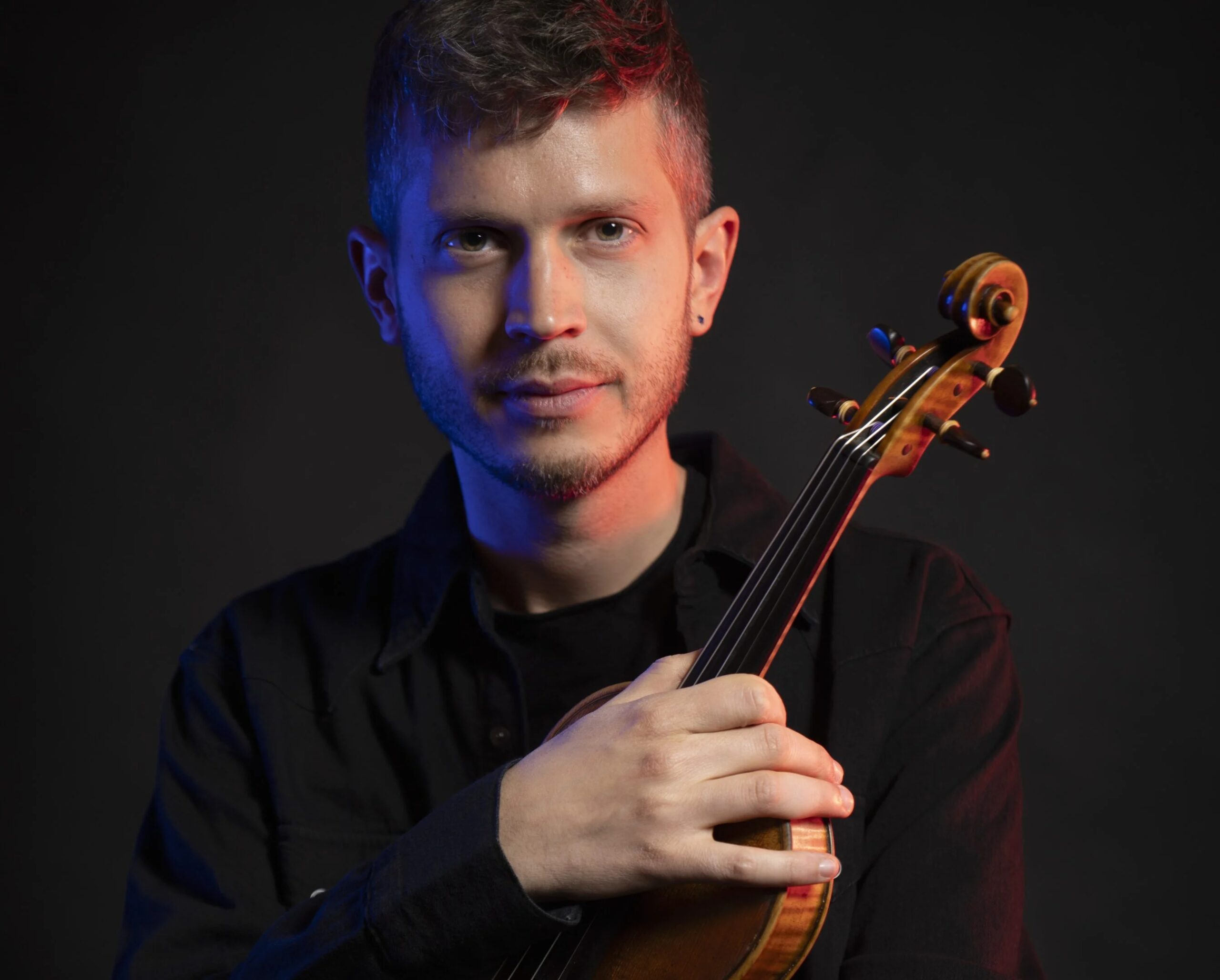
It is precisely these imperceptible trajectories that gave the title to album by Federico Mecozzi(“Imperceptible trajectories” – dedicated to Franco Battiato) released last May 29th. Unpredictable flights described by the eclectic maestro as a symbol of the human soul, which coincide exactly with the vision of revisiting these pieces by the violinist from Rimini, born in 1992. Calling him a violinist, in reality, is reductive: in addition to being one of the youngest conductors of all time, Federico Mecozzi is a composer and multi-instrumentalist. He began playing the guitar at five years old, began his studies at the Conservatory where he graduated in violin, trained as a conductor and arranger and from the age of 17, he permanently accompanied Ludovico Einaudi on his most prestigious world tours.
“I was lucky enough to breathe music from an early age: the first spark was born thanks to Fabrizio de Andrè, my first input to start discovering music, but it was the encounter, after a few years, with the music of Franco Battiato that literally changed my life.”
Federico, a tribute to Battiato, a contemporary dialogue with his work, defined by Cristina Battiato and Francesco Cattini (historical manager) as an exquisite, sublime work, so delicate that the master would certainly have appreciated it.
“This work was born mainly from the profound need to express gratitude and devotion to the artist who, more than anyone else, represented and represents my highest and brightest point of reference. Battiato was a beacon in my growth: the encounter with his art changed my way of thinking, living and making music; the approach to constant research. This album is a very personal journey into his art: the great attachment I have towards his work pushed me to take possession of it, decompose it and recompose it, in a courageous way but also with the most humble approach possible”.
An almost exclusively instrumental album with some important featurings
“They come mainly from encounters I have had in my artistic life, particularly in recent years. I chose guests who were humanly or artistically linked to the maestro. “Shock in my town” is absolutely suited to the creativity of Morgan, with whom I played in several concerts and who worked with Battiato.
It was an honor to have Juri Camisasca among our guests, due to the great relationship that existed between them, and because I have always adored Nomadi (originally one of his songs) in Battiato’s version. Simone Cristicchi collaborates in the closing song, and above all Franco Battiato’s voice enters the final part of “I want to see you dance”. My way of sealing a friendship, perhaps not physical, but sincere, a gift that I gave myself.”
Unfortunately you never met in life. We can say that this project is a posthumous meeting
“The need to make this album came after his passing, five years ago, which I experienced almost like the passing of a second father, despite never having had the fortune of meeting him personally.
At twelve years old I was in Sicily with my family and I forced them to take me to Milo, in front of the maestro’s house, where I brazenly rang the doorbell and above all “The era of the white boar” with my violin. Unfortunately he was not at home.
This record is a way to get to know him, to introduce myself, almost as if I were meeting him in person.”
What is the imperceptible trajectory that Franco Battiato left you?
“There are many. I believe that he transferred to me his sense of life and his artistic research, which was to find himself, to find and discover worlds that are imperceptible. A depth, an extra thickness that has always moved me. A sense of existence that influenced me, because regardless of personal belief, it is something that transforms making music into something superior. And this is the best gift he gave me.”