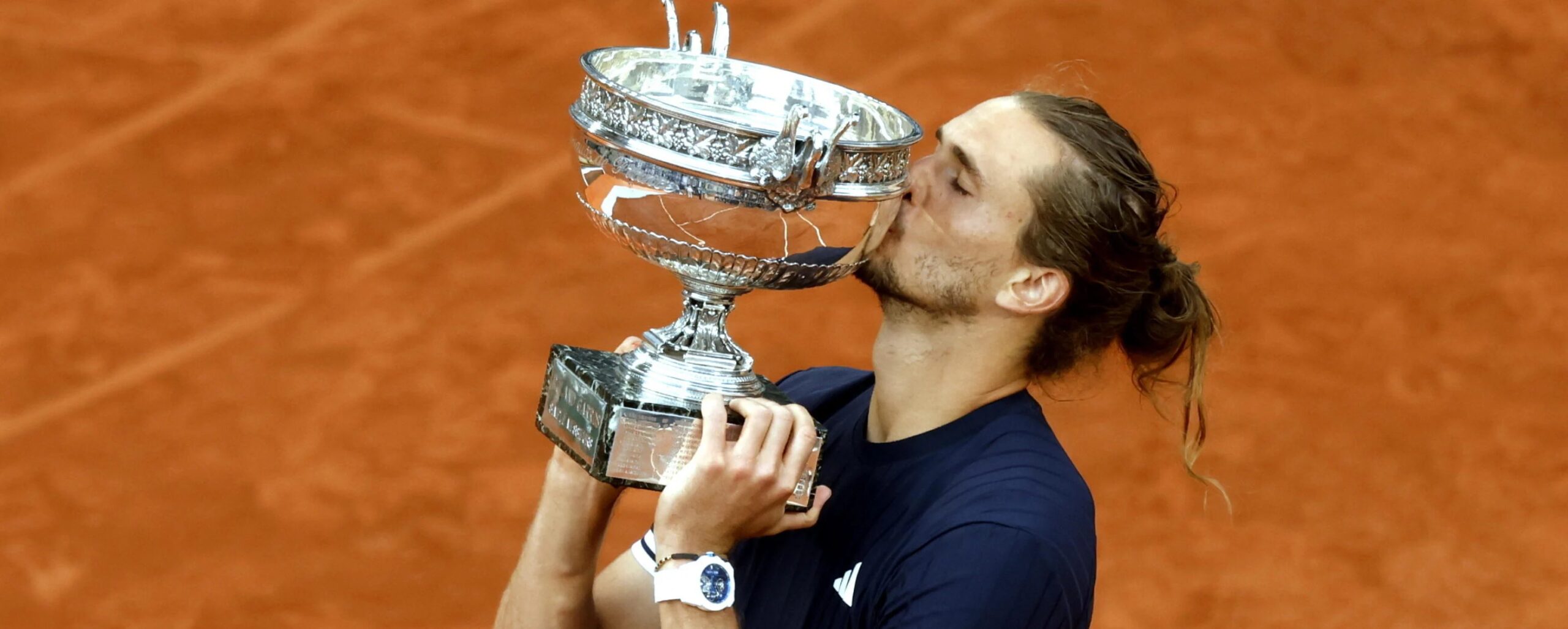
From the diagnosis at four years old to the triumph at Roland Garros in Paris. The story of the German tennis number one shows that diabetes does not prevent him from reaching the top of world sport.
When Alexander “Sasha” Zverev dropped onto the clay of Roland Garros after the final point of the final, the tennis world saw a champion finally breaking a years-long curse. Three Slam finals lost, one serious ankle injury right in Paris in 2022, the criticisms, the missed opportunities. But behind the German’s victory there was an even deeper story: that of an athlete who has lived with the type 1 diabetesa chronic disease that requires continuous checks and which can transform every match into a delicate exercise in physiological balance. When Sasha takes the field, he has two opponents in front of him, and for this reason his victory is worth double.
Roland Garros and the invisible blood sugar match
Zverev was just four years old when he was diagnosed with type 1 diabetes. For a long time he kept his illness hidden, fearing that it could be interpreted as a limit to his career. The problem is that professional tennis represents one of the most complex environments for those suffering from diabetes. Unlike other sports, a match can last one hour or five hours. Every change in the intensity of the effort changes the consumption of glucose by the muscles, making it much more difficult to maintain stable glucose levels blood sugar. Zverev himself explained that during a match there are “two games at the same time”: the one that everyone sees on the pitch and the invisible one which concerns glucose control. For those who suffer from type 1 diabetesthe risk is twofold. On the one hand there is thehypoglycemiai.e. an excessive drop in blood sugar which can cause weakness, tremors and loss of clarity. On the other thehyperglycemiawhich compromises physical performance and slows recovery.
Fatigue, adrenaline and insulin: why winning is more difficult
The lesser known aspect concerns the way in which a competition modifies the physiology of those with diabetes. It’s not just the muscular effort that counts. Stress, adrenaline and emotional tension also influence blood sugar. A Slam final probably represents the most extreme context imaginable. The body produces large quantities of stress hormones which can increase blood sugar levels even as physical activity tends to consume glucose. For this reason, diabetic athletes must plan their nutrition, hydration and doses in advance insulincontinually correcting the strategy during the race. Also for this reason, to give hope to sick people like him, he founded the Alexander Zverev Foundationcreated in 2022 together with his brother Mischa and parents. The foundation supports above all children and adolescents suffering from diabetesfinancing access to insulin and essential medicines, even in developing countries. It also promotes educational projects, sporting activities and initiatives for promote a healthy and active lifestyle among young patients.
A message for children: you can get to the top
Perhaps the most important meaning of the Paris victory is not about ranking or records. It’s about what it represents to the millions of people who live with the type 1 diabetes. The objective of the foundation is precisely to demonstrate that the diagnosis must not become a condemnation or a limit to one’s dreams. This is why the success at Roland Garros it goes beyond tennis. In an era where the diabetes continues to be perceived by many as an insurmountable obstacle, seeing an athlete lift the “Musketeer Cup” takes on enormous symbolic value. The victory of Alexander Zverev he says that there are invisible matches, fought away from the spotlight. And that, sometimes, it is precisely those that make a champion extraordinary. For a child who today learns to live withinsulin and to check the blood sugarthis could be the most important victory of all.