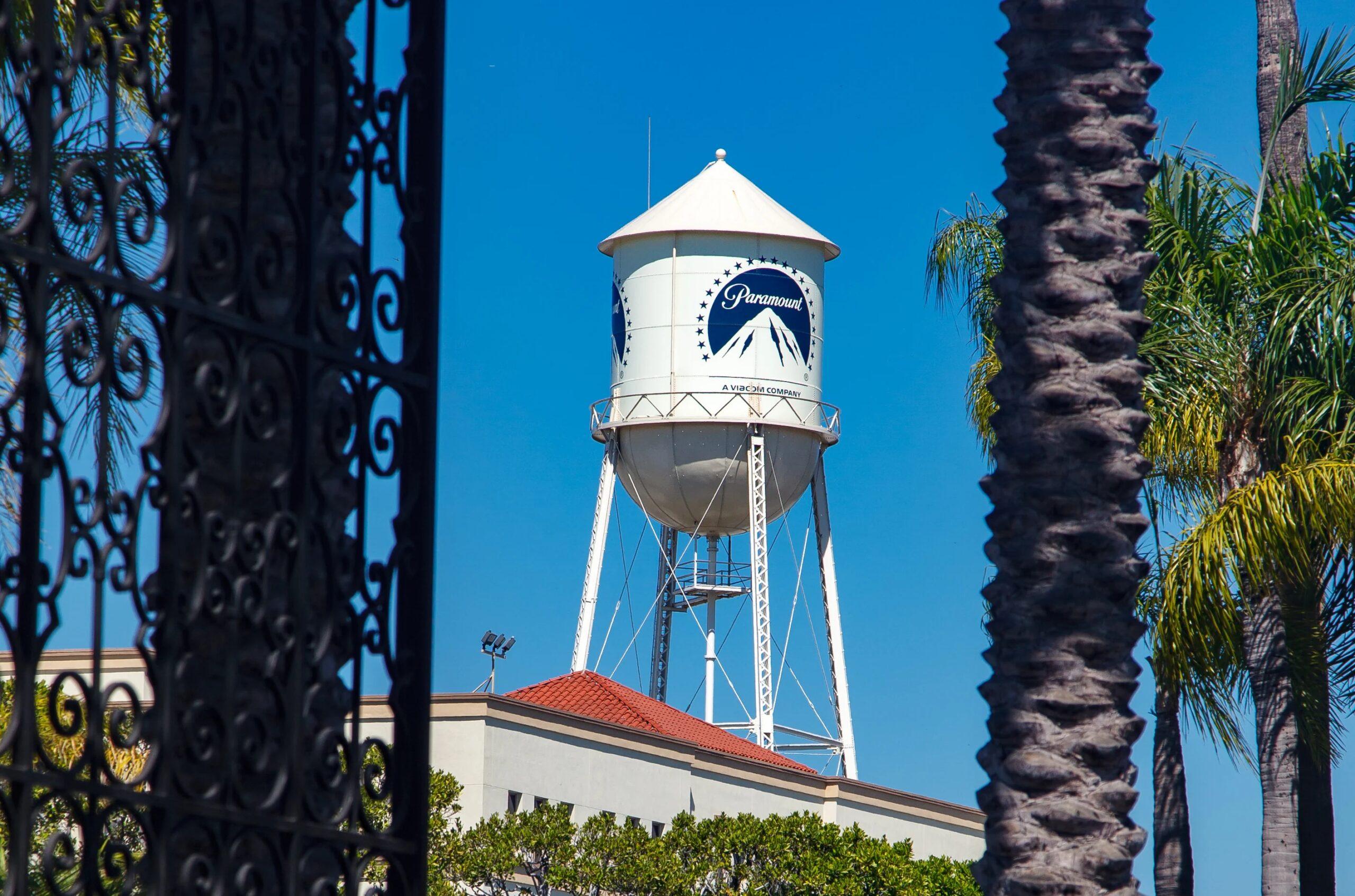
In the great theater of the global cultural industry, where once they fought for a TV studio, today a much more ambitious game is being played: the control of the global imagination. As often happens in the passing seasons of American capitalism, the numbers are enormous, the protagonists are few and the consequences potentially involve the whole world.
The latest move comes from an operation that, on paper, resembles one of the many mergers “that change everything”: Paramount Skydance and Warner Bros. Discovery towards an industrial marriage of 111 billion dollars, debts included. A colossus that doesn’t just grow: it lengthens, expands, overlaps at multiple levels of the media chain. Cinema, TV series, information, books, sports, streaming. All together. Everything connected. And when everything is intertwined, the question is no longer “how much is it worth?”, but “who controls?”. Because the dream is that of total integration. The eye of Big Brother.
The single screen dictatorship resulting from the Paramount Warner merger
The official narrative, obviously, talks about something else. Talk about synergies. Talk about efficiencies. Talk about economies of scale. But the real language, that of the market, is more direct: vertical integration of cultural profiles. A single supply chain that starts from the idea, passes through production, reaches distribution and ends in global monetization: cinema, platforms, video games, merchandising, theme parks. The potential audience is global, without geographical boundaries, without distinction of languages (there are translations and dubbings, even automatic AI ones if desired), without advertising barriers. The complexity crumbled into the unique thought that was born in California, between Hollywood and Silicon Valley.
In this scheme, content is no longer a product: it is a mine. And every intellectual property becomes an asset to be squeezed to the last possible derivation. The model is not new, and it is that of Walt Disney: transforming a story into a universe, and a universe into a permanent economic machine. The difference is that today the scale is larger, the competition fiercer and survival less guaranteed. To understand this race for concentration we need to go back a few years, when the Mecca of cinema decided to chase Netflix. The idea was simple, if the future is streaming, then everyone must become streaming. The result has been less romantic, with exploding costs, compressed margins, unstable subscribers and a hard-to-swallow truth: Not every platform can win.
So the system is going backwards. Or rather: it is moving forward, but with a different dress. Less fragmentation, more verticality. Less experiments, more franchises. And, above all, more direct control over intellectual properties. It is no coincidence that in this scenario we return to looking at “ready-made” books, novels and stories. Because a bestseller costs less to acquire than to invent and – here lies the magic of replication – it can be transformed into series, films, video games and collateral products. Creativity, in this scheme, is increasingly a budget item.
The Financial Axis and the New Geopolitics of Entertainment
Leading the maxi-operation is David Ellison, son of Larry, one of the founders of Oracle, a giant in cloud computing and business programs. David is a central figure of the new season of American media, with a network of relationships that, thanks also to his family legacy, crosses old-style studios and startups in Seattle, politics and global finance. According to reconstructions by the Wall Street Journal, heavy capital is moving around the epic merger: around 24 billion dollars coming from the sovereign funds of the Gulf (but there are also rumors about the Chinese Tencent). The Saudi Public Investment Fund, the Qatari fund and capital from the United Arab Emirates enter as not marginal, but structural players. It’s not just finance: it’s geopolitics through culture.
And here the picture becomes more delicate. Because when global entertainment is intertwined with state capital, the issue is no longer just an industrial one. It’s also narrative. Those who finance inevitably influence. Because obviously the whole operation has a political heart. Because the merger between Paramount and Warner Bros. Discovery is not just a sum of catalogs. They are family albums of the collective imagination: from Warner Bros. Discovery come assets such as HBO (Game of Thrones, Sopranos, The Last of Us), CNN, DC Comics and the Harry Potter universe; from Paramount comes CBS (and its network of 28 local TV stations), the immense catalog of great films produced by the film company (from the Godfather to Titanic, from Forrest Gump to Indiana Jones) and a global distribution system.
In short, the new group will control a significant portion of the contemporary imagination. Not just entertainment, but also information and books. And this is the point that most agitates regulators and legislators. When CNN and CBS News end up in the same industrial perimeter, the issue is no longer competition between platforms, but competition between narratives. In the United States, the Justice Department and several state prosecutors are observing the operation with growing concern. Some senators wrote a concerned letter to the Federal Communications Commission. The crux is clear: the possible convergence between news and entertainment under a single editorial ownership, as well as the entry of money from governments that hostile journalists eliminate them…
The Impact on the Market: Consumers, Creative Work and Sale
On the economic level, the fears are more concrete and less philosophical. The merger between streaming platforms such as Paramount+ and Max could reduce direct competition, with effects on prices and packages offered to subscribers. Some antitrust lawsuits already filed in the United States openly speak of harm to consumers: less choice, more costs, greater dependence on a single ecosystem.
Then there is a less visible but equally relevant topic: the creative job market. With fewer large independent studios, screenwriters, directors and actors risk reduced bargaining power. It is the logic of oligopolies: many workers but only one large employer. In short, Hollywood could become more efficient, but also more rigid and selective. Only those who are able to articulate the cultural approach of the property will find a salary.
On the other side of the Atlantic, the European Commission is observing with an attention that does not grant discounts. The fear is not only the size of the conglomerate, but the role of foreign capital and the possible impact on the market of ideas. The issue of foreign subsidies is particularly sensitive: the presence of Gulf sovereign funds with significant non-controlling shares raises questions about the distortion of competition.
And then there is the cinema front, which fears a squeeze on distribution windows. It means films that spend less time in theaters and move more quickly onto platforms. With direct effects on an already fragile sector.
Ultimately, the direction is quite clear. This is not a “Big Brother” like the one imagined by George Orwell, but something more subtle and modern: an integrated ecosystem where production, distribution and consumption of stories live in the same industrial enclosure. A system in which the spectator does not change platform: he only changes the entrance door to the same building. It is here that the only space of freedom is formed, resulting from the conflict between economic and ideological reality: such an efficient system can also be fragile. Because when everything is concentrated, a single strategic error, a single change in public taste, or a single regulatory tightening can become fatal. The paradox has worked: to reduce competitive risk, a giant is being built that increases systemic risk. In media capitalism, as in finance, size is never just a force. It is also a responsibility. Or at least that’s how it should be.