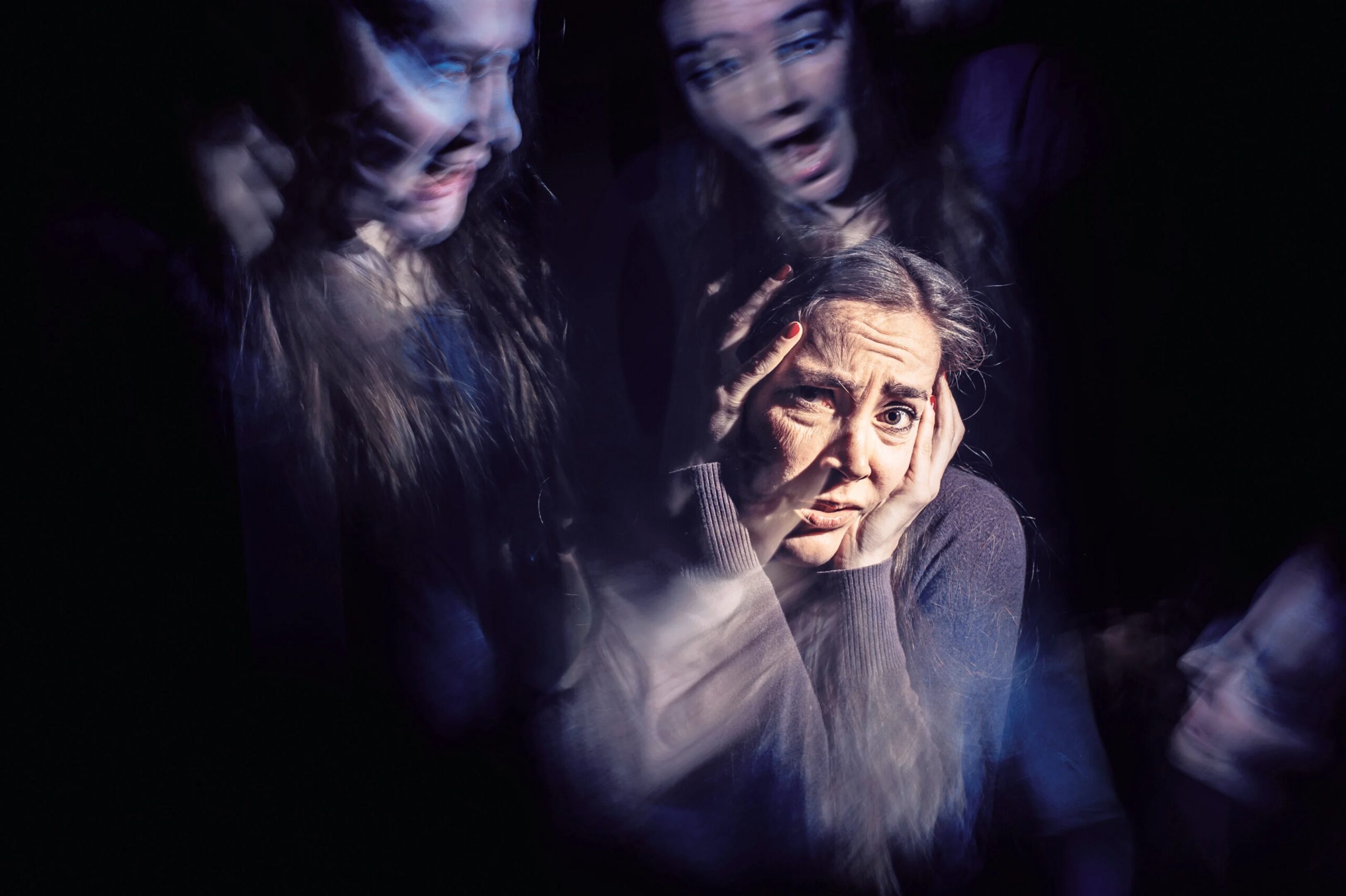
It is estimated that in Western countries one in four people has suffered from attacks at least once in their lives. Often underestimated, but which instead must be analyzed to understand the consequences.
The heart accelerates, breathing becomes short, fear grows to occupy every thought and in a few minutes the mind builds an absolute certainty: “I’m about to die”. Instead it is a panic attack, one of the most frequent causes of access to the emergency room, often mistaken for a heart attack. Globally, estimates from the World Mental Health Survey indicate that recurrent panic attacks affect around 13% of people, but in Western countries up to 25% of individuals have at least one in their life. They are one of the points where the boundary between mind and body becomes more blurred, testing patients, family members and doctors who are called upon to distinguish a false alarm from a real danger.
The Belén case brought attention back to this problem: the Argentine showgirl locked in her house and refusing to open the door to the rescuers, the screams in the middle of the night that alarmed the neighbors, the emergency admission to the emergency room of the Milan Polyclinic and the whole corollary of morbid curiosity. Rodriguez, only a few months ago, had spoken on TV about her panic attacks, while some specialists (and also former tennis player Flavia Pennetta) have also hypothesized a problem of this type for Jannik Sinner’s ailments.
But to understand what really happens during a serious anxiety crisis, we need to start from a very recent discovery in neuroscience. «For many years we have thought of a panic attack as an excess of fear. Today a different and fascinating hypothesis emerges: it could be due to the brain making a prediction error”, Claudio Mencacci, psychiatrist and president of the Italian Society of Neuropsychopharmacology, tells Panorama. «Our brain, in fact, is an organ that spends time interpreting and anticipating what happens in the body. In panic, however, it attributes a catastrophic meaning to completely normal signals, such as an acceleration of the heartbeat or more intense breathing. In practice it raises a real alarm against a threat that does not exist.”
The symptoms, however, are real: tachycardia, chest pain, tremors, sweating, feeling of suffocation. And it is precisely here that the great (and very dangerous) clinical misunderstanding arises, because they resemble those of some cardiovascular pathologies. «The panic attack can simulate a heart attack very well. The patient arrives convinced that he is on the verge of death, experiences the problem in an extremely dramatic way and often describes chest pain that scares him greatly”, explains Paolo Groff, head of the emergency room at Perugia hospital. «The problem is that the opposite is also true: sometimes a heart attack can seem like a panic attack. For this reason the risk is very high, and we cannot rely only on clinical impressions.”
Furthermore, in Italian emergency rooms, these patients are a constant presence. “In a high-volume ward it happens almost every day that we have one or two people with panic attacks,” says Groff. «It is part of our everyday life, like trauma or syncope. It’s not trivial, because at that moment the person is really sick: the problem is that all of us in the emergency departments are always in overcrowded conditions, and these patients require attention, a lot of time and many tests. It is as if there was a blackout in their ability to evaluate what is happening: anguish takes over and blocks discernment.” Regarding the causes, the most recent research suggests that behind this mechanism there may be an alteration of specific brain areas responsible for reading body signals. «Panic disorder never has a single origin», specifies Mencacci. «Today we know that it is the result of the meeting between a family predisposition, environmental factors and sensitivity to body signals. Added to this are brain circuits that are particularly reactive to fear and indeed the tendency to interpret normal physical sensations in a catastrophic way.” Among these sensitive brain regions is the insula, which integrates information from the heart, breathing and other internal organs. When something goes wrong, a normal physiological variation can transform into the belief that something terribly wrong is happening.
The problem, however, does not end in a single episode. After the first attack many people develop a growing fear that it may return. They thus begin to avoid cinemas, public transport, shopping centres, crowded places or places that are difficult to leave quickly. It is the terrain on which agoraphobia, one of the most frequent complications of the disorder, can develop. “Emergency treatment is not simply telling the patient to stay calm,” concludes Groff. «First of all we need to try to understand what is happening, often through indirect questions, because experience teaches that addressing certain issues immediately can lead the person to withdraw. In more complex cases we ask for advice from the psychiatrist and try to direct the patient towards a path of taking charge, because the real objective is to prevent relapses.”
When the acute phase is over, the real therapeutic work begins. «Today the drugs of first choice are not benzodiazepines, but some antidepressants from the SSRI and SNRI families», recalls Mencacci. Benzodiazepines remain important in acute phases because they act quickly, while antidepressants require a few weeks to become effective. The good news is that panic disorder can be overcome. «The most important message is that it can be healed. But the first cure is the correct diagnosis” concludes the neuropsychiatrist. “When the patient understands that he is not dying and that he is not going crazy, the vicious circle of fear and new attacks that fuels the disease is interrupted.”
Ultimately this is the most insidious nature of panic: transforming an error in the brain’s interpretation into an absolute certainty, that of being one step away from the end precisely when the greatest danger is giving in to the wrong alarm. As the most famous of American presidents, Franklin Delano Roosevelt, said almost a century ago in one of his famous speeches: “The only thing we have to fear is fear itself.”