- Research suggests that people with hypertension who regularly monitor their blood pressure at home and share readings with healthcare professionals experience better health outcomes.
- Participants using the telemonitoring system showed reductions in blood pressure within 3 months, with these improvements maintained for at least 1 year.
- Although the study analyzed a large real-world population, it was observational, meaning researchers cannot conclude that telemonitoring directly caused the improved outcomes.
High blood pressure, or hypertension, affects millions of people worldwide and
Health experts often refer to hypertension as the
Hypertension screening and management have primarily relied on measurements taken in office settings, but home monitoring
Now, a large study from researchers in Scotland has found that those who used a digital home blood pressure monitoring system experienced fewer cardiovascular complications, hospitalizations, and deaths than those who received standard care.
The research, published in European Heart Journal – Digital Health, suggests that people with high blood pressure who regularly monitor their readings at home and share the results with their healthcare team may have a lower risk of serious cardiovascular events, such as heart attacks and strokes.
What did the study find?
Researchers from Edinburgh Napier University and the University of Edinburgh analyzed health records from nearly 450,000 people with hypertension across Scotland between 2019 and 2022.
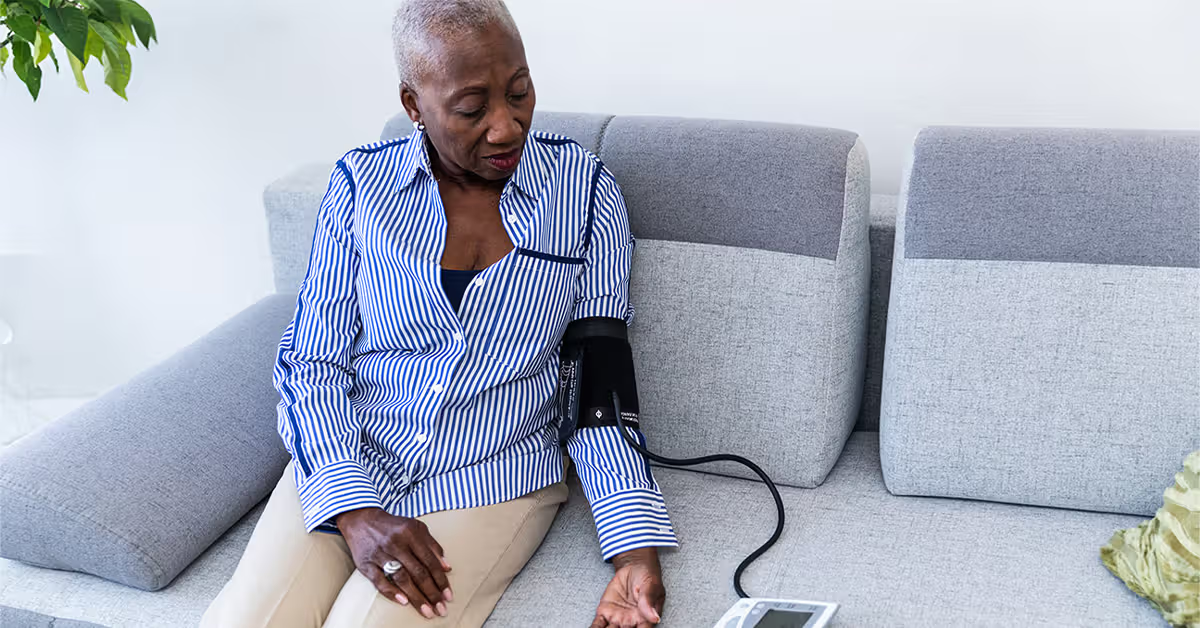
Among them, around 9,500 participants used a telemonitoring program called Connect Me BP. This remote monitoring pathway allows users to measure their blood pressure at home and automatically share readings with healthcare professionals. The system also provides reminders to encourage regular monitoring.
The researchers found that participants using the telemonitoring service achieved reductions in blood pressure within the first 3 months. These improvements were maintained for at least 1 year.
More notably, people using the system experienced significantly lower rates of cardiovascular events, hospital admissions, and death compared with those receiving standard hypertension care.
Kanwar Kelley, MD, JD, triple board certified in Otolaryngology Head & Neck Surgery (ENT), Obesity Medicine, and Lifestyle Medicine, and co-founder and CEO of Side Health, a telemedicine practice, in Orinda, CA, who was not involved in the study, emphasized the potential of telemonitoring for blood pressure management to Medical News Today.
“Monitoring blood pressure at home is effective at reducing blood pressure and also likely contributes to decreases in cardiovascular outcomes, such as heart attack and stroke. Overall, testing blood pressure with telemonitoring could be affecting clinical outcomes for the better and not just collecting data.”
—Kanwar Kelley, MD, JD
Why might home monitoring help?
Previous studies have shown that home blood pressure monitoring
The study researchers suggest that regular self-monitoring may help individuals become more engaged in managing their condition, while also enabling clinicians to identify and respond to concerning trends more quickly. Automated reminders may also encourage better adherence to treatment plans and monitoring schedules.
“The act of taking and recording the blood pressure between visits leads to more engagement in patients and taking a stake and ownership in improving blood pressure,” Kelley added.
“More data allows the physician to better adjust medications and be able to approach and manage trends better than when only having readings at the appointment.”
—Kanwar Kelley, MD, JD
Cardiovascular diseases are the
The study findings provide strong evidence that blood pressure monitoring may not only help reduce blood pressure but also reduce major cardiovascular events.
The researchers also emphasize the importance of expanding access to telemonitoring technology, particularly in more deprived communities, which typically experience a higher risk of hypertension.
“The important work comes between visits to your doctor’s office,” Kelley notes. “Knowing and tracking your blood pressure outside the clinic may help treat and lead to better outcomes. Being active in your care by watching and acting on trends may prevent more problems down the line.”
“When advising my patients, I make them aware that one blood pressure reading is not the end of the world. We look for highs, lows, and the aggregate to better treat blood pressure,” he pointed out.
What to look out for when monitoring blood pressure at home
“It is important to get a monitor that is clinically validated, or able to be validated at your doctor’s office. Blood pressure should be taken near the same time every day and it is important to sit quietly for a few minutes with both feet on the floor to ensure an accurate reading.”
—Kanwar Kelley, MD, JD
Digital health tools can help manage chronic conditions
The findings add to growing evidence that digital health tools could play an important role in managing chronic conditions, such as hypertension.
High blood pressure is estimated to contribute to 7.5 million deaths globally each year. As such, approaches that help people monitor their condition more consistently may offer a practical way to reduce the burden of cardiovascular disease.
While more research is needed to confirm the long-term benefits, the findings suggest that home blood pressure telemonitoring could become an increasingly important part of hypertension care.
However, while the results are promising, the study was observational. This means it cannot prove that telemonitoring directly caused the reduction in cardiovascular events.
Although the researchers adjusted for several differences between groups, people who chose to use telemonitoring tended to be younger, required fewer blood pressure medications, and were less likely to live in socioeconomically deprived areas. Other unmeasured factors may also have influenced the results.
The authors add that additional research is needed to determine whether the benefits extend to broader and higher-risk populations.
“Managing blood pressure by telemonitoring can have real effects on improving blood pressure in patients,” Kelley told MNT.
How at-home devices can help
“The additional data points will provide better averages in real time that improves upon the blood pressure log brought to appointments. Use of the machines at home will also provide a better idea of blood pressure overall than the single office measurement.”
—Kanwar Kelley, MD, JD
“For those being treated for high blood pressure, this represents a critical tool in management. High blood pressure can be silent, without symptoms that leads to chronic disease later on so better monitoring and control is essential,” Kelley said.
“This study supports the use of telemonitoring as an easy-to-implement option for patients with hypertension. Especially those with prior cardiovascular risk factors, hard-to-control blood pressure, or those needing changes to their medication,” Kelley concluded, adding that these devices can also help keep patients involved in their care and create new opportunities for discussion with their physicians.