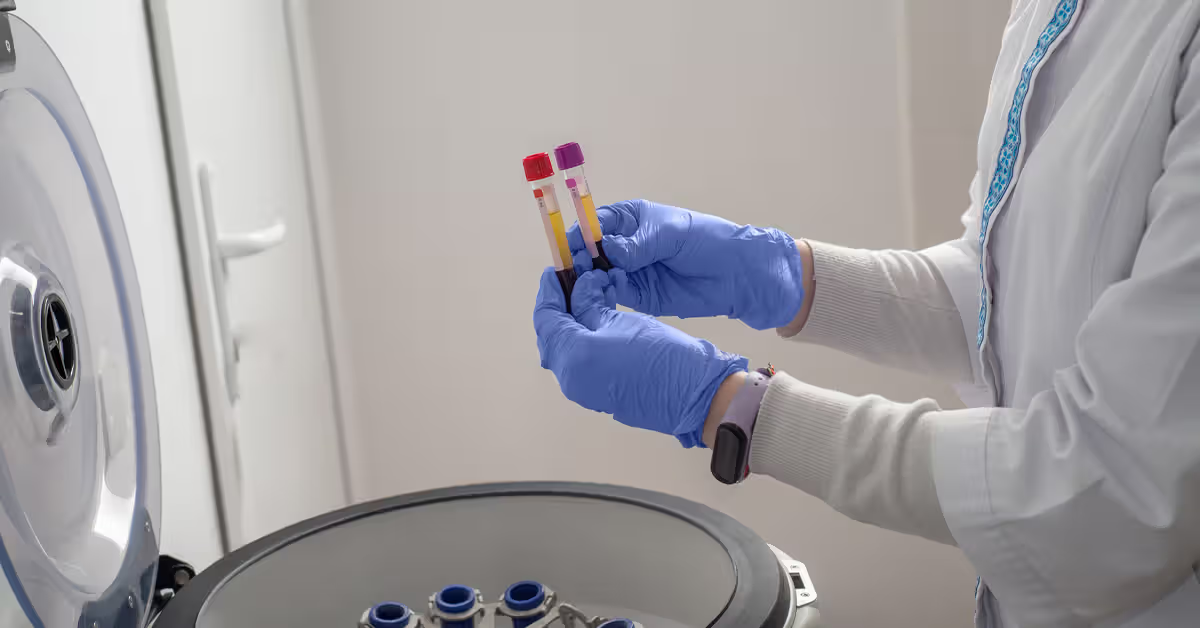
- Researchers identified brain-derived RNA biomarkers that may help detect Alzheimer’s disease through a simple blood test, potentially reducing reliance on expensive brain scans and invasive spinal taps.
- The team analyzed tiny structures released by cells that can carry molecular information from the brain into the bloodstream, and found distinct RNA signatures associated with Alzheimer’s disease.
- A newly characterized nanoparticle, called a SECmere, carried particularly strong brain-related signals.
- The findings suggest that RNA biomarkers could potentially detect disease-related changes earlier than current protein-based blood tests, but larger clinical studies are needed to validate their uHE.
Alzheimer’s disease is the most common form of dementia. It is estimated to affect more than 55 million people worldwide and is projected to affect more than 150 million individuals by 2050.
However, diagnosis can be challenging, particularly in the early stages when symptoms may overlap with other conditions. As such, early diagnosis is becoming increasingly important to target the disease in its earliest stages, before irreversible brain damage or mental decline occurs.
Current diagnostic approaches often rely on expensive imaging scans or invasive procedures, such as lumbar punctures to analyze cerebrospinal fluid. Less invasive tests measuring for blood-based biomarkers could offer a more practical alternative for routine clinical screening.
Now, a new study suggests that tiny ribonucleic acid (RNA) molecules carried in blood may help detect Alzheimer’s disease earlier and less invasively than current diagnostic methods.
Published in
This adds to efforts to develop accessible tools for diagnosing the neurodegenerative condition before symptoms become severe.
What did the researchers discover?
The study focused on extracellular vesicles and particles (EVPs). These are tiny membrane-bound structures released by cells that circulate throughout the body. Some EVPs can cross the blood-brain barrier, carrying molecular information from the brain into the bloodstream.
Using blood and brain tissue samples from people living with Alzheimer’s disease and individuals without the condition, the researchers developed a method to isolate different types of EVPs and analyze their RNA content.
The research team identified distinct RNA signatures linked to Alzheimer’s disease within these circulating particles. Notably, they discovered a newly characterized type of small extracellular nanoparticle, which they termed a “SECmere”.
According to the researchers, these SECmers were enriched with markers associated with brain cells and may provide a clearer picture of disease-related changes occurring in the brain.
“SECmers are sub-50-nanometer nanoparticles,” co-corresponding author Navneet Dogra, PhD, Assistant Professor of Pathology, Molecular and Cell-Based Medicine, and member of the Icahn Genomics Institute at the Icahn School of Medicine at Mount Sinai, explained to Medical News Today.
“SECmeres are discovered in circulation in blood and brain microenvironment. SECmeres are significant because they are carrying RNA in blood from brain cells of origin. This study identifies brain-specific RNA biomarkers in blood, paving the way for early and easier diagnosis of Alzheimer’s disease.”
—Navneet Dogra, PhD
Why are RNA biomarkers important?
Currently, most blood-based Alzheimer’s tests focus on measuring proteins associated with the disease, such as amyloid-beta and phosphorylated tau.
In 2025, the
However, the research team suggests that RNA may potentially help reveal disease processes even earlier than protein markers. They propose that RNA changes may occur before significant protein accumulation or detectable brain pathology develops, potentially offering a broader window for intervention.
“We believe RNA biomarkers may reveal disease-related changes earlier in the disease process, before proteins or pathology become detectable,” Dogra emphasized to MNT.
They also note that EVPs may serve as a type of ‘liquid biopsy’ of the brain, providing insights into neurological changes from a simple blood sample.
A blood test capable of identifying Alzheimer’s-related changes before significant decline could help clinicians monitor at-risk individuals, improve patient selection for clinical trials, and potentially enable earlier treatment.
“The next goal is to conduct a longitudinal study where we plan to see when the Biomarkers start to impact in the disease cascade. Potentially, we will develop a simple, cost-effective PCR assay to determine RNA changes in blood,” Dogra noted.
When will these tests be used in routine practice?
While the findings are promising, the study remains an early-stage investigation. The researchers emphasize that larger, blinded clinical trials will be necessary before RNA biomarkers can be used in routine medical practice.
It is also not yet clear how accurately the biomarkers can distinguish Alzheimer’s disease from other forms of dementia or neurological disorders. As such, further validation will be required across diverse patient populations and healthcare settings.
Still, the findings add to a rapidly expanding field focused on blood-based detection of Alzheimer’s disease.
Although further research is necessary, SECmeres may offer a potential pathway to simpler, less invasive diagnosis, complementing or even enhancing existing protein-based approaches and helping clinicians detect Alzheimer’s disease earlier than ever before.