- Some people develop long COVID after a SARS-CoV-2 infection, and people with type 2 diabetes have an especially high risk.
- People in this group also have a higher risk of developing pulmonary fibrosis, a form of lung scarring.
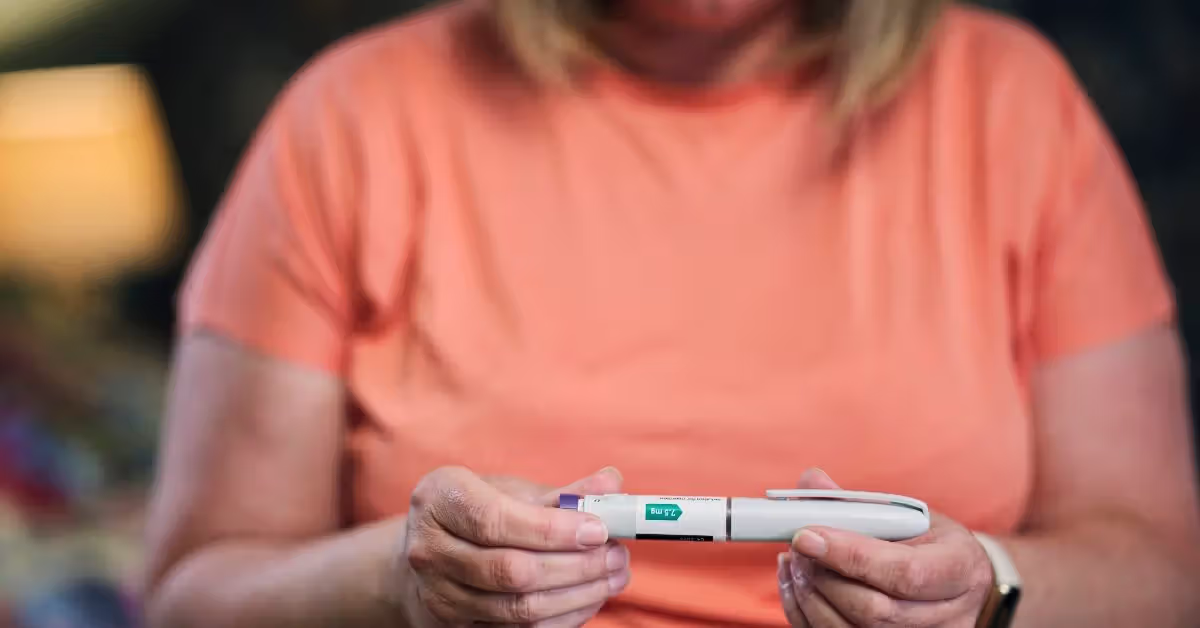
- A new study finds that GLP-1 medications, such as Ozempic and Mounjaro, commonly used to treat type 2 diabetes and obesity, may help reduce that risk.
Researchers from the University of Hong Kong investigated why people with type 2 diabetes are more likely to experience respiratory complications after COVID-19 and what can be done to prevent this.
They discovered that inflammatory immune cells may contribute to lung scarring after a SARS-CoV-2 infection and that GLP-1 medications may offer protection.
The results are published in the Journal of Virology.
Analyzing human samples and experiments in mice
According to the
Doctors prescribe GLP-1 receptor agonists, including semaglutide and tirzepatide, to treat type 2 diabetes and obesity. Besides improving blood sugar control and promoting weight loss, these drugs may also reduce the risk of cardiovascular and kidney disease.
People with type 2 diabetes have a higher risk of developing long COVID and pulmonary fibrosis, a condition where scar tissue builds up in the lungs and makes breathing more difficult.
In the new study, researchers combined analyzes of human samples with experiments in mice to better understand how type 2 diabetes contributes to long COVID-related pulmonary fibrosis.
They first analyzed data from an earlier long COVID study involving 90 people hospitalized with COVID-19, including 11 with type 2 diabetes and 79 without. They compared immune cell activity during hospitalization and again 2 to 3 months later, looking for differences in genes linked to inflammation and lung scarring.
Next, they infected diabetic and non-diabetic mice with SARS-CoV-2 to compare the effects of diabetes on long-term lung damage.
In another experiment, the researchers depleted macrophages, immune cells involved in inflammation, to determine whether they contributed to lung scarring after infection.
Finally, they treated infected diabetic mice with a GLP-1 receptor agonist and compared them with untreated mice.
GLP-1 drugs offer protective lung benefits
In both the human and mouse experiments, the researchers found consistent evidence linking type 2 diabetes to long COVID-related lung scarring.
In the human analysis, people with type 2 diabetes showed increased activity in monocytes, immune cells that can develop into macrophages, for up to 3 months after COVID-19.
They also had higher levels of genes and proteins linked to inflammation and pulmonary fibrosis than people without diabetes.
The first mouse experiment produced similar results. Diabetic mice developed more severe infections, experienced greater weight loss and higher viral loads, and showed increased activity of a fibrosis-related gene not observed in non-diabetic mice.
In another experiment, diabetic mice had more lung-infiltrating macrophages after SARS-CoV-2 infection than non-diabetic mice.
When researchers removed these immune cells, the mice developed less lung inflammation and scarring, suggesting macrophages play an important role in lung damage.
In the final experiment, the researchers tested whether GLP-1 medications could reduce lung damage. Compared with untreated diabetic mice, treated mice developed significantly less lung scarring.
Additional tests indicated that the drugs altered macrophage responses to infection.
How COVID-19 drives lung damage
Lead study author Runhong Zhou, PhD, a virologist at the University of Hong Kong, said the findings point to inflammatory macrophages as a key driver of lung scarring.
“We think that COVID-19 infection-induced proinflammatory macrophage infiltration is a major driver of long COVID-related pulmonary fibrosis,” Zhou shared with Medical News Today.
“GLP-1 receptor agonists reduce this macrophage infiltration and normalize the expression of fibrosis-related genes,” Zhou continued.
Zhou emphasized that the findings are preliminary because they are based on a small number of mice and require confirmation in larger animal studies and eventually in humans.
Understanding why GLP-1s may help long COVID
Gillian Goddard, MD, a board-certified endocrinologist with Park Avenue Endocrinology and Nutrition, spoke with MNT about the study findings.
Goddard called the findings “exciting,” but said they are not enough to change clinical practice.
“We’ll need some studies in people before we can say that GLP-1 is beneficial for treating long COVID,” she said.
Goddard said people with type 2 diabetes already have higher baseline inflammation, which may help explain their increased risk of long COVID complications.
“Essentially, someone with type 2 diabetes has higher baseline inflammation, then you add inflammation from COVID on top of that, and it can lead to much more severe symptoms,” she said, adding that
Fady Youssef, MD, a board certified pulmonologist, internist, and critical care specialist at MemorialCare Long Beach Medical Center, also spoke with MNT.
Youssef said one of the study’s most intriguing findings is that GLP-1 medications appeared to reduce lung scarring even without substantially improving blood sugar levels.
“GLP-1 drugs reduced lung scarring even when blood sugar levels weren’t significantly improved, suggesting the drugs may directly reprogram the immune cells driving the damage,” he said.
Youssef noted that a previous clinical trial found that metformin reduced the risk of long COVID, suggesting that it and GLP-1 drugs may act via similar biological pathways.
“Since metformin is known to increase natural GLP-1 levels in the body, this study raises the possibility that both drugs may be working through the same mechanism,” he said.