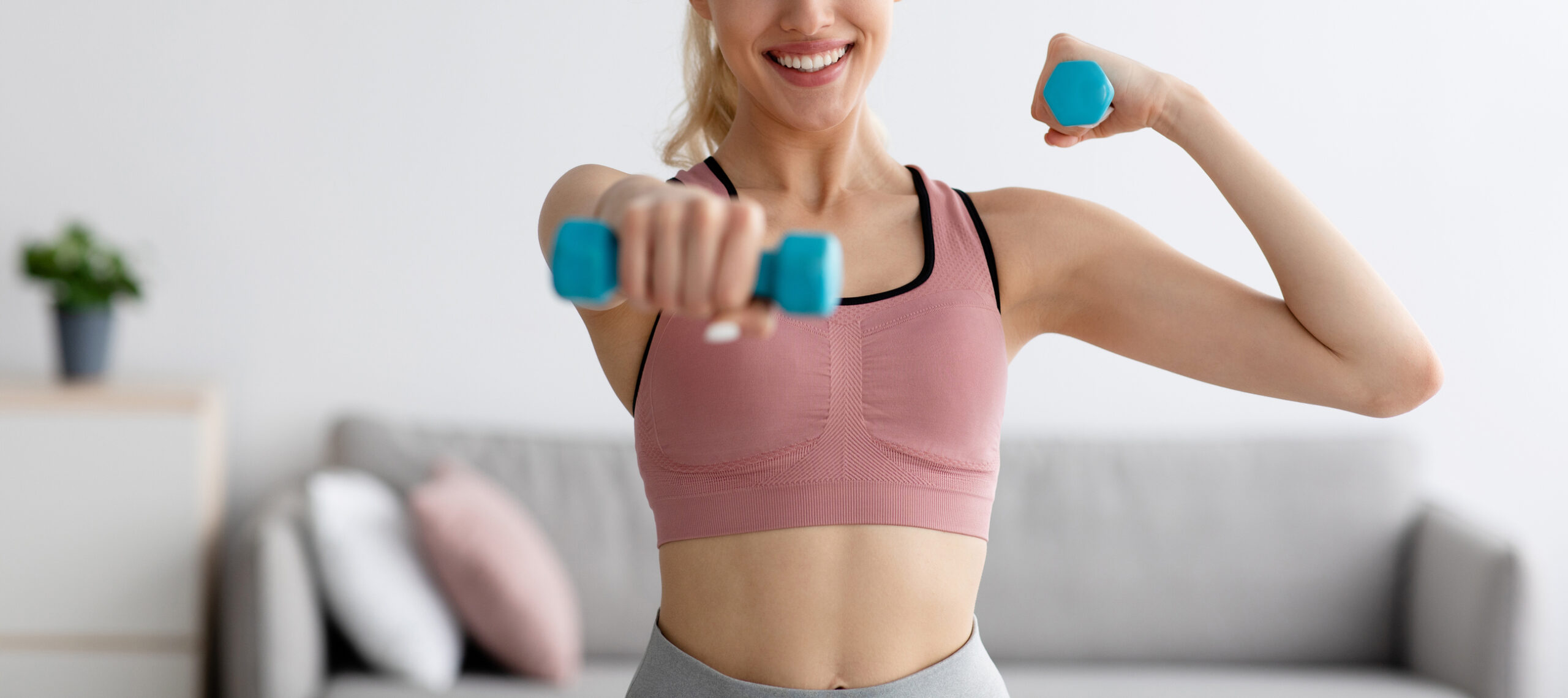
Just five minutes. The time to wait for the coffee to be ready, to finish a phone call or to choose what to wear before going out. According to one of the most talked about wellness trends of summer 2026, they can be enough to transform an empty moment of the day into a small training opportunity.
They are called snack workouts or exercise snacksexpressions that in Italian can be translated as “snack workouts”. They do not include protein bars or new diets: the reference to the snack concerns duration. Instead of concentrating physical activity in a one-hour session, movement is divided into short episodes, repeated at different times of the day.
The format has been relaunched in recent months by the international editions of Vogue and by numerous publications dedicated to well-being, which present it as an answer to the difficulty of finding space for the gym between work, travel and personal commitments. However, it is not an invention born in 2026: the concept has been studied for years and today it is back in the news because it intercepts a broader change in the way of understanding fitness, less and less associated with the fatigue exhibited and more and more with the sustainability of habits.
What exercise snacks really are
On social media the definition is used with a certain freedom. It could mean ten minutes of pilates, a short sequence of sit-ups, some exercises with elastic bands or a brisk walk during your lunch break.
In scientific literature the meaning is generally more precise. A recent systematic review considered exercise snacks to be structured sessions of physical activity lasting a maximum of five minutes, performed at least twice a day and for at least three days a week. The interventions analyzed lasted from four to twelve weeks and included exercises of varying intensity, from moderate to near maximal.
In practice they can translate into a few minutes of climbing stairs at a brisk pace, squats and lunges performed at home, a short brisk walk, arm exercises or a free body sequence. The main feature is not so much the type of movement but the possibility of easily inserting it into the routine, without having to organize a real workout.
This does not mean, however, that any movement of a few seconds produces the same results. The intensity, frequency, level of individual preparation and continuity over time continue to make the difference.
Because they are conquering the public
The reason for the success is intuitive: five minutes seems manageable even when an hour seems impossible.
Traditional training often requires changing clothes, going to a gym, finding an appropriate space and changing the organization of your day. A snack workout can instead be done in the living room, in the office, in the park near home or on the stairs of a hotel.
This is an advantage that is far from negligible, considering that a significant part of the world’s population continues to move too little. According to the World Health Organization, around 2022 31 percent of adultsequal to almost 1.8 billion peopledid not reach the minimum recommended levels of physical activity. The share has increased by about five percentage points compared to 2010 and, in the absence of a trend reversal, could reach 35 percent by 2030.
Exercise snacks do not eliminate all obstacles, but they reduce the one perceived as most difficult to overcome: lack of time. Above all, they make the choice between full training and total inactivity less clear.
The most promising fact: it’s easier not to give up
The most interesting scientific confirmation does not concern weight loss or physical transformation, but people’s ability to follow the program.
A systematic review with meta-analysis published in British Journal of Sports Medicine examined 11 randomized clinical trialsinvolving a total of 414 physically inactive adults and elderly people. The average rate of adherence to exercise snacking programs was equal to82.8 percentwhile participants completed the 91.1 percent of exercises prescribed.
These are high percentages, particularly because many programs were unsupervised and some were performed directly in the home. The finding suggests that short workouts may be easier to maintain over time than routines that require prolonged commitment.
It is a fundamental aspect. In fitness, in fact, a less ambitious but regularly followed program can prove more useful than a perfect plan abandoned after a few days.
The benefits exist, but they are not all equally proven
The same meta-analysis found a significant improvement in Cardiorespiratory fitness in physically inactive adults. In other words, repeated short sessions can help the heart, lungs and muscles better use oxygen during exertion.
A possible improvement in muscular endurance was also observed in the elderly. In this case, however, the authors judged the certainty of the evidence to be very low, due to the limited number of studies and participants.
However, no significant and uniform effects emerged on body composition, blood pressure or blood fat levels. Snack workouts, therefore, cannot be presented as a guaranteed method for losing weight, reducing your waistline or solving metabolic problems.
The correct message is simpler: they can especially help those who move little to improve their cardiorespiratory fitness and introduce physical activity into daily life.
Is 15 minutes a week really enough?
One of the most surprising data associated with the phenomenon comes from research published in European Heart Journal. The study analyzed information collected through wearable devices on over 71 thousand participants from the UK Biobank.
According to the results, accumulate approx 15-20 minutes per week of vigorous activityeven through very short episodes, was associated with a lower risk of mortality and of developing some cardiovascular and oncological pathologies. Favorable associations further increased to approximately 50-57 minutes per week.
However, the data should not be interpreted as permission to train for a quarter of an hour a week and consider one’s commitment completed.
First of all, it was about one observational study: found a statistical association, but could not prove that those few minutes were directly responsible for the reduction in risk. Furthermore, the activity examined was vigorous, therefore intense enough to noticeably increase heart rate and breathing.
A short, relaxed walk and two minutes of brisk stair climbing are not necessarily the same stimulus. Rather, the result demonstrates that even modest amounts of intense activity can count, especially compared to being completely sedentary.
They are not a substitute for a thorough workout
Snack workouts can contribute to weekly movement, but they do not cancel out the general recommendations.
For adults, the WHO indicates at least 150 minutes of moderate aerobic activity per weekor at least 75 minutes of vigorous activity, or an equivalent combination. To these should be added strengthening exercises of the main muscle groups at least twice a week.
Short workouts can be used to get closer to these goals, break up long periods of sitting, or start moving after months of inactivity. However, a few occasional minutes can hardly replace a progressive program when the goal is to greatly increase strength, build muscle mass, prepare for a race or significantly improve endurance.
Nor has it been proven that exercise snacks automatically keep cortisol low or are less stressful for the body. A short but very intense effort can still represent a considerable stimulus, especially for those who are not trained.
Recovery enters the new fitness culture
The success of micro-workouts is part of a larger change. After years dominated by “no pain, no gain”, well-being is increasingly described through words such as balance, recovery, sleep and continuity.
Even in this case, however, it is necessary to distinguish a cultural trend from scientific conclusions.
A meta-analysis published in 2026, based on 200 randomized clinical trials and over 23 thousand participants, found that exercise can improve the subjective quality of sleep, especially in people starting from worse conditions. However, the same authors classified the overall certainty of the evidence as very low, due to the strong heterogeneity of the studies.
Rest is therefore not an alternative to movement and movement cannot systematically compensate for insufficient nights. They are different components of the same balance: sleeping allows you to recover, while regular physical activity can help improve general well-being and, in some cases, also the perception of the quality of sleep.
How to try without turning everything into another obsession
The easiest way to start is to choose two or three moments already present in the day. A short walk after lunch, some exercise while waiting for dinner to be ready, the stairs instead of the elevator or a few minutes of free exercise between two meetings.
The initial goal should not be to immediately get out of breath, but to build a habit compatible with your level of preparation. Intensity and duration can increase gradually.
Those who have been sedentary for a long time or have cardiovascular, respiratory, joint or metabolic problems should avoid starting with near-maximal efforts and evaluate the most suitable activity together with their doctor or a qualified professional.
The strength of snack workouts, after all, does not consist in proving that five minutes are always worth as much as an hour in the gym. It’s about remembering that physical activity doesn’t have to start with a perfect schedule.
Between an ideal workout continually postponed and five minutes of movement actually done, the body almost always prefers the second possibility.