Snackpacking conquers Millennials and Gen Z: supermarkets, markets, street food and local shops become the new unmissable travel stops
More than museums, monuments or starred restaurants. The new interest of Millennial and Gen Z travelers is snackpacking. An English term that indicates a real revolution in the priorities of young tourists.
Until recently, when planning a trip, after identifying accommodation, we went to find gourmet places that would lighten the wallet. Social media was full of advice on unmissable restaurants, chefs of the moment, famous menus. In short, a trip wasn’t a trip if you didn’t publish the starred dish on your social profiles. Well, today instead there is snackpacking: the systematic exploration of supermarkets, markets and small shops as an experience to learn about the local gastronomic culture.
American Express’ Global Travel Trends Report crowned it as one of the year’s dominant trends. And here’s the data. Industry monitoring says that as many as 89 percent of Millennials and Gen Z travelers consider tasting local products as an essential part of the trip. Apparently, therefore, no young person dreams of looking for a carbonara in Uzbekistan or a cacio e pepe in Japan. Where do you experience local gastronomy? Specifically, 69 percent of those interviewed say they turn to street kiosks, the legendary street food, 53 percent prefer local micro-baking and 50 percent spend hours exploring neighborhood grocery stores. All places that don’t even appear in niche guides or in the “we make it strange” series tours. And since here we are faced with a real trend that has spread like wildfire, the interface can only be that of social media.
Just as on a tour you cannot miss a stop in the place made famous by a film, a TV series, a VIP wedding or even a crime news event, so you go hunting for that specific food product just because it has gone viral.
A research that involves over 75 percent of young people. The most emblematic case is linked to the hashtag #711, which stands for the famous 7-Eleven convenience stores. It has exceeded 900 thousand posts on Instagram and 266 thousand videos on TikTok thanks to the contributions of travelers who explore the products sold by the chain.
These are indicative numbers that help to understand how snackpacking is literally redesigning contemporary tourist itineraries.
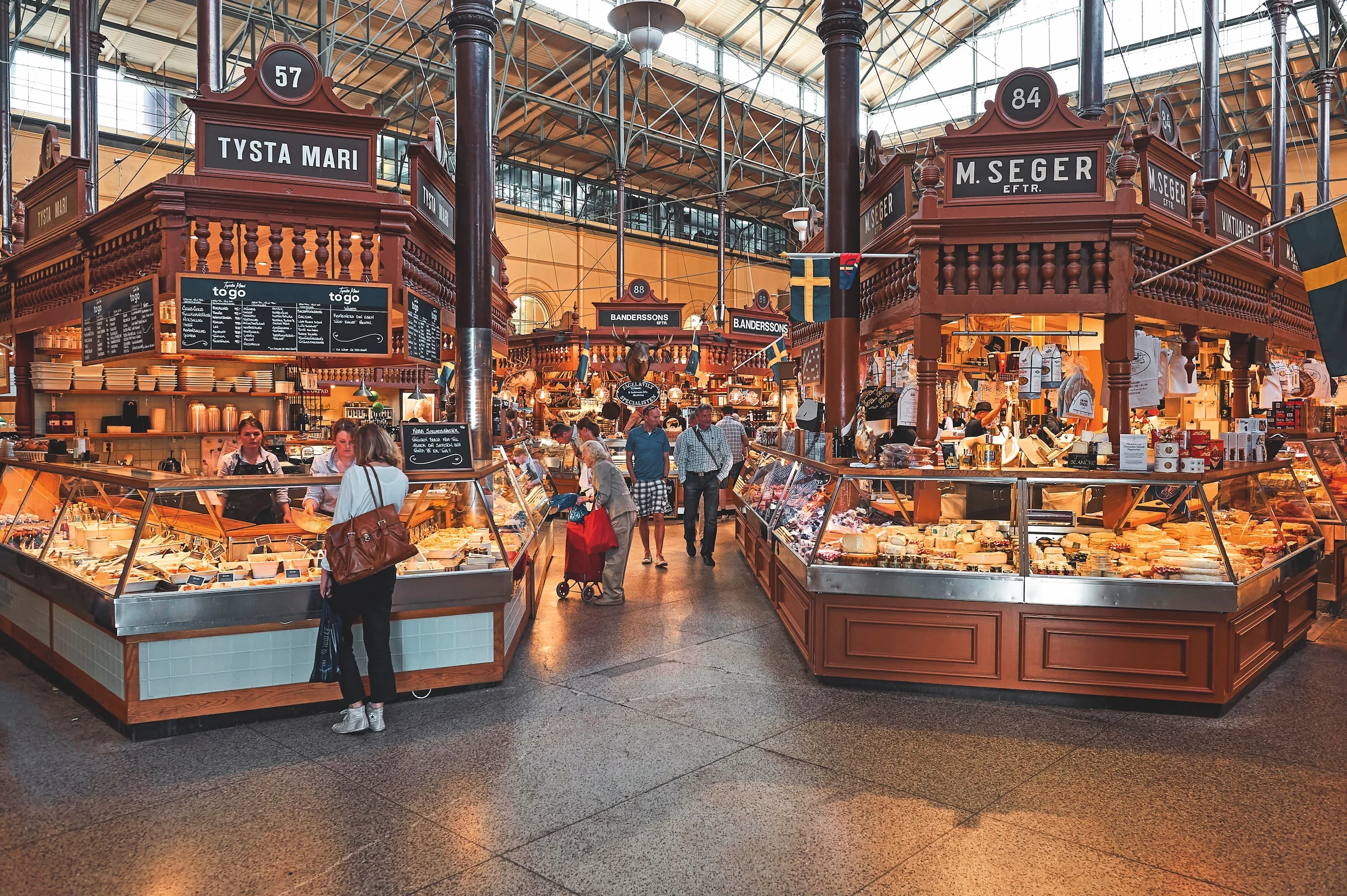
In Italy and in Europe in general there is a great wealth of gastronomic traditions, of small food shops that sell products that are sometimes unobtainable as soon as you leave the perimeter of that particular municipality, or artisan bakeries of towns that religiously preserve the art of baking as it was done in the past and that offer characteristic breads, unobtainable in large-scale retail trade, including gourmet ones. Anyone who goes to Spain makes an obligatory stop in the Mercadona in search of artisanal jamón ibérico flavored chips, or to have their ham cut “with a knife” by expert cutters, at super prices. In Greece you stop in the neighborhood bakeries for a hot bougatsa (cream puff), while in the Netherlands you buy the famous caramel waffles (stroopwafel) or bitterballen (fried meatballs) from the Febo vending machines, the famous Dutch chain of automated fast food restaurants, famous above all in Amsterdam for its “from the wall” (snackmuur) sales system. In Portugal, in Lisbon, tour among the old grocery stores in search of the historic sardine cans, while in Stockholm you can’t skip the Östermalms market and in Oslo the Mathallen market. The street markets of the Baltic cities of Tallinn (Estonia), Riga (Latvia) and Vilnius (Lithuania) are famous for the incredible abundance of fresh berries during the summer season.
Italy is a snackpacking paradise. Even the smallest town is full of unique culinary offerings, often offered in markets or on street corners like in Palermo among the alleys of the Ballarò and Vucciria markets where sfincione and arancine are sold for a few euros in small stalls. In Genoa, snackpacking is done by walking in the alleyways with the classic focaccia or a parcel of fried panissa while in Puglia, the king of the traveling snack is the Salento pasticciotto or a bag of hot taralli bought in Bari Vecchia. But the tom tam of millennials also passes through supermarkets. For example from Esselunga, where focaccias are a must.
How to go without fail? The web offers a series of specific applications. Starting with Street Food App, the global map for those looking for kiosks and which tracks the position of street vendors in real time, while Too Good To Go is used by snackpackers to locate historic bakeries, pastry shops and neighborhood delicatessens. TasteAtlas and OpenStreetMap geolocalise traditional local snacks and the kiosks or historic local markets where you can buy them.
Anyone who thinks this is just a way to save money is wrong. Maybe there is also this, if those who travel have a limited budget, but street food has seduced well-known and unsuspected people. King Charles III has revealed a great passion for traditional meat pies (pasty) sold in British mobile kiosks, David Beckham is famous for his stops in the markets of Singapore or Vietnam to taste the typical “pho” street soups, Bella Hadid often shares on social media her breaks based on pizza by the slice in New York or stuffed piadinas in European markets.
Street food has become so viral that even the Michelin Guide couldn’t help but give it a look and awarded five cheap but gourmet kiosks: the Taqueria El Califa de León in Mexico City, in the San Rafael neighborhood, a small kiosk specializing in Mexican tacos that can be eaten for less than 5 euros; Hawker Chan in Singapore, opened by Chan Hong Meng, one of the best-known chefs in all of Asia, where a dish costs just over 2 dollars; also in Singapore, Hill Street Tai Hwa Pork Noodle, famous for its handmade noodles (a dish around 9 euros). In Bangkok, Raan Jay Fai has become a pilgrimage destination for fans of the genre, thanks to its Crab omelette and its Drunken noodles.
Finally in New York, at the Village, there is Jeju Noodle Bar: the main dishes on the menu are the Truffle Cheese Myun, the Wagyu Ramyun and the Toro Ssam Bap, with truffle and cheese respectively, with the Wagyu, Japanese meat, and with the Toro, which is the most prized part of the tuna in Japanese sushi.
Which then, with supermarket or shop snackpacking, also changes the world of souvenirs. No more plastic “souvenirs”: do you want to put a box of regional biscuits, or vacuum-packed cheese and ham?