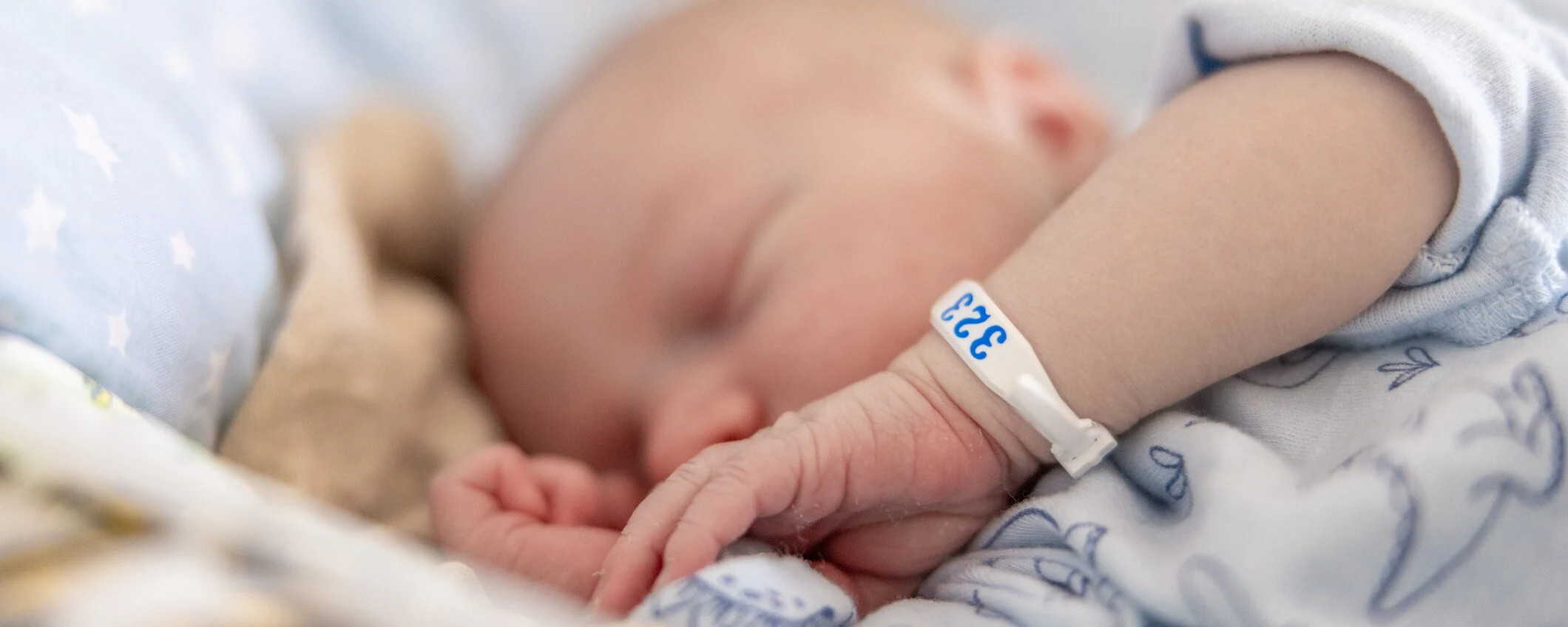
The government is studying a pension account opened at birth, with an initial payment from the State and voluntary contributions from parents and family members. The model looks to Germany, where a similar system is already planned
A social security current account that opens the same day you are born, with the first euros paid directly by the State, then voluntarily funded by parents and family members and, later, by the beneficiary himself once he enters the world of work. It is the idea that the government is working on, as explained by the Minister of Labor Marina Calderone. The principle is simple: give that initial money time to grow, taking advantage of compound interest over a very long horizon, even sixty years or more. For now, everything remains a hypothesis under study, which the government is considering including in the next budget law.
What is the birth pension fund and how would it work
At the birth of each child, an individual pension position would be opened, a sort of savings account dedicated only to him, distinct from any other family account. The State would finance it from the start, with an initial payment, a small initial capital. From then on, the fund could be fed on a voluntary basis: parents, grandparents or other family members could decide to pay additional sums, perhaps on the occasion of birthdays or anniversaries, until they reach the age of majority. Once an adult, the beneficiary himself would be able to continue with the contributions, ideally when he starts working and having his own income. In this way, the fund would accompany the person throughout their life, first as a gift from the State and the family, then as a personal savings choice. Public resources? “The coverage can be found, without subtracting it from other instruments, especially since small amounts are enough to start the social security fund at birth,” declared Minister Calderone. The project is part of a process of strengthening complementary pensions that the government has already started. It would not be a question of waiting for the first salary to start building a supplementary pension, but of starting decades in advance.
The German model and the simulations: how much could be accumulated
There is a precedent: the German Frühstart-Rentethe bill approved in mid-August by Friedrich Merz’s government. In Germany the state will pay 10 euros per month for each child aged 6 to 18, for a total of 1,440 euros each. The money is invested in the financial markets and not left idle in an account, so as to benefit from compound interest: the earnings are reinvested and in turn produce other earnings, year after year. The more time one has, the more powerful this effect becomes, and a child has six or seven decades ahead of him before retirement. The German Ministry of Finance has calculated that, with an average return of 7% per year (plausible estimate, not guaranteed), those 1,440 public euros could become around 53 thousand euros at 65 years old. If parents added another 10 euros per month up to the age of 18, the capital would rise to around 107 thousand euros. However, they are projections net of costs but not of inflation, which over decades can reduce the real value of these figures. Applying the same mechanism to a hypothesis of payment from birth, with the capital invested up to 67 years of age, the result changes greatly depending on how much is paid and how much the investment yields. With 10 euros a month, you would reach around 12 thousand euros with a return of 3%, 38 thousand with 5%, 116 thousand with 7%. With 20 euros a month, the figures rise to around 24 thousand, 75 thousand and 232 thousand euros and with 50 euros a month, you can exceed half a million euros, before taxes. These are purely indicative numbers: in Italy key details are still missing, such as the amount of the initial state contribution and the type of investment chosen.
Who would manage the fund and the next steps
Who will really decide how to invest the social security savings of millions of Italian children? The idea came from the president of INPS Gabriele Fava, who proposed entrusting the management of the new fund to the institute, and Minister Calderone accepted it positively. However, not everyone agrees: the CISL fears that entirely public management would expose children’s savings to the risk of being used for other purposes in the future, as has already happened with severance pay. The union instead proposes to involve the negotiating funds, which already manage billions in social security savings with low costs and under the control of Covip. At the moment the pension fund at birth remains only a hypothesis under study: no starting date, no defined amount, no regulatory text. The next few weeks, as the economic maneuver approaches, will be decisive in understanding whether this idea will really find space in the budget law, and with what rules.