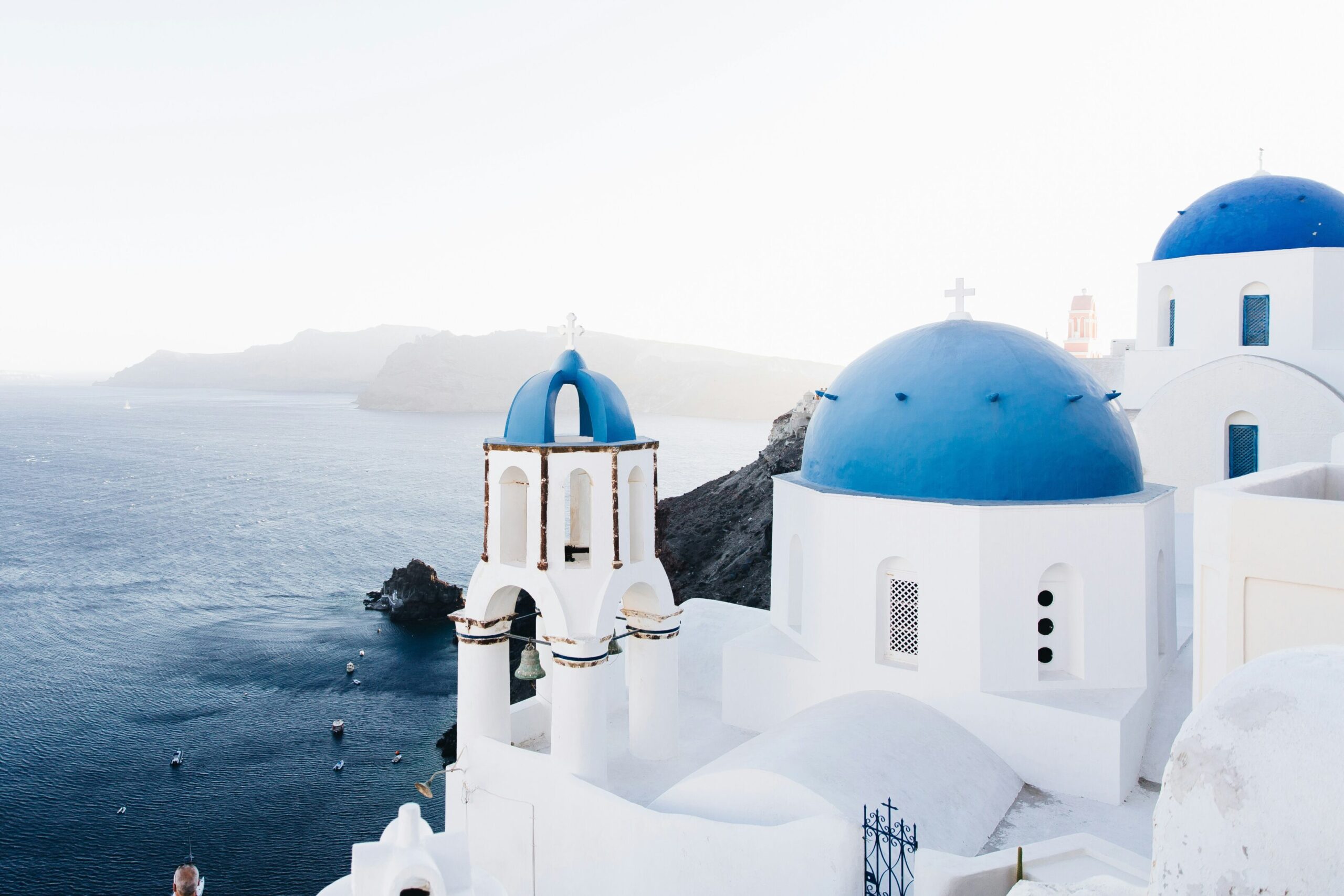
Traces, diaries and aesthetic pilgrimages along the routes of the great authors, to discover the panoramas that changed entire careers
There is no more uncertain fate than that of travel books written by literate authors, a much more vulnerable category. The man who writes a travel book hands himself into the hands of his adversaries. Of course, the topic of travel is wonderful in itself and, for this reason, the multitude of readers appreciate it even more in the preparation period or during a holiday. Roland Barthes himself, in his essay The writer on holidaynoted how it is almost impossible for an author to completely unplug, even while relaxing on the beach or skirting the most pristine bays. If our life is a long journey, for writers the journey is a continuous source of inspiration: changing one’s environment always has surprising effects on the creative imagination. In this article you will discover how some masterpieces of literature were born from an encounter with a place, following a period away from home or after having embraced a new life in a foreign country. Sometimes travel can change the entire course of a career or reveal a latent calling. Exploring the world is much easier today than in the past: in the hyper-connected time, the landscapes and sounds of other countries are at your fingertips, while, before globalization, traveling could prove extremely adventurous or even expensive, if you didn’t want to give up a certain lifestyle. But, after all, a traveler is much to be envied: for the instinct that drives him, for the courage that sustains him and for being himself a spectator of those characteristic human activities, in their picturesque sceneries. Many of these writers have managed to turn their destinations into tourist attractions. In this way they encouraged readers to follow in their footsteps, fueling those aesthetic, almost literary pilgrimages, during which one goes in search of the places described by one’s idols or the residences where masterpieces were born. I can list a few. From Federico García Lorca, with his wanderings in the Big Apple, where he wandered into jazz clubs, musical theaters, restaurants and speakeasies – prohibitionism was still in force -, experiences that gave rise to the collection Poet in New York published by Garzanti, written in room 1231 of John Jay Hall, in the heart of Columbia University. The Paris of James Baldwin, who every day, with a small notebook and a fountain pen, went to the upper floor of the Café de Flore, on the corner of boulevard Saint-Germain and rue Saint-Benoît, sipping coffee and scribbling until late in the evening, and then usually going with friends to the nightclubs, continuing to drink until late, with possible detours to some French-Algerian restaurant in Pigalle to smoke hashish, and have breakfast at dawn in one of his favorite cafes, very cheap, near the Les Halles market. Among his favorite destinations were also L’Abbaye, in rue de Jacob, and Chez Inez, a jazz venue with soul food cuisine, where, left broke, he procured a portion of fried chicken and offered in exchange a full-throated performance of The Man I Love by Ira Gershwin. Shortly thereafter, Baldwin used these notes to write Giovanni’s room published by Fandango, a novel of unique intensity and exceptional beauty: hypnotic, intimate, heartbreaking. Those years were mirabilis, for the writing of novels, as also happened for the new literary talent of F. Scott Fitzgerald, witty social chronicler of the jazz age and of the new bold gesture of tanning, a fashion, which owed its promotion to Coco Chanel on the pages of Vogue. Likewise, the French Riviera had become the favorite destination of a group of American artists with a passion for sunbathing, including Fitzgerald, his wife Zelda and husband and wife Gerald and Sara Murphy. One of the symbolic places of that world was L’Hôtel du Cap-Eden-Roc, which would later inspire the American writer in the description of Tender is the night published by Minum Fax. Or the traveler Katherine Mansfield, a New Zealand writer, passing through in the city of Bad Wörishofen, in the tender spa park nestled among the Bavarian Alps, where a statue dedicated to her can still be admired today: the honors paid to Mansfield do not appear at all obvious, if one thinks of the sharp portraits of Wörishofen present in her debut collection of 1911, A German pension published by Spiga Meravigli. Having so far only spoken of masterpieces of the past, we cannot fail to mention contemporary traveling writers, who require careful admiration on your part. Let’s start with Diana Darke’s journalistic reportage in Syria. An expert in Islamic culture, the author has edited numerous travel guides dedicated to Islamic countries and has published My home in Damascus published by Neri Pozza, where the reader comes across the magnificent Ottoman palaces, places where ancient and recent history intertwine. Among the many authors, we can conclude with a young Venetian, Gianni Dubbini Venier, specialized in Archeology of the Silk Road and History of Art of South Asia at the School of Oriental and African Studies (SOAS), who published The adventurer. On the trail of Niccolò Manucci from Venice to the Strait of Hormuz published by Neri Pozza, winner of the Chatwin Viaggi di carta Award for best first work. We are in 1653: a vessel leaves the night lights of the Doge’s Palace with a destination: the unknown. A journey of over five thousand kilometers in the footsteps of Manucci, together with the photographer Angelica Kaufmann, after having reconstructed his adventures in the archives of half of Europe. What you have in front of you is just a small atlas dedicated to wandering writers and the places, near and far, that inspired them.