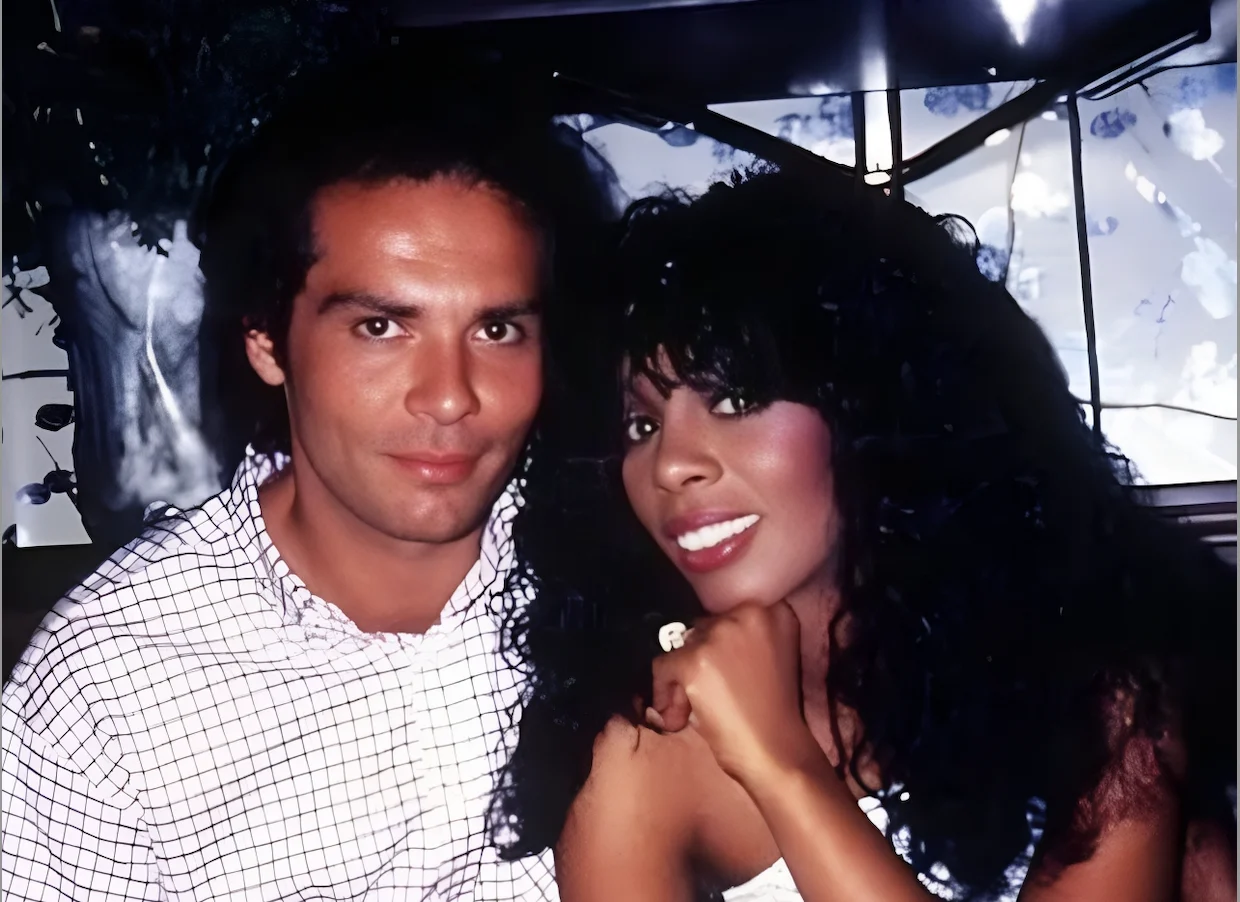
Interview with the musician and composer, who shared his life with the legendary vocalist for thirty years
«March 13, 1977 is the day that changed my life. Donna arrives at a friend’s house fresh from a driving school lesson. I was sitting at the table with Joe Esposito and Andy Hoganson, my bandmates in Brooklyn Dreams. Leaning against the table were several guitars. She sits down without too many pleasantries and we start playing, improvising. And it’s chemistry right away: it’s clear that we like the same music, that we have a common background.”
This is how Bruce Sudano, New York musician and composer, remembers his first meeting with Donna Summer. Love to Love You Baby and I Feel Love had already consecrated her as the queen of disco music; that afternoon, however, their story begins far from the spotlight. «We recorded the first song written together on a cassette. I looked for that tape for a long time, but I was never able to find it” he explains.
The composition session continues in the following days. «We wrote and talked about our stories, what inspired us musically, our families and spirituality. By the end of that first week we knew each other very well. As the days went by, the situation became more complicated: we had to find a way to end the relationships we had in progress in order to really begin our own”. They married in July 1980 and accepted the most difficult challenge: keeping love and career together. Sudano publishes his first solo album, Fugitive Kind, an inspired and refined album, present for the first time on digital platforms a few days ago. «In my late twenties, the priority in my life was music. And it was like that for Donna too. The song that gives the album its title talks about two people who come to understand that you can’t escape forever and that sometimes the heart demands priority.”
Among Sudano’s indelible memories are the late-night sessions at the Magic Wand, a recording studio in Burbank (Los Angeles). «If we had an idea in the middle of the night, I would call the owner of the studio, he would prepare the microphones, put the tape in the recorder, and then we would arrive with the other musicians. They would record whatever came to mind for hours and hours.”
Thus was born Bad Girls, Donna’s 4 million copy hit. «We took it to Neil Bogart, the boss of Casablanca Records. He liked it a lot, but he had just signed Cher and said that song would be suitable for her. Donna’s response was clear: “No, this song is mine. I want to do it myself.” Giorgio Moroder’s magical touch then made the song a worldwide success.
Sometimes all it took was an ordinary scene for Donna to hear a song coming on. After a Grammy ceremony, in a restaurant, he entered the ladies’ room and saw a woman who worked in the restaurant asleep in a chair, exhausted from fatigue. Returning to the table, she wrote the title of her next piece on a napkin: She Works Hard for the Money.
Also Starting Over Again was born from an intimate story. Sudano was writing it in a room at home, thinking about his parents’ possible divorce. Donna passed in the doorway and suggested a verse to him. The next day she was expected on the Tonight Show to promote a new single. «He told me he would also sing Starting Over Again. I asked her why, since the goal was to promote her new album. He replied: “Maybe they’ll let me do two songs. If I sing it, maybe your parents will stay together.” remember. «A gesture that says a lot about Donna’s heart and the person she was» The parents eventually divorced. But the song found another home: the manager of Dolly Parton he called to ask for it, he recorded it and it was immediately first place in the American charts.
Songs, in Sudano’s life, never remain just songs. Tell Me I’m Not Dreaming (Too Good to Be True) he wrote with Michael Omartian and Jay Gruska for Jermaine Jackson. Jermaine recorded a guiding voice; Michael heard the piece and wanted to participate. «He entered the studio and asked us: “Can I sing this song too?” Of course we said yes.” The collaboration became a duet and the single began to rise in the charts. «He was then “curbed” because Michael’s label had no intention of allowing a rival major label (Jermaine’s; ed.) to capitalize on the voice of the king of pop».
Finally, one last touching memory: with Donna (who died in 2012 from lung cancer), Sudano shared over thirty years of life: a love intertwined with family, music and work. «She’s not just a disco diva. She was a great author, a great performer and an extraordinary entertainer. On stage he didn’t just perform: he took the audience by the hand and led them on a journey. He knew how to lift your soul, lull you into a moment of absolute intimacy and then make you leave the stadium with a light heart. Because she was like that… She painted, designed clothes for the stage, furnished the house: at a certain point she transformed the garage into an art studio” he underlines. «The truth is that she excelled in every single aspect of her life: as an artist, wife, mother of three daughters and sincere friend. It didn’t matter where she was: she was, simply, the light of the room.”