- Researchers have identified 12 proteins associated with prostate cancer diagnosis more than 15 years after blood collection.
- Notably, the protein GZMK was associated with future prostate cancer risk, suggesting a possible role for immune processes in the disease’s development.
- Seven proteins were associated with aggressive disease, including ANKRD1, as well as proteins already linked to known prostate cancer genes, including ERBB3, KRAS, and NRAS.
- Although the findings could help improve understanding of prostate cancer development and improve future risk assessment, most associations were modest and further research is still necessary.
Prostate cancer is the second most commonly diagnosed cancer in men worldwide, and the fifth leading cause of cancer death among men. Yet, despite being common,
Early detection is therefore crucial, as identifying prostate cancer at an earlier stage can improve treatment options and outcomes, highlighting the importance of understanding the factors that contribute to its development and progression.
Now, research led by scientists at Oxford Population Health have identified blood proteins linked to immune function, cell interactions, and blood vessel formation that may provide clues to a man’s future risk of developing prostate cancer, including aggressive forms of the disease.
The study, published in European Urology and presented at the American Society of Human Genetics Annual Meeting, identified 12 proteins associated with prostate cancer diagnosed more than 15 years after blood samples were collected.
The researchers also found 7 proteins linked to aggressive prostate cancer, including a protein associated with cancers that had spread or ultimately proved fatal.
Although the findings offer new insights into the biology of prostate cancer, the researchers emphasize that the identified proteins are not yet suitable for use as clinical tests.
What did the study find?
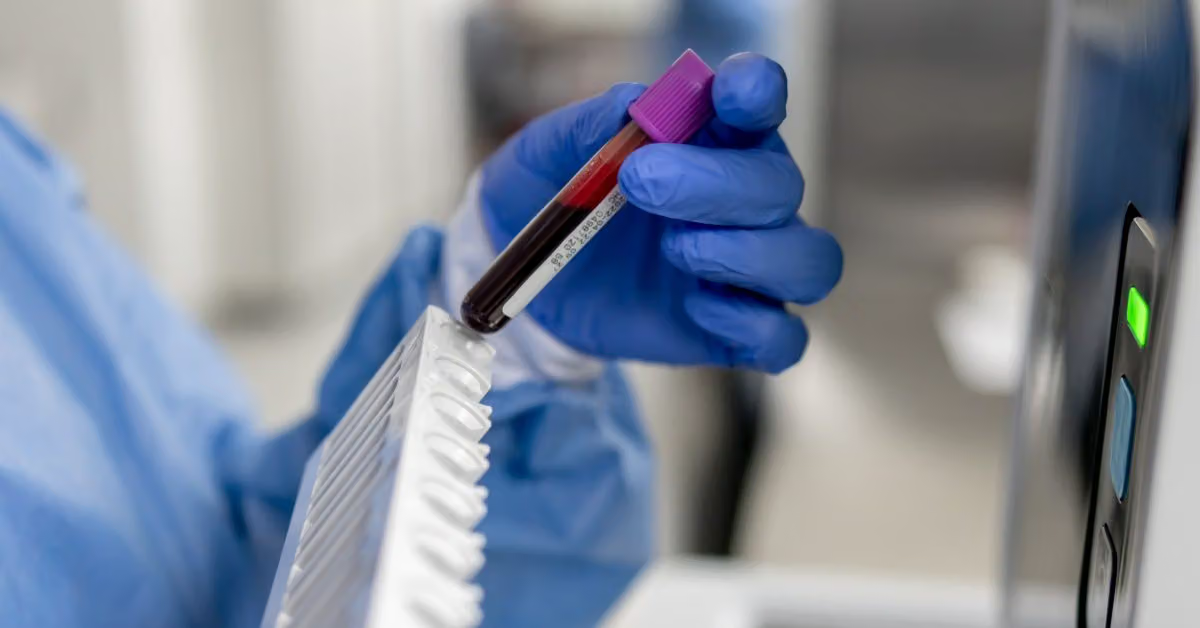
Researchers analyzed blood samples from 982 men who subsequently developed prostate cancer and 1,573 men selected at random from the European Prospective Investigation into Cancer and Nutrition (EPIC) study.
They measured more than 6,000 proteins in the participants’ blood and examined whether protein levels were associated with a later prostate cancer diagnosis. Participants were followed for approximately 16 years.
The analysis identified several proteins associated with prostate cancer risk, including proteins involved in immune responses, interactions between cells and surrounding tissues, and the formation of new blood vessels.
These processes may help researchers understand the biological changes associated with the development of prostate cancer, particularly forms of the disease that are more likely to progress or spread.
“Our findings suggest that biological changes linked to prostate cancer, particularly aggressive disease, may be detectable in the blood many years before clinical diagnosis,” Zhe Huang, PhD MBBS, MPH, first author of the study and a postdoctoral epidemiologist at Oxford Population Health, told Medical News Today.
“We identified several proteins associated with aggressive prostate cancer, including circulating proteins encoded by known prostate cancer driver genes. These findings provide new clues about the biological pathways that may contribute to aggressive disease, potentially opening up opportunities for future prevention strategies.”
—Zhe Huang, PhD MBBS, MPH
Immune system proteins may play role in prostate cancer risk
One notable discovery involved granzyme K (GZMK), a protein produced by immune cells that helps recognize and destroy abnormal cells.
The researchers identified an association between GZMK and prostate cancer diagnosed more than 15 years after blood collection. This finding raises the possibility that immune system activity may be involved in the biological processes associated with prostate cancer risk long before a diagnosis.
“GZMK is a protein produced by immune cells, particularly certain T cells and natural killer cells,” explained senior study author Karl Smith-Byrne, DPhil, associate professor and senior molecular epidemiologist at Oxford Population Health.
“We found that circulating GZMK was associated with prostate cancer risk more than 15 years before diagnosis. This is particularly interesting because prostate cancer is generally considered an immunologically ‘cold’ tumor.”
—Karl Smith-Byrne, DPhil
“Our findings raise the possibility that immune-related processes may be involved much earlier in prostate cancer development than previously thought. However, whether GZMK reflects a protective immune response, underlying immune regulation or other biological processes remains to be investigated,” Bryne added.
However, the study does not establish whether GZMK helps protect against prostate cancer, contributes to its development, or simply reflects other biological processes linked to the disease.
“Our findings point towards several biological processes, including immune function, cell adhesion and blood vessel formation, which may be involved in prostate cancer development,” Huang noted.
“These protein differences could reflect underlying biological susceptibility or early changes in pathways involved in cancer development. However, the exact mechanisms remain unclear, and further experimental studies will be needed to understand these relationships,” he added.
7 proteins linked to aggressive prostate cancer
The study also identified seven proteins associated with aggressive prostate cancer.
One protein,
“ANKRD1 is a protein involved in cellular stress responses and the regulation of gene expression. Previous research has also implicated it in cancer-related processes, although its precise role in prostate cancer remains unclear,” Smith-Byrne told MNT.
“In our study, ANKRD1 was consistently associated with several aggressive forms of prostate cancer, including advanced and fatal disease. This makes it a particularly interesting candidate for further investigation. However, additional studies are needed to establish whether ANKRD1 plays a direct role in disease progression or reflects other underlying biological processes.”
—Karl Smith-Byrne, DPhil
The researchers also found associations involving proteins produced by genes already known to be important in prostate cancer, including ERBB3,
These findings may help scientists investigate the molecular pathways involved in the early development of aggressive prostate cancer.
However, detecting an association between a protein and a future diagnosis does not necessarily mean that cancer was already present when the blood sample was collected. Instead, the protein levels may reflect biological processes associated with the subsequent development of the disease.
Could blood proteins help predict prostate cancer risk?
Identifying biological markers associated with future prostate cancer risk could eventually help researchers develop better approaches to identify men more likely to develop clinically significant disease.
This is particularly important because prostate cancer
As such, identifying blood proteins linked to prostate cancer years before a diagnosis could help with understanding how males who develop aggressive prostate cancer differ biologically from those who do not, potentially contributing to improved risk assessment.
“…this is one of the exciting longer-term possibilities,” Huang noted. “One of the major challenges in prostate cancer is distinguishing men who may develop aggressive, life-threatening disease from those whose cancers are likely to remain slow-growing.”
He asserted that the study was based on identifying proteins linked to prostate cancer risk and deciphering their potential biological roles, instead of developing a risk prediction test.
“Although some proteins were associated with aggressive disease, this does not necessarily mean they can accurately predict an individual’s risk. Further studies in larger and more diverse populations, together with dedicated risk prediction analyses, will be needed to explore their potential clinical applications,” he added.
What are the limitations of the research?
Although the study included a large population and examined thousands of proteins, some findings were supported by additional population studies and genetic evidence, while others could not be confirmed. The researchers also have not established whether the identified proteins directly contribute to prostate cancer development or are indicators of other underlying biological processes.
Importantly, the proteins are not currently suitable for use as clinical screening tests. Additional research will be necessary to establish whether they can improve the prediction of aggressive or clinically significant prostate cancer.
The findings should therefore be considered an early step toward understanding the biology of the disease rather than evidence that a new blood test is ready for clinical use.
Future research through the Prostate Cancer Aetiology and Prevention Program (PCAP), funded by Cancer Research UK, will investigate whether these findings could contribute to improved approaches to predicting or preventing prostate cancer.
For now, the study provides new evidence of biological differences associated with future prostate cancer risk, while highlighting the need for further research before these findings can inform clinical practice.