A child died in New York State, the first death associated with measles recorded in the area for over thirty years, and a disease which, despite decades of vaccination campaigns, continues to circulate and cause even very serious consequences. The news comes from the United States, but rekindles an alarm that also concerns Italy, where infections have started to increase again and where, contrary to what one might think, Not only are children particularly involved, but also young adults between 15 and 39 years oldmany of whom are not vaccinated.
The little boy’s death, which occurred in Lewis County, in the northern part of New York State, was confirmed on November 2 by local health authorities, who did not release further details on his clinical condition or vaccination status, asking to respect the family’s privacy. An episode that takes on an even more worrying significance in light of the American epidemiological situation: according to the Centers for Disease Control and Prevention (CDC), as of October 29, 2026, the United States had already recorded 4,852 confirmed cases of measlesmore than double the 2,289 reported in all of 2025.
Measles, what happened in New York and why the alarm is back
To understand the significance of the news, we need to go back to 2000, when the United States declared the endemic transmission of measles eliminated, a result achieved thanks to widespread vaccination campaigns and a particularly effective health surveillance system. Elimination, however, does not mean the definitive disappearance of the virus: the disease can be reintroduced through people infected abroad and start spreading again when it encounters communities with insufficient vaccination coverage.
This is precisely one of the aspects that most worries the health authorities. In the United States, the percentage of children vaccinated against measles, mumps and rubella went from 95.2% in the 2019-2020 school year to 92.4% in 2025-2026, falling below the 95% threshold considered essential to limit the circulation of an extremely contagious virus.
In New York State, where as of October 24, 178 cases had been reported since the beginning of the year, Governor Kathy Hochul had already declared a state of health emergency at the beginning of October, introducing extraordinary measures to facilitate the administration of vaccines and contain outbreaks. The child’s death has brought attention to the consequences of a disease often perceived as an outdated childhood infection, but which can cause pneumonia, encephalitis and, in the most serious cases, death.
Measles in Italy, infections on the rise: 2026 data
Even in Italy, measles continues to represent a public health problem and the data collected by the Ministry of Health show an increase in infections compared to the previous year.
According to the ministerial epidemiological analysis relating to the period 2024-2026, in the first five months of 2026, 472 confirmed cases of measles were recordedcompared to 322 in the same period of 2025, with an increase of approximately 47%. A number still lower than the 509 cases confirmed in the same period of 2024, but sufficient to highlight how the circulation of the virus remains significant.
Also considering possible and probable cases, reports in the first five months of 2026 rise to 609, compared to 342 the previous year. The increase is particularly evident in some regions, including Campania, Calabria, Lazio and Tuscany, where the health authorities have recalled the need to strengthen epidemiological surveillance and recover missing vaccinations.
The picture is also confirmed by the most recent data from the European Center for Disease Prevention and Control (ECDC): between October 2025 and September 2026, Italy reported 651 cases, making it the country with the highest number of notifications in the European Union and in the European Economic Area during the period considered. In September 2026 alone, 14 Italian cases were reported, out of a total of 66 in the countries that have recorded infections.
Who risks the most in Italy: pay attention to young adults between 15 and 39 years old
One of the most significant aspects emerging from the Italian data concerns the age of the infected people. Measles is still frequently associated with childhood, but 2026 findings indicate that the majority of notified cases concern young adults between 15 and 39 years old.
In this age group, 94.7% of infected people for whom the vaccination status is known are not vaccinated. A particularly high percentage, which highlights the importance of vaccination recovery campaigns aimed at those who have not completed the expected cycle or have never received the vaccine.
The risk especially concerns those who do not have documented immune protection, but complications can be particularly serious in very young children, adults, pregnant women and people with a compromised immune system.
Measles should therefore not be considered an exclusively pediatric disease. In adults, the infection can cause major complications and require hospitalization, while in pregnant women it can increase the risk of miscarriage, premature birth and other consequences for maternal and fetal health.
What are the symptoms of measles and how to recognize them
Measles is caused by a virus that is transmitted through the air and can spread very easily when an infected person coughs, sneezes or breathes in an environment shared with other people.
The first symptoms generally appear after an incubation period of approximately 7-14 days and can easily be confused with those of a common respiratory infection. The disease initially manifests itself with high fever, persistent cough, runny nose, red and watery eyesaccompanied by a general feeling of malaise.
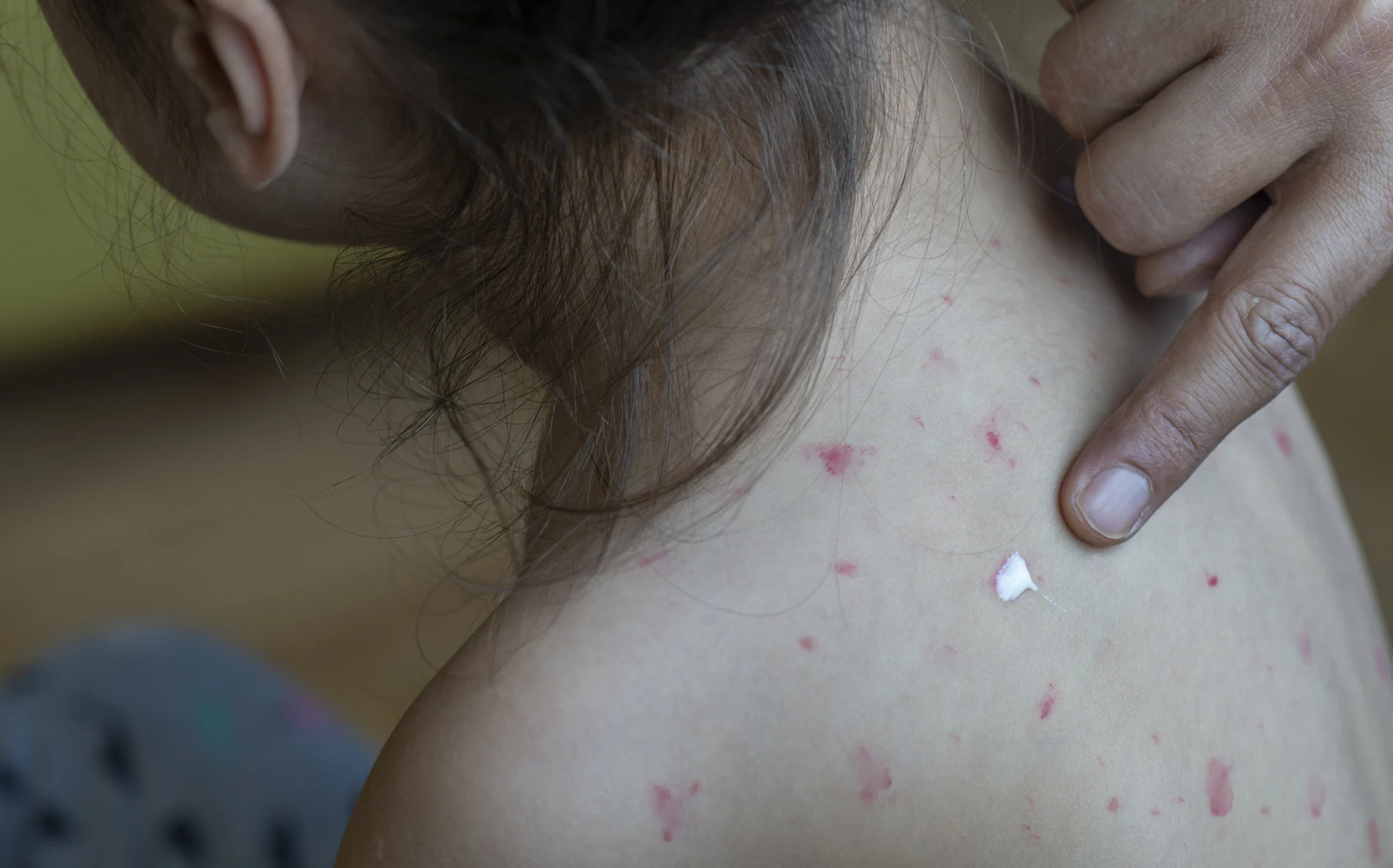
Only in a later phase does the most characteristic sign of measles appear: a skin rash composed of red spots that generally begin on the face and behind the ears, and then progressively extend to the neck, trunk and limbs.
Another possible sign is represented by the so-called Koplik spots, small whitish lesions that can appear inside the mouth before the rash.
The problem is that a person suffering from measles can be contagious as early as four days before the spots appear on the skin and continue to transmit the virus for up to four days after the onset of the rash. This means that contagion can occur when the disease has not yet been recognized.
Because measles can also be dangerous in adults
In most cases measles resolves, but always considering it a mild disease would be a mistake. Complications can affect different organs and include ear infections, severe diarrhea, dehydration and respiratory infections, up to more serious clinical pictures such as pneumonia and encephalitis, an inflammation of the brain that can cause permanent neurological damage.
According to the World Health Organization, the most frequent and serious complications mainly affect children under five years of age and adults over thirty years of age, as well as immunosuppressed people or people with particularly vulnerable conditions.
Globally, despite the availability of an effective vaccine, measles caused around 95 thousand deaths in 2024, mainly among young children who were unvaccinated or incompletely vaccinated.
Measles vaccine: how many doses are needed and what to do if you are not vaccinated
The main protection against measles remains vaccination, administered in Italy through the combined vaccine against measles, mumps and rubella (MMR), or in the formulation that also includes chickenpox.
The national vaccination calendar includes two doses, generally administered around 12 months of life and subsequently at five years. Completion of the cycle guarantees high and long-lasting protection, with an effectiveness against measles of approximately 97%.
For adults who do not remember having been vaccinated or are not sure whether they have completed the cycle, the first step is to check their vaccination status through their health records, their general practitioner or the ASL vaccination service. In the absence of adequate documentation, healthcare personnel can evaluate the need to recover the missing doses.
Particular attention must be paid to people who have come into contact with a confirmed case of measles. For susceptible individuals, vaccination within 72 hours of exposure may offer protection or attenuate the disease; in certain situations, especially for those who cannot receive the vaccine, immunoglobulins can instead be used within six days of contact, according to medical indication.
Anyone who suspects they have contracted measles should contact their doctor by telephone before going to the clinic or emergency room, so as to receive the necessary information and avoid exposing other people to the risk of contagion.
The decline in vaccinations and the risk of new outbreaks
The New York case is part of an international scenario in which vaccination coverage continues to represent one of the main critical issues for the control of infectious diseases. According to the World Health Organization, only 84% of children worldwide have received their first dose of measles vaccine in 2025, still lower than the 86% recorded in 2019.
The data highlights how difficult it is to maintain the results achieved by prevention, especially when the number of unprotected people increases and population groups are created in which the virus can circulate again.
In Italy, the Ministry of Health has explicitly drawn attention to the need to strengthen vaccination campaigns aimed at young adults and the most exposed categories, while simultaneously improving the timeliness of diagnoses and monitoring of outbreaks.
The death of the child in New York State thus represents the most dramatic sign of a problem that goes beyond American borders. Measles is not a disease that has disappeared nor is it an infection that only affects children: it is a virus capable of rapidly spreading again when the conditions necessary to contain it are no longer present. And the Italian data demonstrate how important it is not to underestimate the risk, even in adulthood.