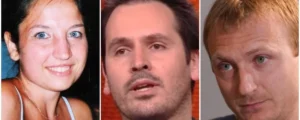

The Garlasco case and the request for trial for Andrea Sempio reopen questions about the conviction of Alberto Stasi, investigative errors and the role of magistrates, lawyers and journalists
We dealt with the Garlasco case in a recent issue of Panorama and, therefore, the Pavia Prosecutor’s request for indictment against Andrea Sempio did not catch me unprepared. From the new investigation, conducted by Fabio Napoleone – chief prosecutor who, speaking only with judicial documents and never with journalists, unlike many of his colleagues, has made confidentiality his key -, the Parma Ris, for years led with a certain arrogance by the then colonel Luciano Garofano, emerge in pieces. Now retired with the rank of general, the former commander has not lost his arrogant style and is always on TV, ready to deny that he and his men have made any mistakes or have forgotten some important element to identify Chiara Poggi’s murderer. Even if not many people talk about it, the Supreme Court was also devastated, which, after two sentences that acquitted Stasi, instead of putting the definitive stamp on the innocence of the victim’s boyfriend, ordered the re-trial of the appeal trial, practically opening the door to the conviction of the “blond with the icy eyes”.
Rereading the device with which the young man was sentenced to 16 years in prison gives one shivers, because – beyond a technical assessment which has only now been revealed to be false (Chiara’s blood on the pedals of Alberto’s bike, which was not blood and was probably the result of a laboratory error) -, the exculpatory evidence is transformed by the judges into incriminating evidence. Were there no traces of blood on Stasi’s soles? Well, clearly he must have thrown away the shoes he was wearing. These were never found and there is no evidence that he ever owned that type of footwear? Well, but in the shops he frequented, that particular brand was sold and if the smoking gun needed to frame him was not found it was only due to the coldness and cynicism of the young man, of whom a mysterious psychological profile was found in the investigation files, which describes him as a skilled manipulator, but whose author is not known. There is not only the anomaly of the bloodstains which, even though they are not there, become an element of accusation, because they would demonstrate that Stasi took care not to get his shoes dirty in killing his girlfriend. There is also the incredible absence of motive: Chiara and Alberto had not argued, they were a normal, affectionate and sexually active couple. But the judges dismiss the matter by saying that the motive must be sought within the couple itself. That is, the sentence admits that the reasons that may have pushed Stasi to murder his girlfriend are not there: no one, not even those who tried to invent the pedophilia trail, managed to find a reason that could have pushed him to kill Chiara in just a few minutes. And then the judges come out saying that the key to the crime must be sought within the relationship between the two. Admitting, therefore, that he had not found it. And if they didn’t find it, despite looking for it, who should find it? But, despite this, at the Court of Cassation, which had indignantly rejected Stasi’s double acquittal, this is fine and, therefore, a boy who had the sole fault of having been engaged to the victim of a brutal murder, spent 11 years in prison, only to then discover that the person responsible for the crime, perhaps, was a guy who the investigators and robbers had under their eyes from the first moment, but whom they ignored and we still don’t know why.
However, if the reputation of the RIS and some magistrates is shattered by the Garlasco case, I do not want to ignore the fact that, in this matter, many lawyers and journalists also have broken bones. In recent days, I have followed some talk shows dedicated to the request for indictment for Andrea Stasi. A show was staged on TV that would be an understatement to define as grotesque. I know the world of television, and I understand that the notoriety you get by frequenting certain salons, as well as being a promotional vehicle for your career, can go to your head. But the sports bar dialogues, although cloaked in legal jargon, that I heard from some lawyers gave me shivers, thinking that we were not discussing a missed penalty or even an unseen foul, but the conviction of a boy and a crime.
As for my fellow journalists, what do you want me to tell you? I believe they have reached one of the lowest points in the profession. For years they transformed themselves into Torquemada, giving credence to the most incredible anti-Stasi chatter and, today, they retreat, pretending to have been detached reporters. They staged trials without appeal and, now, they are clamoring for clarity, as if they had not been part of the Barnum circus that wanted Stasi guilty at all costs. How sad! I know that – together with the then Stasi lawyer, Angelo Giarda, and the current Giada Boccellari – the only ones who fought, immediately and without hesitation, believing in Stasi’s innocence, were Vittorio Feltri and a young reporter called Cristiana Lodi. Almost all the others, however, called for the gallows and now, when they are asked to account, as Milo Infante did with Piero Colaprico of Repubblica last week, they stammer, without having the courage to do the only right thing: to keep quiet and disappear.