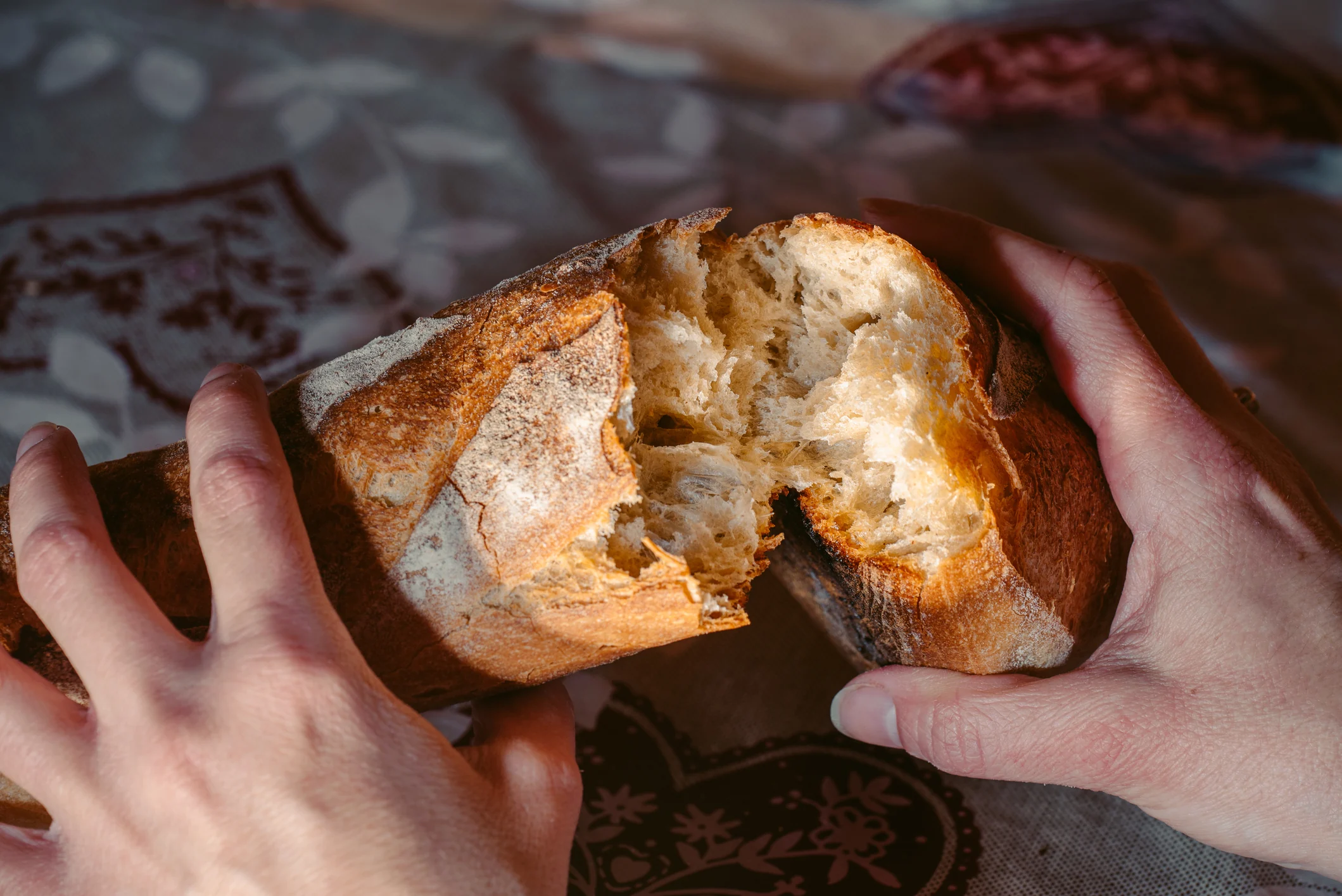
Bread is one of those purchases to which little attention is paid. It enters the shopping cart almost automatically, accompanies meals, and is rarely considered a major expense. Yet, in the space of a few years, even this daily food has become an indicator of the differences in the cost of living of Italians. To buy a kilo of soft wheat bread you can spend 3.11 euros in Florence and 5.16 euros in Padua. A difference of over two euros for the same product category, which translates into a gap of 66%.
The new investigation by Altroconsumopublished on November 16, 2026, which analyzed 933 prices in 161 stores in ten Italian cities. The result tells a less uniform reality than one might imagine: while some centers record even double-digit increases, others see price lists decrease significantly.
The most surprising data concerns the last three years. Considering the nine comparable cities, the average price of bread fell by 3.2% compared to 2023. But in five of these nine cities, buying it still costs more than before. And looking further into 2017, the average price increase reaches 32%.
The ranking of the cities: Padua and Bologna the most expensive, Florence the cheapest
Padua holds the least desirable record, with an average price of 5.16 euros per kilo for soft wheat bread. Immediately behind is Bologna, where you spend 5.12 euros. Both therefore exceed the psychological threshold of five euros.
Genoa and Milan also appear in the most expensive range, with prices above 4.50 euros per kilo. In the Lombardy capital the average is 4.55 euros, still a high value, despite the drop recorded compared to 2023, when Milan led the ranking.
At the other extreme is Florence, where bread costs on average 3.11 euros per kilo, followed by Naples with 3.23 euros. Rome and Turin both remain under 3.60 euros, while Palermo and Bari are in the intermediate range.
These are average prices recorded in the points of sale selected by the association, not rates applied without distinction in all the bakeries of the individual cities. The survey considered, when multiple varieties of the same type were present, those with the lowest price per kilo.
The territorial difference, however, is also significant when translated into a concrete example. A family that bought a kilo of bread a week would spend, at the average prices recorded, around 268 euros a year in Padua compared to 162 euros in Florence. The gap would be almost 107 euros, for the same quantity purchased. With two kilos per week, it would exceed 213 euros.
Since 2017, bread has cost 32% more: the highest increases in the South
To understand how much the price of bread has changed, we need to broaden the observation period.
According to Altroconsumo’s historical series, in 2017 a kilo of soft wheat bread cost on average 3.15 euros. In 2026 the average reaches 4.15 euros: one euro more for every kilogram, equivalent to an overall increase of around 32%.
Behind this average lie even more marked differences.
The city recording the highest price increase is Bari, with an increase of 67% compared to 2017. Followed by Naples, where bread costs 58% more, and Palermo, with an increase of 49%. In Padua the growth was 45%, while Bologna recorded +37%.
Much more limited, at least in percentage terms, are the increases in Milan (+15%) and Turin (+12%).
It is a result that calls into question a simplistic reading of dear bread as a predominantly northern phenomenon. Northern cities often maintain the highest absolute prices, but some of the largest percentage increases in the last decade have occurred in the South.
In other words, being still among the cheapest cities does not mean we have been spared from the increases.
Because in some cities the price has decreased compared to 2023
The last three years presents an apparently contradictory trend.
In the homogeneous comparison of the nine cities already analyzed in 2023, the average price of soft wheat bread went from 4.18 to 4.05 euros per kilo. A decrease of 3.2%, which at least partially interrupts the long season of price increases.
But the declines are not evenly distributed.
In Florence the price decreased by 24.3%, in Rome by 16% and in Milan by 12.2%. Palermo is moving in the opposite direction, with an increase of 10.5%, Bari (+7.7%) and Naples (+5.8%).
According to Altroconsumo, among the possible explanations for the slowdown are the reduction in wheat costs and, at least in some phases of the period, that of energy costs. The commercial strategies of supermarkets and bakeries may also have had an impact, with a greater presence of less expensive products.
However, there is an important clarification: the sales points examined in 2026 do not necessarily coincide with those of the previous survey. The differences therefore also reflect the composition of the offer and the sample observed.
In short, the average reduction does not mean that the price of each individual type of bread has decreased.
Supermarket or bakery? The difference can exceed one euro per kilo
The choice of shop also significantly affects the final bill.
The survey reveals that an average cost is spent on a kilo of soft wheat bread 3.61 euros in large-scale distribution versus 4.70 euros in traditional bakeries. The gap is 1.09 euros per kilo.
On a weekly purchase of one kilogram, it means a theoretical difference of around 57 euros per year. The potential savings naturally grows with the quantity purchased.
But not all cities follow the same trend.
In Turin, bread sold in bakeries costs on average 74% more than that of large-scale retailers. In Bologna, Padua and Palermo the gap is around 50%.
Bari, however, represents an exception: in the sample analysed, it is the traditional bakeries that are on average cheaper than supermarkets.
The overall data does not express a judgment on the quality of the products. The differences may depend on the types of bread available, the processing and the pricing policies of the individual businesses. To really compare two offers, it is essential to check the cost per kilogram, rather than limiting yourself to that of the single piece.
Wholemeal bread costs almost a euro more than traditional bread
It is not only the city that determines the price, but also the type of bread chosen.
Soft wheat remains the cheapest of the products considered, with an average of 4.15 euros per kilogram. Followed by baguettes and loaves, while wholemeal bread reaches 5.13 euros per kilo.
The difference compared to soft wheat bread is 98 cents, equal to approximately 24% more.
Even small-format sandwiches often have a relatively high price per kilogram. This is why a product that appears cheap because it is sold for a few cents or a euro per piece can be more expensive than a loaf of bread purchased by weight.
The comparison becomes particularly important for families who buy bread every day, choosing between fresh, packaged, wholemeal or long-life products.
The shopping cart is once again weighing on families
Altroconsumo’s monitoring comes at a time when the cost of living has started to grow significantly again.
According to preliminary estimates from Istat, in October 2026 Italian inflation reached 5.4% on an annual basis, compared to 4.2% in the previous month. The acceleration was fueled above all by energy prices, but the food component also contributed to the increase.
The so-called shopping cart, which includes food and home and personal care products, recorded an annual increase of 2.5%.
What makes the picture even more significant are the data on family budgets. In 2025, according to Istat, the average monthly expenditure for food and non-alcoholic drinks rose to 552 euros, compared to 533 euros in 2024. In the same year, 29.4% of families declared they had limited food purchases, reducing the quantity or quality of the products purchased.
Bread alone certainly does not determine the trend of the household budget. But it represents a concrete example of how apparently modest differences, repeated over time, can impact overall spending.
How to save on bread without sacrificing quality
The survey suggests that the first element to consider is not just where you buy, but what you buy.
Comparing prices per kilogram, evaluating larger packages when compatible with family consumption and checking the differences between bakeries and supermarkets can help limit spending.
Another precaution concerns waste: buying realistic quantities, storing bread correctly and freezing what will not be consumed immediately allows you to avoid repeated purchases.
However, the central data of the research remains another. In 2026 the same food may have profoundly different prices from one city to another, while the reductions of the last three years have not yet canceled out the increases accumulated in previous years.
Bread costs less on average than in 2023 in comparable cities, but continues to be much more expensive than nine years ago. And it is precisely this distance between the recent slowdown in prices and the weight of past price increases that tells how much Italians’ daily spending has changed.