
The story of a 56-year-old Sicilian father, the mobilization of his daughter Sara and the case of Jessica Scarpa, who obtained financing for the new drug in Lombardy. Daraxonrasib has received European authorization: now the challenge is to ensure timely and equitable access to all patients who can benefit from it.
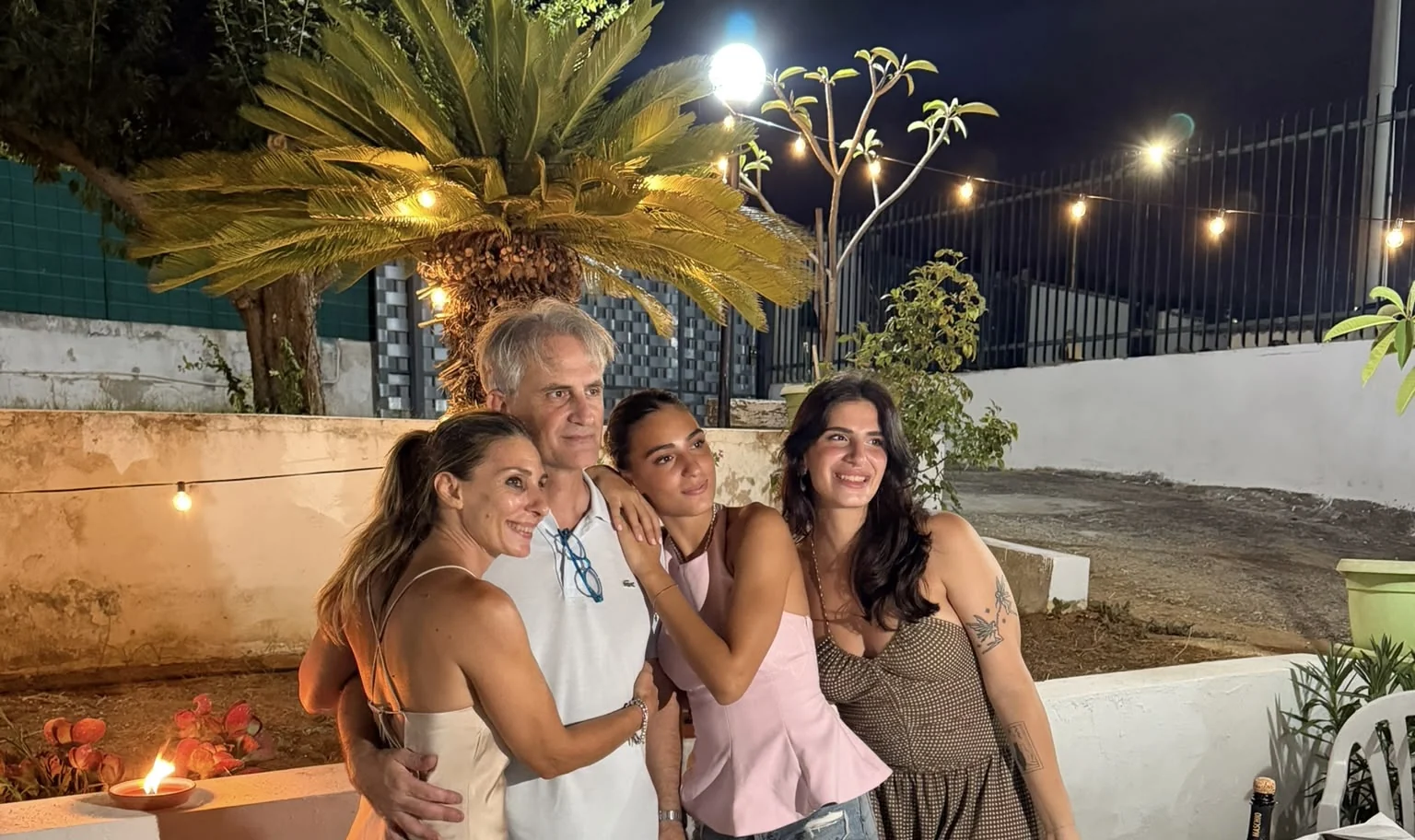
There are battles in which time is not measured in days, but in possibilities that risk vanishing. For Giuseppe Caracappa, 56 years old, policeman from Palermoevery day spent without an answer is a day taken away from the possibility of trying a different therapeutic path. The diagnosis of metastatic pancreatic cancerwhich arrived this summer a few days before he turned 56, has radically changed his life, and obviously that of his family too. Now, while the effects of chemotherapy are debilitating him, there is a drug on which he has pinned his hopes: the daraxonrasib. The story of this race against time is his daughter Sara, 22 years old, who together with her mother Clotilde and her 18 year old sister Elisa is obviously on the front line to help her father. «Dad faced seven cycles of chemotherapy, which debilitated him greatly. An experience like this brings a sadness and pain to a family that is impossible to understand until you experience it firsthand.” says Sara. «He has always been a man full of energy, incapable of sitting still, used to doing a thousand things and solving any problem immediately. Now the disease has turned our daily lives, our plans, the way we look to the future upside down. It’s difficult to see your father, who has always been the driving force of the family, no longer being able to do what he loves.”. The family in recent days has entrusted the request for help to the Sicilian institutions to an appealprimarily to the Region. Sara, Elisa and Clotilde are not asking for an experimental treatment without scientific basis, nor a shortcut to obtain any cure. They ask that their relative be able to access this innovative therapy, already authorized in the United States and, since a few weeks, also in the European Union.
The battle to return to life
«Now our daily life is made up of battles, treatments, side effects, expectations, hopes and difficult moments» Sara continues. «You realize that this disease doesn’t just take away the big things, but also the more banal ones, the ones that you didn’t think could become a problem before. Everything changes. My dad, however, is a very strong person, and we try to be strong together with him. We support each other, we try to be there at all times, we never lose hope and we don’t let ourselves be discouraged. We are looking for every possibility, every path, every hope that can help us continue this battle. We don’t want to give up.”. This is why Sara, her sister and her mother are fighting for therapy that could offer him more time and the possibility of feeling better, as witnessed by other patients who are already taking it: first of all the famous radio speaker Max Parisi, who flew to the United States between August and September to be treated and who speaks of a “surprising effect” on the disease and the symptoms.
In Lombardy, patient care is paid for by the Region
The comparison between the case of Giuseppe and that of Jessica Scarpa, 36 years old, mother of twins and resident in Olginatein the province of Lecco, is paradoxical. The young mother, who is also fighting against metastatic pancreatic cancer, has in fact obtained financing from the Lombardy Region to purchase daraxonrasib in the United States. The decision was announced by the Welfare councilor Guido Bertolasowho is committed to guaranteeing equal treatment to any other patients who may have to face this treatment. Giuseppe’s family therefore once again makes a specific appeal to the Sicilian Region: to identify every possible tool to allow him to receive daraxonrasib. It is not a question of asking for shortcuts, but of guaranteeing a timely evaluation of your case and not leaving a family alone faced with unsustainable expenses and easily imaginable bureaucratic and clinical difficulties.
Daraxonrasib, the metastases disappeared in the images presented in Barcelona
The pancreatic cancer it is still one of the most difficult cancers to treat. It is often diagnosed when it is already in an advanced stage. Among the main causes of tumor growth is KRAS, a gene altered in the vast majority of pancreatic adenocarcinomas. For years this protein was considered an almost impossible target to hit. The daraxonrasibdeveloped by the US company Revolution Medicines, acts on RAS proteins in their active form. Its goal is to block the signals that promote the proliferation of tumor cells.
The results of the international phase III RASolute 302 study, presented at ASCO in 2026, are important. In patients with already treated metastatic pancreatic cancer, the median survival it was 13.2 months with daraxonrasib, versus 6.7 months with chemotherapy. The time without disease progression also increased: 7.2 months versus 3.6. New expectations also come from the EORTC-NCI-AACR international congress, held in Barcelona from 18 to 20 November. The first results of the RMC-GI-102 study, which tests the combination of daraxonrasib and chemotherapy, were presented.
During the presentation, CT images of a patient were shown. Someone metastatic lesions were no longer visible after treatment. A significant radiological response, which attracted the attention of oncologists. The medicine is not without side effects. The most frequent include skin rash, stomatitis and gastrointestinal disorders.
Compassionate use: why Italy cannot waste any more time
The daraxonrasib it was authorized in the United States and, on 16 November 2026, also by the European Commission following a favorable opinion from the EMA. It may be used in adults with metastatic pancreatic adenocarcinoma who have received at least one prior systemic therapy or are not eligible for multiagent therapies. In Italy, however, it is not yet available through the National Health Service. The AIFA steps relating to evaluation, price and reimbursement must be completed. There is also another tool that can anticipate access: compassionate use. The ministerial decree of 7 September 2017 allows, in the presence of specific requirements, to obtain medicines not yet available free of charge. The request must be justified by the treating doctor and submitted to the competent Ethics Committee. The manufacturing company’s willingness to supply the drug is also needed. The national program for daraxonrasib, however, is not yet operational.
Sick people don’t have time. And life cannot depend on the region in which you live
Meanwhile, Lombardy has authorized financing for Jessica, allowing her to purchase the medicine in the United States. A concrete answer, which however raises a question of fairness. Access to care cannot and must not depend on the region of residence. The Sicilian Region should therefore verify Giuseppe’s case as soon as possible, discuss with the doctors who follow him and immediately take action with the competent authorities and the manufacturing company. Because oncology research is opening a new era, but scientific progress is only valuable if it reaches patients. Everyone, regardless of economic possibilities. For Giuseppe Caracappa, who has always looked at the world with the curiosity of someone who wants to discover every corner of it, giving up is not an option. He loves history and art, knows Palermo like few others and knows how to tell the story of every monument, villa or palace. «It’s practically a living Wikipedia»smiles Sara. He is a curious man, passionate about animals and horses, music and watches, with a thousand interests and a constant desire to learn. A man who still has many things to discover, places to visit and passions to cultivate. And who today only asks to have a chance to live his life again. Because, as your daughter says, “Dad still has so many things to do and we want to do them with him”. The question is therefore addressed to the institutions: can the right to time and life really depend on the region in which one lives? For Giuseppe the answer cannot and must not come too late.