
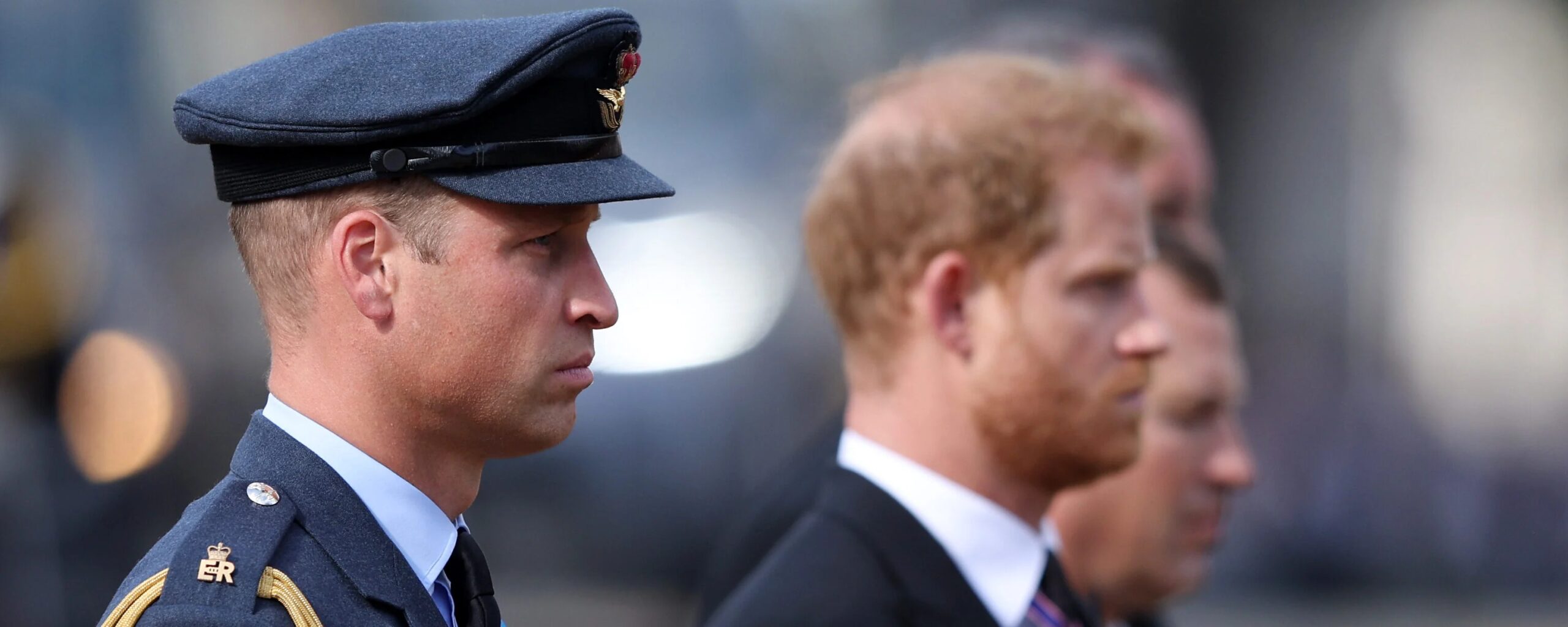
It would not only be the last chapter of the war between two brothers who have been unable to reconcile for years. This time, there would be something much bigger at stake: the very future of the British monarchy. When he becomes king, Prince William could deprive Harry of the title of prince, extending the decision to his children Archie and Lilibet and redesigning the rules that for over a century have established who can boast the privileges of the royal family. A transformation destined to change the very meaning of belonging to the Windsor dynasty, transforming royal titles from rights acquired by birth to recognitions linked to service actually provided to the Crown.
The alleged project was revealed by the Mail on Sunday, which in its edition of 22 November 2026 dedicated large space to previews of a new book by royal journalist and commentator Tom Sykes. The rumors were also taken up by the Evening Standard and other British newspapers, relaunching a particularly delicate issue for Buckingham Palace: What should happen to members of the royal family who choose not to work for the monarchy, but continue to retain its titles and prestige?
William’s plan: royal titles only for those who work for the Crown
The idea attributed to the Prince of Wales is as simple as it is potentially disruptive: whoever officially represents the monarchy can retain titles, privileges and treatment of His Royal Highness; those who decide to build an independent life, however, should renounce the prerogatives associated with their status.
According to Tom Sykes, Daily Beast columnist and author of the book Dukes of Hazardto be released in the United Kingdom in February 2027, William has already discussed with some collaborators a profound reorganization of the royal family. The publication reconstructs the crises that involved three particularly controversial figures in the history of the Windsors: Edward VIII, Andrew and Harry, united by the condition of members of the dynasty who were not destined to reign.
A person described as close to William would have explained to Sykes that, in the new system, only those who participate in institutional commitments, represent the sovereign and play a public role should be able to benefit from the titles and resources associated with the Crown. For others, the possibility of leading a private life and undertaking professional activities would remain, but without particular preferential treatment.
The project would also include stricter rules on residences and economic benefits, with the aim of reducing the number of members of the royal family retained within the monarchical organisation. It would therefore not just be a question of downsizing Harry and Meghan, but of establishing a principle destined to be valid for future generations.
Harry, Meghan, Archie and Lilibet: who risks losing the title
The first recipient of the reform would be Harry himself, who in January 2020 renounced official duties together with his wife Meghan Markle. Since then the Sussexes have built their own professional businesses, while maintaining a formal link to the monarchy through their respective titles.
The distinction is not secondary. Harry is Prince of the United Kingdom by birth, but also holds the title of Duke of Sussex, given to him by Elizabeth II on the occasion of his 2018 wedding. Meghan is Duchess of Sussex and does not hold an independent princely title by birthright. Furthermore, both have already agreed not to publicly use His Royal Highness’ treatment after separation from institutional roles.
The new reform would go beyond that agreement. Harry could formally lose the title of prince, while Archie and Lilibet would be deprived of the titles they acquired with the accession to the throne of their grandfather Charles III in September 2022. For Meghan the issue would above all concern royal treatment and the possible modification of the couple’s ducal status, which would require a separate legal path.
A similar decision would have an above all symbolic meaning: it would establish the institutional separation between the Sussexes and the Crown, making permanent that distance which until now has mainly been the result of a personal and family choice.
Charlotte and Louis could also renounce their titles: the choice that would change the future of the Windsors
Perhaps the most significant part of the rumors concerns William’s children. The alleged reform would not in fact be limited to relatives with whom the future king has difficult relationships, but would also involve Charlotte and Louis.
Princess Charlotte, 11, and Prince Louis, 8, could decide once adults whether to dedicate themselves to the service of the Crown or pursue independent careers, in the latter case giving up royal titles and treatments.
It would be a way to overcome the traditional distinction between the heir and his younger brothers, often destined to play a supporting role within the ruling family. In the new system, according to Sykes’ account, there would no longer be an implicit obligation to live in the shadow of the future sovereign.
The position of George, 13 years old, second in the line of succession after his father, is different. Its institutional future would remain tied to the Crown, while for Charlotte and Louis the possibility of choosing a different path would open up.
The Mail on Sunday also reports that William and Kate are already educating their children in a less formal dimension of royal life. At home they would not be called HRH by staff and at school they would be referred to simply by their first names. According to the newspaper’s reconstruction, George would be identified in school and sporting contexts as George Wales, unlike his father, who during his years at Eton was referred to as Prince William.
An apparently marginal detail, but consistent with the image of a monarchy that William would like to make less distant from the everyday life of citizens.
Andrea’s precedent and the Epstein scandal: why William wants to change the rules
Behind the possible reform there would also be the desire to avoid new reputational crises like those that have affected the royal family in recent years.
The most significant case is that of Andrea Mountbatten-Windsor, younger brother of Charles III, overwhelmed by controversies relating to his relationships with Jeffrey Epstein. In November 2025 Andrew was formally stripped of the title of prince and the treatment of His Royal Highness through an order of the Crown. A separate royal act had also ordered his cancellation from the official register of peers, preventing him from institutionally using the title of Duke of York.
The affair demonstrated that the monarchy has tools to revoke some prerogatives, but it also highlighted the complexity of the rules governing noble titles and dignities.
According to what was reported by the British media, William would like to avoid future controversies forcing Buckingham Palace to intervene only after the explosion of a scandal. Establishing in advance who can maintain titles and privileges would mean introducing clearer criteria, at least for family members who do not perform official functions.
Can William really strip Harry of the title of prince?
It is the fundamental point to understand how the alleged plan is concretely achievable. According to documentation from the Library of the British House of Commons, the sovereign can influence the titles of prince and princess and the treatment of His Royal Highness through Letters Patentformal instruments issued in the exercise of the prerogatives of the Crown.
The current system derives largely from the provisions introduced by George V in 1917 and subsequently amended. A new decision by the sovereign could therefore affect the attribution of princely titles, as already happened in the case of Andrea.
The question of duchies, which belong to the category of hereditary noble titles, is more complex. Their effective revocation normally requires the intervention of Parliament, while their elimination from the official register of peers does not necessarily equate to the legal extinction of the title.
There is also another important distinction: losing the title of prince does not automatically mean being excluded from the line of succession to the thronewhich follows its own rules and whose modification requires a legislative process.
The reform imagined by William, therefore, would not be just a family decision. To be fully implemented it would have to deal with a constitutional and legal system sedimented over the centuries.
“Change is on my agenda”: William’s words on the future of the monarchy
What also makes Sykes’ reconstruction particularly interesting are some public statements released by the Prince of Wales in October 2025.
During an interview with actor Eugene Levy, for the series The Reluctant Traveler of Apple TV+, William had spoken openly about the future of the monarchy, explaining that he wanted to introduce changes capable of making the institution more useful and closer to the people.
“Change is on my agenda,” he declared, specifying however that he did not imagine excessively radical transformations, but rather interventions that he considered necessary.
Those words contained no direct reference to Harry’s titles or the Sussexes’ future. Reread in light of the advances in the Mail on Sunday, they are however interpreted as an indication of the future sovereign’s desire to give a different direction to the British monarchy.
Kensington Palace does not confirm: Harry’s future remains uncertain
For the moment there is no official provision, nor confirmation that William has actually decided to remove the title of prince from his brother. When asked about the revelations, Kensington Palace reiterated its policy of not commenting on books and statements contained in publications.
The rumors therefore remain attributed to Tom Sykes and the anonymous sources cited in his reconstruction. Yet the debate raised by British newspapers concerns an issue destined to survive the tensions between William and Harry: what role can members of the royal family who do not intend to dedicate their lives to the service of the Crown have in the monarchy of the future?
For decades, the Windsor system has been based on a combination of birth, tradition and institutional responsibility. William’s possible reform would introduce a different criterion, in which belonging to the family would not automatically guarantee the status of official representative of the monarchy.
For Harry, it would mean being able to remain the king’s brother without being formally a prince anymore. For William, it would mean redefining what being a member of the British royal house entails. And this, even more than yet another family fracture, is the true extent of the indiscretions arriving from London.