
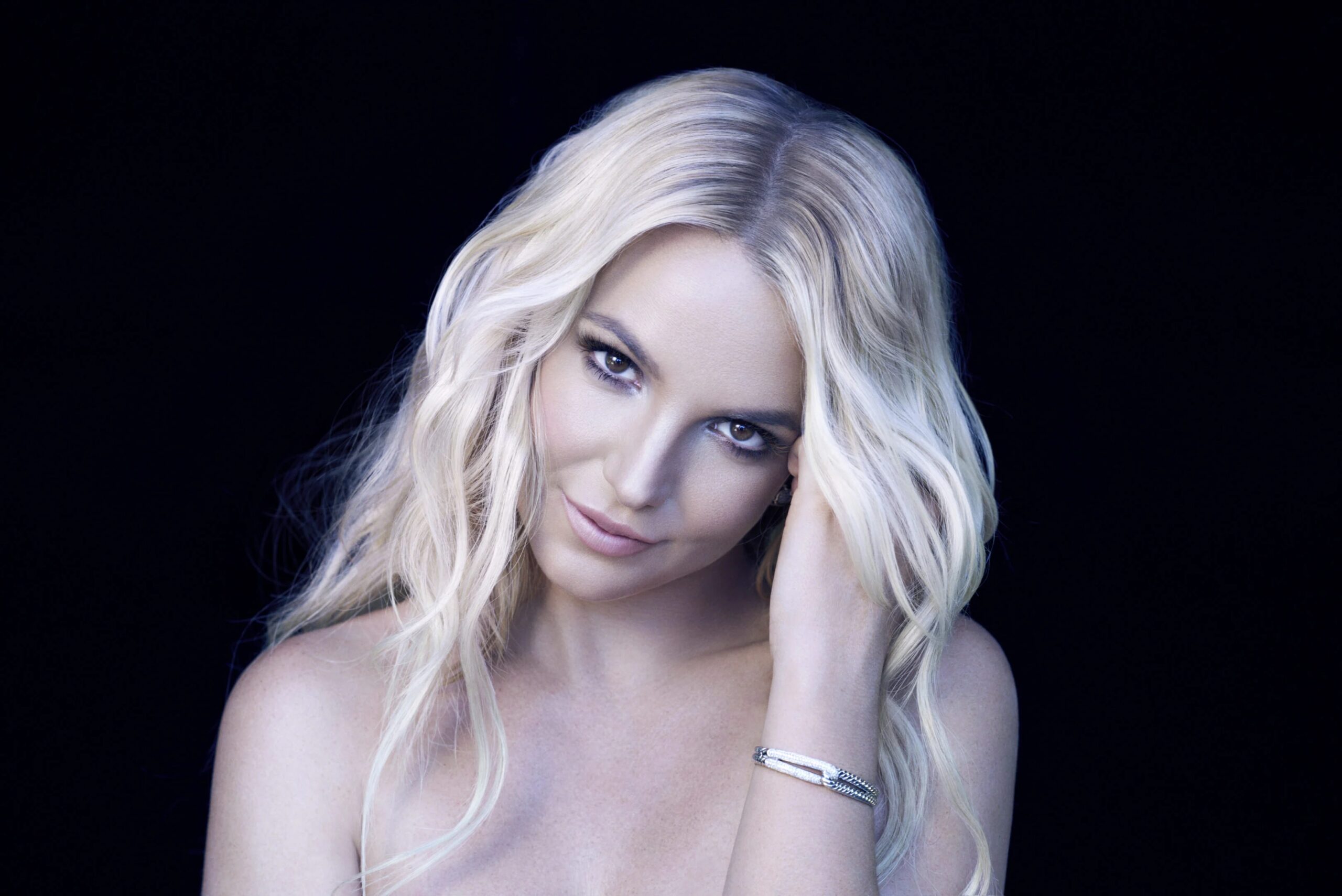
Britney Spears reveals that her exes recommended cosmetic surgery to her forehead. An outburst that reopens the debate on the obsession with perfection.
Britney Spears is back in the news after a video published on Instagram where she shows herself fixing her hair and confessing that all the ex-partners she dated advised her to undergo surgery and hair implants to “reduce” her forehead.
As often happens with content published by the pop star, the video immediately made the rounds on social media, accompanied by a very harsh and provocative phrase towards men. The singer did not name specific names but the media immediately went wild hypothesizing references to well-known ex-partners (from Justin Timberlake to Sam Asghari), but these are only journalistic reconstructions.
The problem doesn’t need a textbook name. It’s not “body shaming”, it’s not “aesthetic pressure”, it’s not “image control”. It is simply the detachment from reality: the belief that a body, a face, a forehead can be “fixed” because they do not respect a canon that does not exist. Now, even affection can become a distorting mirror.
There is a difference between advice and a sentence. Telling someone “maybe you should use conditioner, your hair is dry” is practical advice, which concerns a choice, not a body trait. Telling someone “you should have your forehead operated on” is something else: it is no longer about a cure, but about a connotation, something that is part of a person’s physical identity. And today, unfortunately, this distinction is often confused.
A flash of clarity among social content
In the midst of a constant flow of over the top posts, increasingly racy videos and constant media chatter – often also fueled by gossip and inferences about alleged personal problems or substance use (rumors never confirmed) -, Britney’s words open an unexpected window.
This outburst, in its crudeness, becomes a flash of clarity on an extremely current topic: aesthetic pressure. However, Britney slips into a cliché that is now too accepted. He lashes out at men when in reality it is now a problem that affects everyone.
It would be a huge mistake to relegate this phenomenon to the female sphere alone. It is too easy to reduce it to a formula or a gender enclosure: today more than ever man is also subjected to the same ruthless aesthetic pressures, trapped in the same visual performance anxiety.
Not dolls or figurines: the escape from reality between Photoshop, filters and AI
The central point is not to confine the discussion to formal labels or hasty formulas. The problem is that today aesthetics has taken on an all-encompassing weight and the boundary with reality has become dangerously thin. Between Photoshop, digital filters and artificial intelligence, the ambition of turning into perfect figurines is now clear.
This is confirmed by the data and official positions of the main trade associations and internationally renowned plastic surgeons. The BAAPS (British Association of Aesthetic Plastic Surgeons) has raised repeated alarms about the exponential increase in patients showing up in medical offices displaying faces generated by artificial intelligence or heavily altered by filters.
Authoritative specialists confirm this daily drift in their studies. Plastic surgeon Dr. Nora Nugent (member and former top figure of BAAPS) underlined this phenomenon with concern: «I always remind patients before surgery: what I can do in the operating room is not unlimited. Neither I nor they can control everything”, highlighting how expectations are now totally distorted by unattainable virtual models. Plastic surgeon Alex Karidis is along the same lines, warning that cosmetic surgery will never be able to replicate the algorithmic perfection or fairytale precision produced by software. We are not dolls, yet the claim to adhere to a standardized model is becoming a collective cage.
A pressure that gives no concessions to men
It is not simply a question of labels, but of a profound fracture: we are now detached from reality, incapable of accepting our humanity and our biological truth. Britney Spears’ post, beyond the media hype and gossip, thus ends up fitting into an extremely current context worthy of in-depth reflection, reminding us how urgent it is to find authentic contact with ourselves in an era that would like us all to be perfect, plasticized and standardized.