There is a snow-covered Victorian London, with chimneys smoking above the roofs, windows lit by the warm light of candles and a miserly old duck who considers Christmas a gigantic waste of time. On the other side of the city, a little mouse with a scarf around his neck tries to bring some happiness to his poor house, where wealth is measured in affections and not in coins. They are the images of Mickey’s Christmas Carolone of those little animated masterpieces that, since 1983, continue to return to homes during the holidays, almost as if they were part of the Christmas decorations.
A few frames are enough to rediscover that particular atmosphere that Disney has always managed to build around Christmas, made up of nostalgia, melancholy, humor and a certain idea of domestic happiness that survives the passing of generations. Burny Mattinson’s transposition of Charles Dickens’ story is still one of the most successful today, not only for its ability to condense a complex story into just 25 minutes, but because it manages to convey its deepest meaning without sacrificing the personality of its protagonists.
Forty-three years later, Disney seems to have decided to repeat that experiment, this time choosing another title that belongs to the collective imagination of the holidays. No longer Dickens, ghosts and the redemption of Ebenezer Scrooge, but a house decorated for Christmas, a hasty departure, two forgotten protagonists and intruders to keep away.
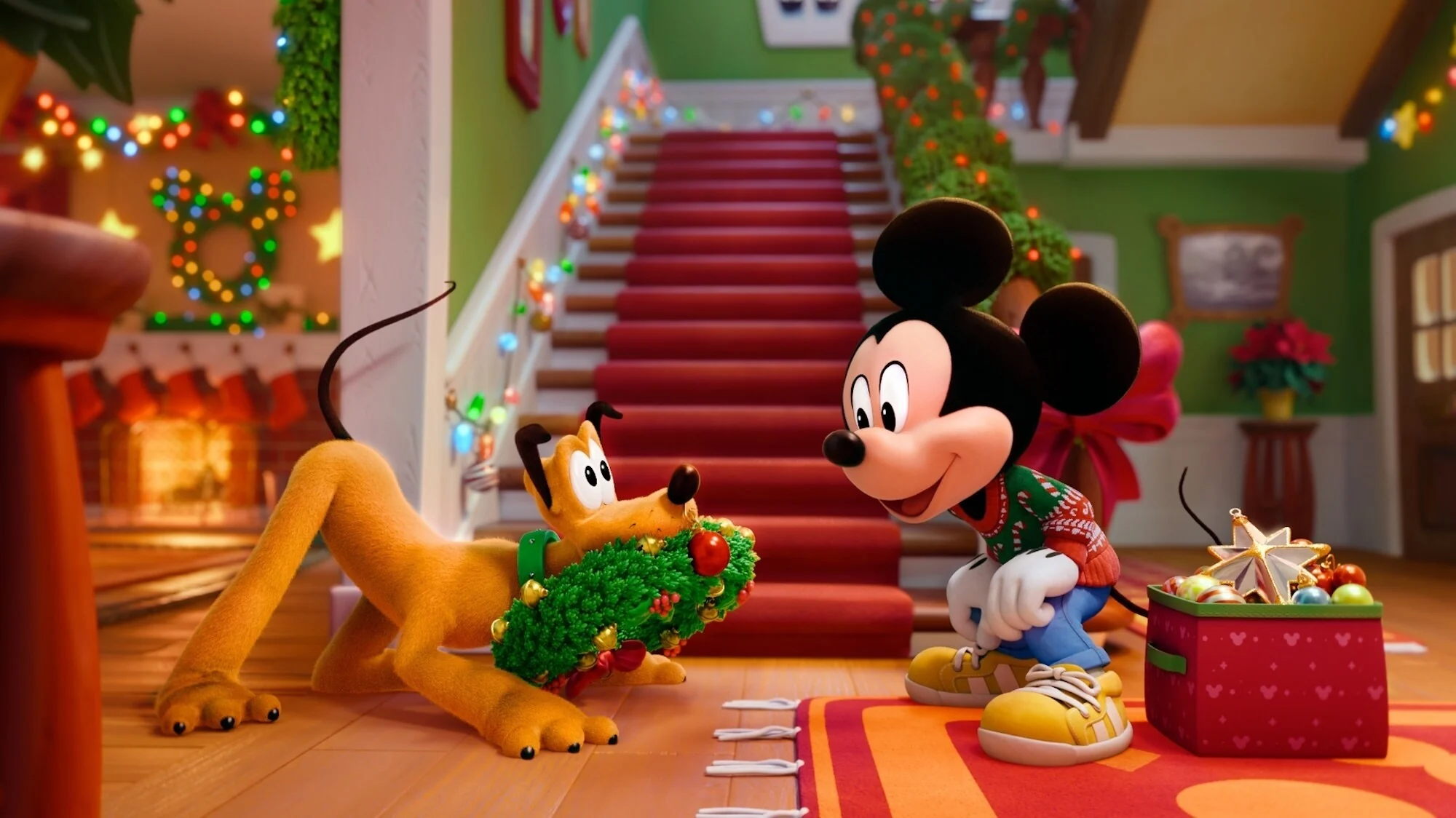
The result is called Mickey Mouse, I missed my planea new animated special available on Disney+ in Italy from November 27, 2026, which takes inspiration from Mom, I missed the planethe 1990 film starring Macaulay Culkin which has become one of the great cinematographic events of the Christmas period. The official trailer anticipates an adventure in which Mickey and Pluto find themselves defending their home, and above all their Christmas dinner, from two unlikely criminals. The idea, at least on paper, is as simple as it is irresistible.
Mickey’s Christmas Carol, the little Disney masterpiece that never gets old
When Mickey’s Christmas Carol arrived at the cinema in 1983, Disney carried out an operation that today might seem obvious, but which at the time had a particular meaning. Mickey Mouse returned as the protagonist of a short film destined for theaters after thirty years of absence, and he did so by entering one of the most famous Christmas stories in world literature.
The choice of characters was already, in itself, a small stroke of genius. Scrooge McDuck played Ebenezer Scrooge, the miserly protagonist of Dickens’ tale, while Mickey Mouse took on the role of his patient and underpaid clerk Bob Cratchit. Goofy became the ghost of Jacob Marley, Donald Duck played his nephew Fred and the rest of the Disney universe came to life in the streets of nineteenth-century London.
It was not simply a question of customs or character similarities. The extraordinary effectiveness of that short film came from the ability to use already beloved characters to tell a story that spoke of loneliness, regret, selfishness and the possibility of change. Scrooge was perfect in the role of Scrooge precisely because he brought with him decades of cartoonish avarice, while Mickey Mouse’s kindness made Bob Cratchit’s humanity immediately understandable.
The film also managed to be deeply Christmassy without becoming cloying. There was pain, fear, poverty and even death, all central elements in the original story, but filtered through a visual language capable of reaching even children. The Oscar nomination for best animated short confirmed the value of a work destined to survive well beyond its first distribution.
Since then, Mickey’s Christmas Carol it has become a small domestic ritual. One of those films that you know almost by heart, that you can find randomly during the holidays and that continue to work because they don’t depend on the surprise effect. The story is always the same, the ending is known, yet the pleasure of seeing it again remains intact.
From Dickens to Home Alone: Mickey Mouse becomes the new Kevin McCallister
Times, scenarios and above all the type of adventure change, but the underlying operation changes Mickey Mouse, I missed my plane has an interesting similarity to the one from 1983: taking a story that the audience already knows and re-reading it through Disney language and characters.
The reference, this time, is naturally Mom, I missed the planethe comedy directed by Chris Columbus in 1990 and starring a very young Macaulay Culkin in the role of Kevin McCallister. The story of the child forgotten by his family while leaving for the Christmas holidays, forced to defend his home from two thieves, has become much more than a family comedy over the years. It is one of the films that have contributed to defining the contemporary imagination of Christmas, with its fairy lights, exaggeratedly decorated American houses, chaotic family reunions and that childish freedom that transforms a home into a land of adventures.
In the new Disney special, however, it is not Kevin who stays at home, but Mickey Mouse, accompanied by the faithful Pluto. The premise is perfect to be translated into animation, because Mickey Mouse’s cinema and that of Mom, I missed the plane they have always shared a fundamental element: physical comedy, built on misunderstandings, domestic accidents and the unpredictable consequences of apparently simple situations.
The short film thus promises to bring together two forms of comedy that seem made to meet, the slapstick of the Disney tradition and the equally irresistible one that transformed Kevin McCallister into a small master of home defense strategies.
Mickey Mouse, I Missed the Plane: the plot of the new Disney+ special
The story begins with a very simple desire. Mickey can’t wait to spend a quiet Christmas at home, surrounded by his habits and the atmosphere of the holidays. Minnie Mouse, however, has organized something completely different: a surprise for the whole group, with tickets to spend Christmas in a world-famous Ice Palace.
The departure unleashes the predictable chaos of big family occasions and, between preparations, luggage and confusion, the unthinkable happens. Mickey and Pluto are forgotten at home, while Minnie and her friends leave convinced that they are all together.
For the two protagonists, what might have seemed like a perfect opportunity to enjoy the Christmas tranquility quickly turns into an adventure. A raccoon and a weasel, in fact, have set their sights on their Christmas dinner and are determined to take it over. It will thus be up to Mickey and Pluto to defend the banquet from intruders, while the rest of the group tries to remedy the mistake and return home.
The plot clearly takes up the narrative structure of the original film, but replaces the thieves Harry and Marv with two animal antagonists, perfectly inserted into the Disney comic universe. In place of the child left alone in a large American house there are a mouse and a dog, and at the center of the dispute are not the family possessions, but something much more Christmassy: the holiday dinner.
Because the Disney/Home Alone meeting works so well
The idea of transforming Mom, I missed the plane in a Mickey Mouse adventure is interesting above all because it intercepts an element that the two universes have in common: Christmas as a representation of imperfect family happiness, often built precisely through chaos.
Kevin McCallister spends a good part of the film wishing to no longer have anything to do with his family, only to discover that an empty house, however wonderful in the first moments, cannot replace the warmth of affection. Mickey, on the other hand, would simply like to stay at home, but ends up finding himself in the same condition of involuntary loneliness. The premises are different, but the narrative mechanism allows us to reach a very similar emotional territory.
Then there is a question of collective memory. Disney knows perfectly well the value of its historical characters, but also that of the films that the public has gradually transformed into traditions. Mom, I missed the plane it now belongs to a particular category of cinematographic works: films that are not just watched, but relived every year, often on the same days, with the same people and with the same frame of mind.
Christmas cinema also works like this, through the repetition of familiar images. The McCallister house lit up for the holidays, Kevin’s incredulous face in front of the mirror, the chases and domestic accidents have become immediately recognizable references, as much as old Scrooge walking through a snowy London accompanied by the spirits of Christmas.
Bringing these two imaginaries together means simultaneously addressing those who grew up with Disney classics and those who consider them Mom, I missed the plane an essential vision for December. And above all it means using nostalgia as a narrative language, rather than simply re-proposing a known title.
The music and authors of Mickey Mouse, I missed my plane
An original soundtrack also arrives to complete the Christmas atmosphere of the special. Disney released the EP on digital platforms Disney Jr. Music: Mickey’s Home Alonewhich includes two previously unreleased songs, Ho-Ho-Home for Christmas And Favorite Christmas Feelingwritten by Keith Harrison Dworkin, as well as a new arrangement of Jingle Bells.
The production is entrusted to Wild Canary in collaboration with Disney Jr., with Tom Rogers as executive producer and Rachel Ruderman in the role of co-executive producer. The direction is signed by Shane Prigmore, while Tony Morales takes care of the soundtrack.
The new special will be available on Disney+ in Italy from Friday 27 November 2026, effectively inaugurating the period of great Christmas viewings on the platform.
A new Christmas classic? Disney’s bet on nostalgia
It would be premature to say whether Mickey Mouse, I missed my plane will be able to conquer the same place occupied by Mickey’s Christmas Carol in the memory of several generations. Holiday classics, after all, are not necessarily born as such: they become so through the years, repeated viewings and that particular emotional bond that is created between a story and the public.
Yet, Disney’s intuition is remarkable. Because instead of inventing yet another Christmas story built around Mickey Mouse, the studio chooses to put him at the center of a story that the public already knows and loves, bringing together two apparently distant traditions but united by the same idea of Christmas.
In 1983, all it took was a miserly old duck, three ghosts and a small, illuminated house to transform Dickens into one of the fondest memories of Disney animation. In 2026, a mouse, a dog, a dinner to save and two decidedly out-of-the-ordinary petty thieves could be enough to give the public a new holiday event.
Ultimately, cinematic Christmas lives precisely on this: images that return, stories that we never tire of listening to and characters that, even after decades, manage to make us feel at home. And if there is anyone capable of transforming a house forgotten by everyone into the most desirable place to spend Christmas, that someone could be Mickey Mouse.