The story of the Nasoni of Rome, the iconic cast iron fountains: why they are called that, how many there are and why the water flows non-stop.
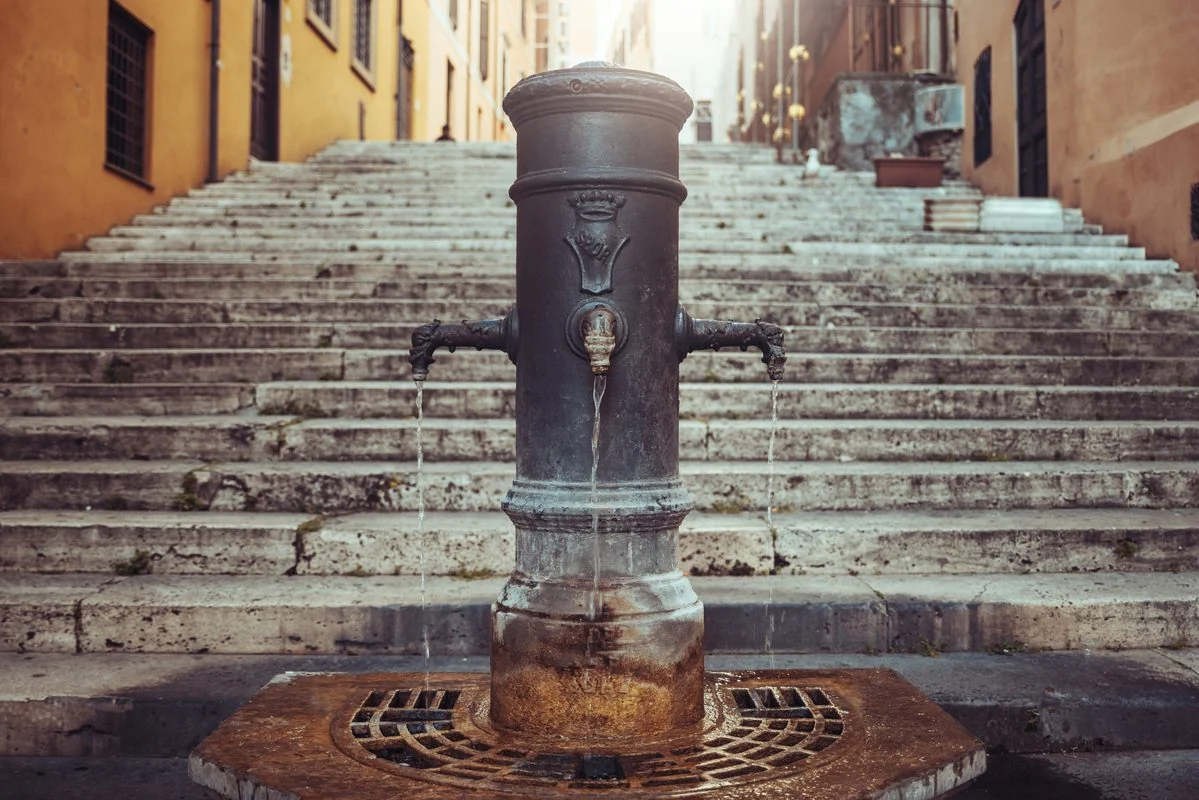
The fountains are one of the symbols of the Eternal City. From that of Trevi to that of the Rivers, they have always been part of the Capitoline imagination. Splendid works of art, discreetly accompanied by an exceptional quantity of picturesque, unmistakable fountains. Ironically called Nasonican be considered the “younger brothers” of the monumental baroque fountains that adorn the city squares. And like these, they have become a true icon.
The history of the Nasoni
The legendary cast iron fountains with the writing SPQR were born in 1874, when Rome, which had recently become the capital of the Kingdom of Italy, was experiencing a period of great transformations. In that year, the mayor Luigi Panciani decided to build a network of fountains to guarantee the widespread distribution of drinking water to all neighborhoods, in order to improve the hygienic conditions of the city.
The first models had three dragon-shaped heads from which water flowed. Later, the project was simplified with the adoption of a single curved metal tube, the cinnamon, from whose characteristic shape the popular nickname derives. Today the majority of Roman fountains belong to this typology, which is precisely that of the Nasoni proper. In the centre, some historic three-headed specimens still survive; and there are others, with a brass wolf’s head from which water comes out, dating back to the 1920s.
Nasoni today: how many there are and what they are for
The sources differ on the number of noses, but it is estimated that today there are between 2,500 and 3,000 fountains in Rome. Water flows 24 hours a day, a continuous flow that has the important function of relieving the pressure on the pipes of the city’s vast water network. In addition, obviously, to providing free drinking water, both in the center and on the outskirts.
To drink from the Nasoni, the most experts adopt an ingenious and hygienically impeccable system. Plug the main outlet with a finger, making the water gush from a small hole located in the curvature of the cinnamon. This way, you can drink without placing your mouth on the metal.
With their roar that never stops, these omnipresent cast iron columns provide the background sound to the daily life of millions of Romans. And tourists, happy to fill their bottles with fresh water and take a selfie in front of one of the icons of the capital.
The impressive network of fountains, without comparison in Italy, contributes to making Rome a city of water. It is no coincidence that a great twentieth-century composer like Ottorino Respighi titled one of his famous symphonic poems The fountains of Rome. And as Amedeo Minghi sings, to a text by Gaio Chiocchio, in the memorable 1950“the sea of this city has waves and spray that come out of our fountains.” Thanks, of course, to the great baroque works, with the superb marble statues from which refreshing waters gush. But also a little thanks to the Nasoni, an ironic and sly symbol of a city that never ceases to surprise.