From Garnerin’s balloon to F-16s: the Vigna di Valle Aviation Museum on Lake Bracciano is one of the largest flight museums in Europe
At the entrance you are welcomed by a unique piece: the Garnerin balla nineteenth-century hot air balloon, protagonist of the celebrations for thecoronation of Napoleon Bonapartedragged by a terrible storm from Paris to Lake Bracciano and recovered by fishermen. It is this find, considered the oldest aeronautical relic in the world, that kicks off the visit to the Historical Museum of the Air Force: a place that is absolutely worth the trip.
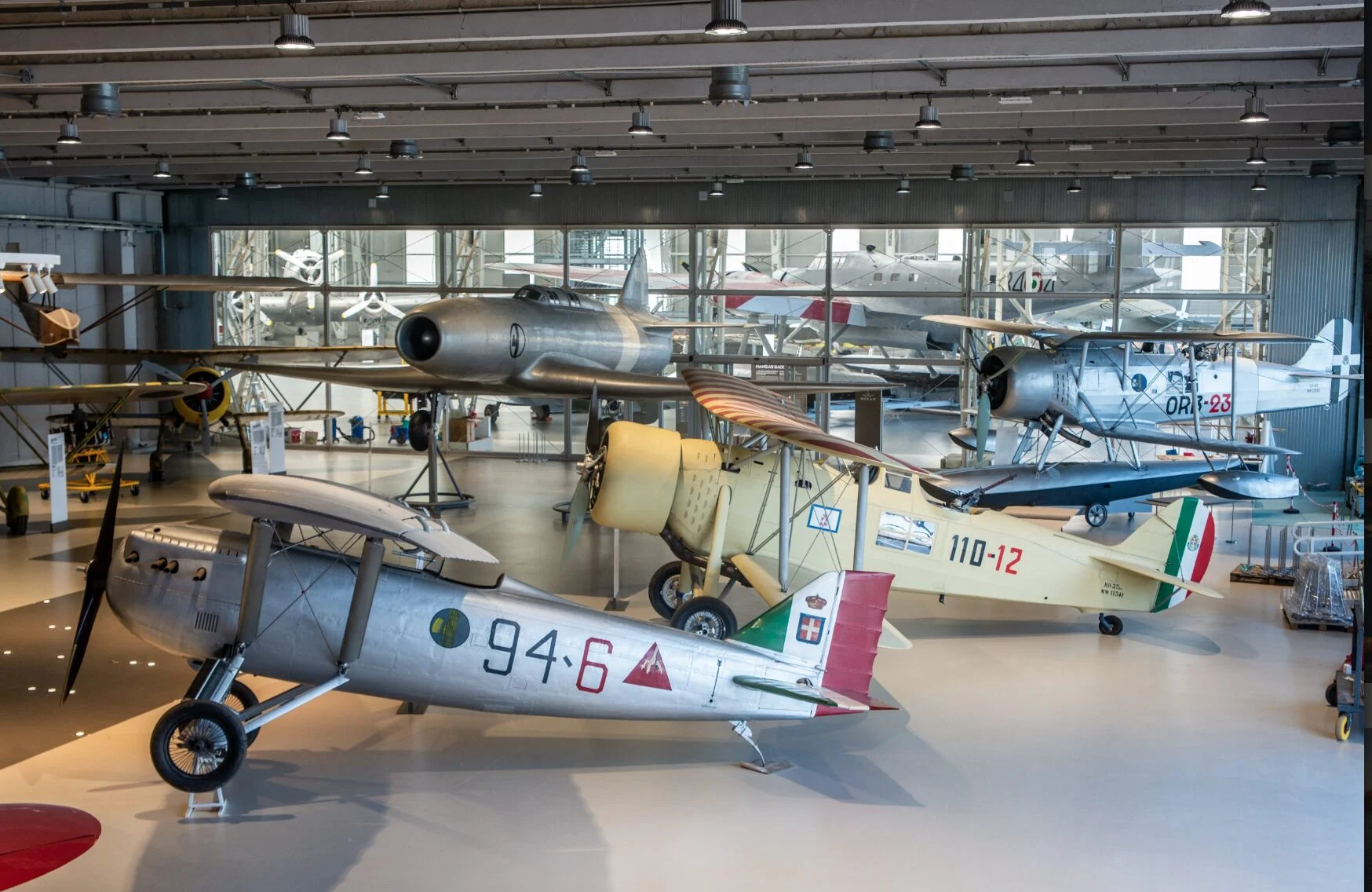
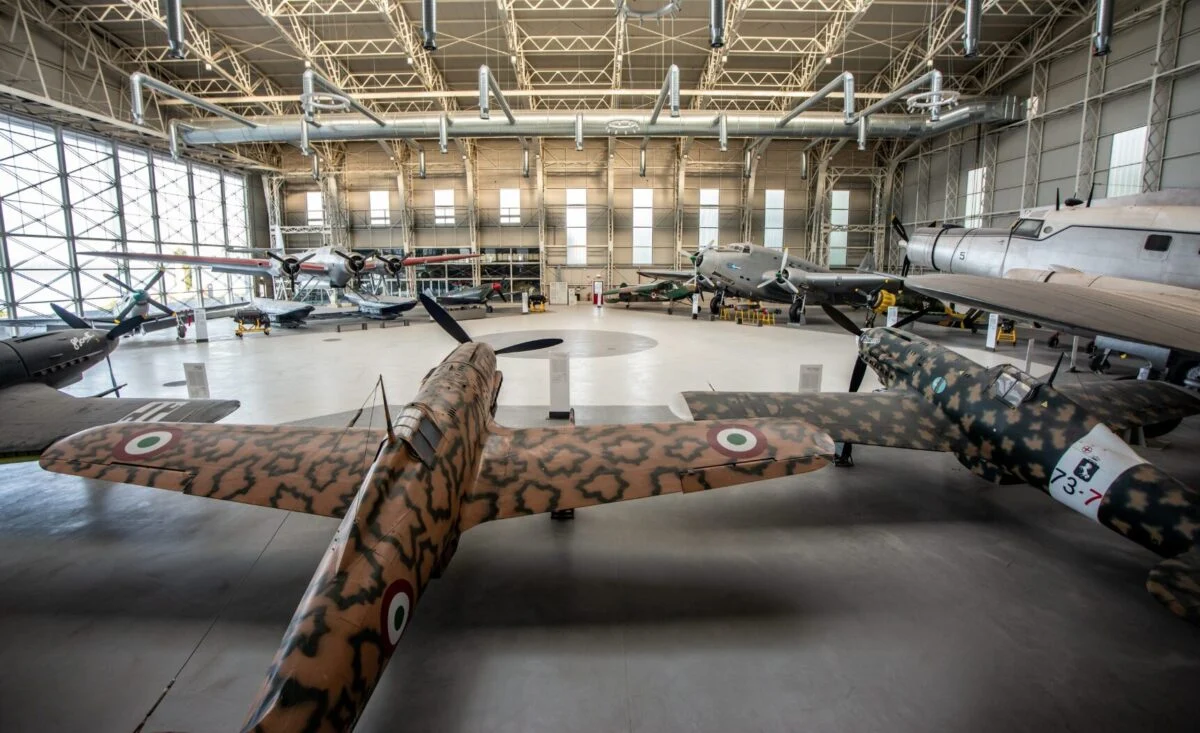
The museum is located on the ancient seaplane base of Vigna di Valle, on the shores of Lake Bracciano (Rome)where seaplanes and airships were tested at the beginning of the twentieth century. The hangars that welcome visitors today were born from the evolution of operational structures, transformed into a path of over 16 thousand square meters which traces more than a century of history of Italian military flight, with around 80 aircraft including planes, seaplanes and helicopters.
The full ticket costs 10 euroswhile the reduced rate of 5 euros is foreseen for minors between 6 and 18 years old and for first-degree family members of various Armed Forces and State Corps, in service and retired, upon presentation of the qualification which gives right to the discount. Entry may be free in specific cases indicated by the museum, which can always be verified at the ticket office.
The museum is reachable by car from Rome via Cassia and Braccianese-Claudiawith signposted crossroads for Vigna di Valle, or via Aurelia and the A12 motorway following the signs for Cerveteri and then Bracciano. From the A1 motorway we recommend the Magliano Sabina exit, continuing towards Civita Castellana, Nepi and Cassia Veientana until the crossroads for Settevene-Trevignano-Bracciano and then Anguillara Sabazia, from which you follow the lakeside promenade to the entrance. From the capital the journey takes about fifty minutes.
As soon as Garnerin’s ball is left behind, the visitor enters a chronological itinerary that is both a technological story and a biography of a nation in relationship with the sky. Each hangar is a “room of time”, with its atmosphere, its suspended noises, the wing profiles that change as we get closer to the present. Large windows illuminate the spaces and overlook the lake water.
The pioneers: from the balloon to the biplane
The first stretch of the route is dedicated to the pioneering season, when the Italian Air Force does not yet exist as an autonomous armed force and flight is a matter for visionaries, engineers and experimental officers. Between the biplanes as fragile as kites and the visible engines, we understand the passage from the free balloon to the controllable, armable aircraft that can be used on the front: the flight that goes from being a spectacle to becoming a military instrument. The first Italian military airplanes and materials linked to the birth of aviation in the country appear in these rooms, giving back the idea of an era in which every take-off was still a gamble. The display cases dedicated to the ace Francesco Baracca are very interesting, full of artefacts.
Big businesses between the wars
Continuing, the museum enters the years between the two wars, when flight also becomes an instrument of diplomacy, propaganda and exploration. Here find space for the polar exploits of General Umberto Nobile, the spectacular mass air cruises and the challenges of the Schneider Cup, with the record-breaking seaplanes that transform the skies and seas into a geopolitical stage. Uniforms, personal effects and documents tell the story of the life of the crews and the role of the aviators as media heroes ante litteram, a projection of a country that entrusts part of its international image to the sky. AND the moment in which the Italian aeronautics consolidates a culture of flight that combines courage, research and building internal consensus.
Total war and «big airplanes»
The atmosphere changes when entering the hangars dedicated to the Second World War and large airplanes. Here bombers, fighters, transport aircraft and a dense collection of engines and technical equipment tell the tale of transformation of flight into the infrastructure of an industrial and total war. Here you can admire, among others, a Spitfire and a Mustang, planes donated by the Allies to the Italian forces. After the war the story shifts to rebirth of the Air Force and the entry into the jet age. The first jet fighters, trainer planes and helicopters of the Cold War years show the transition from piston engines to turbines and Italy’s insertion into Western collective defense architectures. In this part of the museum the visitor perceives how military flight becomes more and more a system: standardization, interoperability, avionics, global logistics. Alongside the aircraft, instruments, helmets and suits tell the story of the evolution of the work of pilots and specialists, increasingly intertwined with networks of alliances and shared technologies.
Hangar 100 and the contemporary era
The route ends with Hangar 100, inaugurated in 2023 and dedicated to the contemporary era, where theThe aesthetics of the museum are close to that of a large technological hub. Here fighters such as the F16, Tornado, Eurofighter, patrol planes and modern transport aircraft are on display, together with thematic collections of helmets, propellers, instruments and a space that tells the story of the contribution of Air Force astronauts to international space missions. A flight simulator allows you to experience the Frecce Tricoloribringing the visitor to the center of that relationship between man, machine and training which is the operational heart of the armed force. It is the culmination of a story that began with a balloon dragged by the wind, today made up of complex aircraft, satellite networks and global missions.