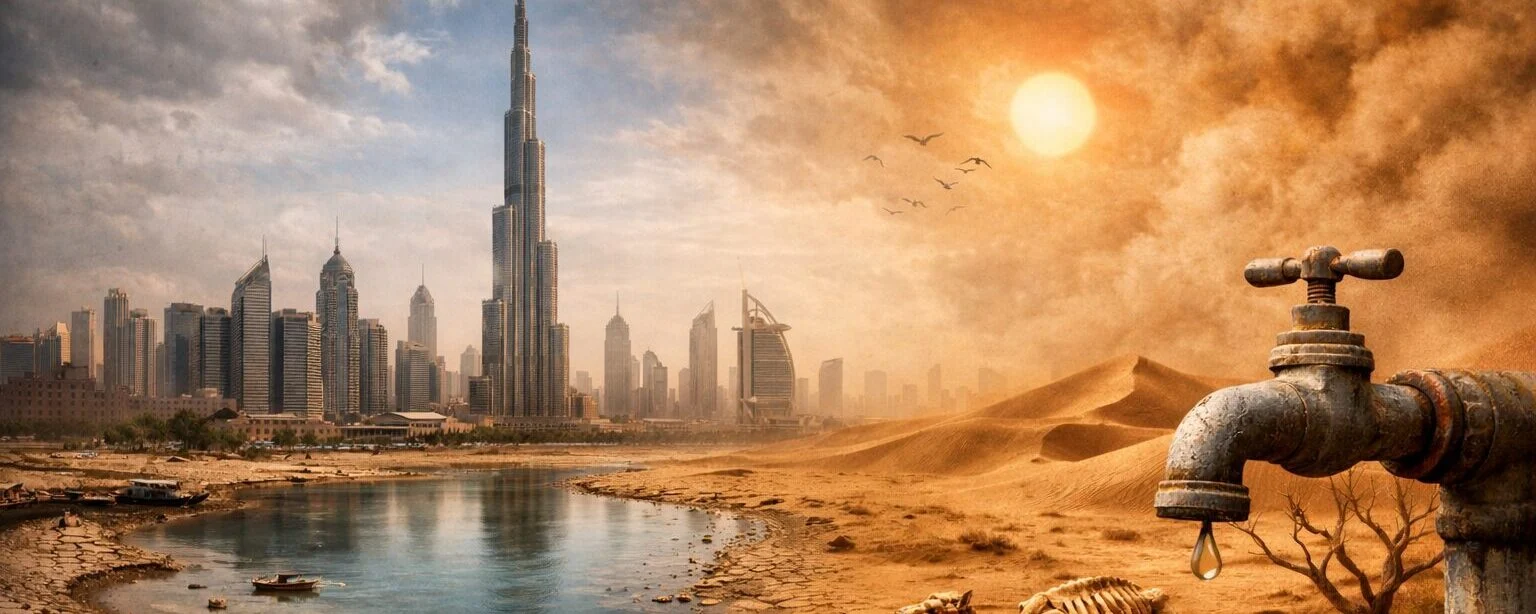
In the Gulf the water does not come from rivers or aquifers but from desalination plants. If Iran targeted these vital infrastructures, metropolises such as Dubai, Doha and Abu Dhabi would risk running out of water within hours.
As the Islamic Republic of Iran seeks to turn its fight for survival into a global crisis, it is the Gulf Arab countries that risk the most in this new war. Immediately, the blocking of Strait of Hormuz and the damage to their oil facilities is depriving them of their main source of revenue. However, the real threat to the stability of the countries of Gulf Cooperation Council (GCC) will manifest itself in the medium to long term.
Missiles and air defenses: the risk that no one is looking at
For now almost all missiles and drones launched from Iran towards the Arab capitals of the Gulf were intercepted. The most serious immediate problem is that the defense systems will run out of ammunition before the Americans and Israelis manage to neutralize the Iranian launch systems. Fortunately, Tehran’s rate of ballistic missile launches has significantly slowed.
If we stop at the daily counts of interceptions and attacks, however, we risk not focusing on the truth existential threat that the current war poses to GCC members. The Iranian bombings have in fact exposed the fragilities that these states had managed to hide.
To secure the revenues that have allowed GCC members to rapidly develop their economies, oil and gas are to be exported through the Strait of Hormuz. Saudi Arabia, aware of this weakness, has invested in an alternative route to bring crude oil from the wells on the eastern coasts to those on the Red Sea, but even this solution is a very small patch in a very large hole. Not only because oil is just one of the crucial resources that passes through Hormuz, but also because the threat of Yemeni Houthiswho have so far remained out of the conflict.
The most vulnerable point: water
In the Arabian Peninsula, completely devoid of rivers and with almost completely non-renewable aquifersthe megacities of Dubai, Abu Dhabi, Doha and Riyadh survive thanks to water desalination.
For Iran, committed to fighting for the survival of the Islamic Republic, refineries and water plants represent vulnerable and “attractive” targets. The American president Donald Trump he said there is almost nothing left to bomb in Iran. It is a paradox, but this is what allows Iran to be in control of the escalation: if Tehran were to decommission even just a part of the desalination plants, the Arab countries of the Gulf would also find themselves having to deal with their possible disappearance.
The “Vision” bet and the future without oil
It is also due to the awareness of the vulnerabilities of models that rely on hydrocarbon exports that all GCC members have prepared their Visionall-encompassing strategies that should lead these countries towards a future of less dependence on oil and environmental sustainability.
Some, like the United Arab Emiratesand in particular DubaiI’m much further along this path. If on the one hand the strategies identified are a correct response – excluding some unrealistic projects – to real problems, on the other the choice to focus on the development of sectors such as tourism and logistics it assumes that the location of the Gulf Arab monarchies is a strong point.
Dubai is the busiest airport in the world, while Saudi Arabia wants to capitalize on its location at the crossroads of Asia, Africa and Europe.
When the security bubble bursts
What the great capitals of the petromonarchies managed to do — again Dubai most of all — is to convince investors, businessmen and tourists from all over the world that these cities were perfectly isolated bubbles from the geographical context.
Located in one of the most turbulent regions on the planet, these cities have made their security the cornerstone on which they build economies and political systems. With them Iranian attacksthat bubble suddenly burst.
The images of the flames at the luxurious hotel Burj al-Arab or on the artificial islands of Palm Jumeirah they are a threat to the image of the United Arab Emirates which risks making inroads into people’s minds, despite the effectiveness of the Emirates’ air defenses being superior to 90 percent.
The fact that hundreds of expatriate professionals have abandoned these areas – and it is not known if and when they will return – also poses a problem of human capital to local economies.
The war of the image
This is also why dozens of influencers they were enlisted to show off the supposed climate of tranquility that would be felt in Qatar or the Emirates. The same Mohammed bin Zayedpresident of the UAE, had his portrait taken in a shopping center during the bombings.
While this is a brilliant communication move, it also shows the gravity of the situation.
The new sword of Damocles on the Gulf
Both the current political-economic systems and the Vision for the future of the GCC countries require a stable and, as far as possible, pacified region.
Even if hostilities cease, considering that the Islamic Republic will probably remain alive – perhaps weakened but more radical – the Gulf countries will sword of Damocles of possible new attacks.
In this climate it becomes even more difficult to attract the capital and individuals necessary to realize the Visions. The destabilization and weakening of the Gulf Arab monarchies is a scenario that has never been considered, but which would pose strategic challenges perhaps even greater than the collapse of the Islamic Republic.