- Metabolic dysfunction-associated liver disease (MASLD) is a common liver condition that requires careful management.
- Research is ongoing about what food choices are most helpful for managing MASLD.
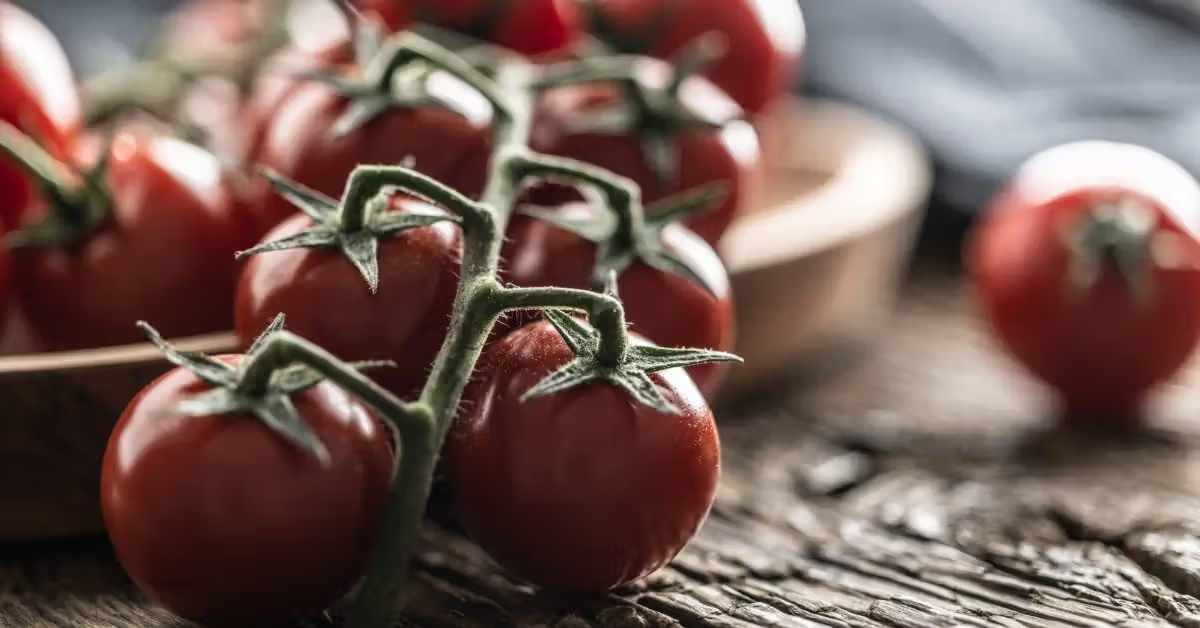
- One exploratory randomized controlled trial in participants with MASLD found that eating tomatoes daily helped to reduce fat buildup in the liver.
For a diagnosis of MASLD, people also need to have at least one cardiometabolic risk factor like obesity or high blood pressure.
Diet and lifestyle changes can be helpful for people who have MASLD, and experts are interested in also understanding what specific food choices may be most helpful.
A study published in Nutrients explored whether consuming tomatoes was helpful for individuals with MASLD.
Researchers found that participants who ate raw tomatoes and tomato sauce daily saw a greater decrease in hepatic steatosis than the control group.
While there is still a lot more research needed in this area, the results suggest a possible benefit for people with MASLD by consuming more tomatoes in their diets.
Tomatoes and MASLD
The authors of this study wanted to see how tomatoes, a common food in the Mediterranean diet, affected liver steatosis.
This study enrolled of 79 adult participants who had MASLD. Researchers excluded certain participants, such as those who consumed over a certain amount of alcohol or had a body mass index of over 30, which
Researchers divided participants into two groups. One group followed a tomato-free control diet. The other ate 200 grams of raw tomatoes and fifty grams of tomato sauce each day.
All tomato products came from the same producer. Other than the intervention, researchers told participants to continue their normal lifestyles.
The tomato intervention lasted for 6 weeks. Researchers assessed a number of health indicators, including body composition, hepatic steatosis, liver stiffness, and cholesterol levels.
Researchers found that hepatic steatosis actually declined in both groups. However, there was a greater decrease for those in the intervention group.
Further evaluation indicated that hepatic steatosis was similar at baseline between the two groups. When it came to other measurements like liver stiffness, researchers did not find any major changes.
They also didn’t find any significant differences between the groups when it came to components like lipids, liver enzymes, and body mass index after the 6-week intervention time.
The authors suggest that their findings indicate that “tomato consumption may reduce hepatic fat accumulation independently of major changes in body weight, total and abdominal adiposity.”
Study limitations and continued research
The intervention time only lasted for 6 weeks, so any long-term benefits are not something this study can speak to. The research also only included adults aged 65 and younger, so it’s unclear how results may differ in older adults.
Most of the participants were men, so more balanced groups may be valuable in future research too. Additionally, excluding participants who had a body mass index of over 30 could have also limited the findings.
Endocrinologist and obesity specialist Randa Abdelmasih MD, DipABOM, from the University of Texas Medical Branch (UTMB), who was not involved in this study, told Medical News Today:
“The study demonstrates a modest reduction in hepatic steatosis over only six weeks in a highly selected population of adults with MASLD and BMI (body mass index) of 30 kg/m² (kilograms per square meter) or more. Most patients we see in clinical practice have obesity (BMI over 30 kg/m²), type 2 diabetes, or more advanced metabolic disease, so the generalizability of these findings is limited.”
Jonathan Jennings, MS, MD, a board-certified internist with Medical Offices of Manhattan, also not involved in this study, expressed a similar sentiment about the limitations of its findings.
“The inclusion criteria required only one cardiometabolic risk factor, and it could be any risk factor. I am concerned that not all risks are equal, and people with multiple factors are at higher risk than those with a single risk factor,” Jennings told us.
“Type 2 diabetes is more likely to lead to MASLD than high blood pressure but the study evaluates them as equal risk factors,” he pointed out.
Researchers note that the reduction in liver fat could have been related to other factors, like how participating in a dietary intervention study may affect participants. Researchers were also limited by how they had to rely on dietary counseling and participants’ reports of actually following the intervention.
Abdelmasih noted that since the intervention combined raw tomatoes and tomato sauce, it’s “difficult to determine which component or combination was responsible for the observed effect.”
Additionally, researchers did not measure circulating amounts of lycopene and carotenoids, which are components that may be responsible for the possible impact of tomatoes on liver health.
Limited clinical application
The authors note that their study was exploratory, so it mainly helps to provide information for future research. They encourage that the findings need confirmation with bigger and more long-term research and encourage that people should interpret the findings as hypothesis-generating.
It’s also unclear how helpful the findings are in clinical practice since other factors remained unchanged.
Abdelmasih noted:
“The study showed improvement in liver fat but no significant improvements in liver stiffness, fibrosis scores, liver enzymes, insulin resistance, inflammatory markers, lipid profile, or body composition. Therefore, while the imaging findings are interesting, we cannot conclude that tomato consumption meaningfully alters disease progression or improves clinically relevant outcomes.”
Further clinical implications
While this study can only show so much, it does indicate a possible health benefit of eating tomatoes for people who have MASLD and a possible strategy that could help with fat buildup in the liver.
Tomatoes may bring other benefits as well. For example, they may offer cardiovascular benefits and even have anti-cancer properties.
People should work with their doctors and other health experts to create a dietary plan that addresses health concerns, rather than hyper-focusing on specific foods.
Jennings noted that:
“The study’s conclusions are hopeful but careful discussion with a healthcare provider is still needed before engaging in any radical dietary adjustments. Tomatoes and tomato-based products may be problematic for individuals with gastroesophageal reflux disease (GERD). Many tomato-based foods are also calorically dense and may worsen insulin resistance in certain individuals.”
It’s also important to look at the findings in the broader context as well.
According to Abdelmasih: “Dietary interventions should be viewed within the broader context of treating the underlying metabolic disease. For patients with obesity, sustained weight loss of approximately 10% or more remains the intervention with the strongest evidence for improving steatohepatitis and fibrosis.”
“While tomatoes can certainly be part of a healthy Mediterranean diet, they should not distract from therapies that have demonstrated meaningful improvements in liver and cardiometabolic outcomes,” she concluded.