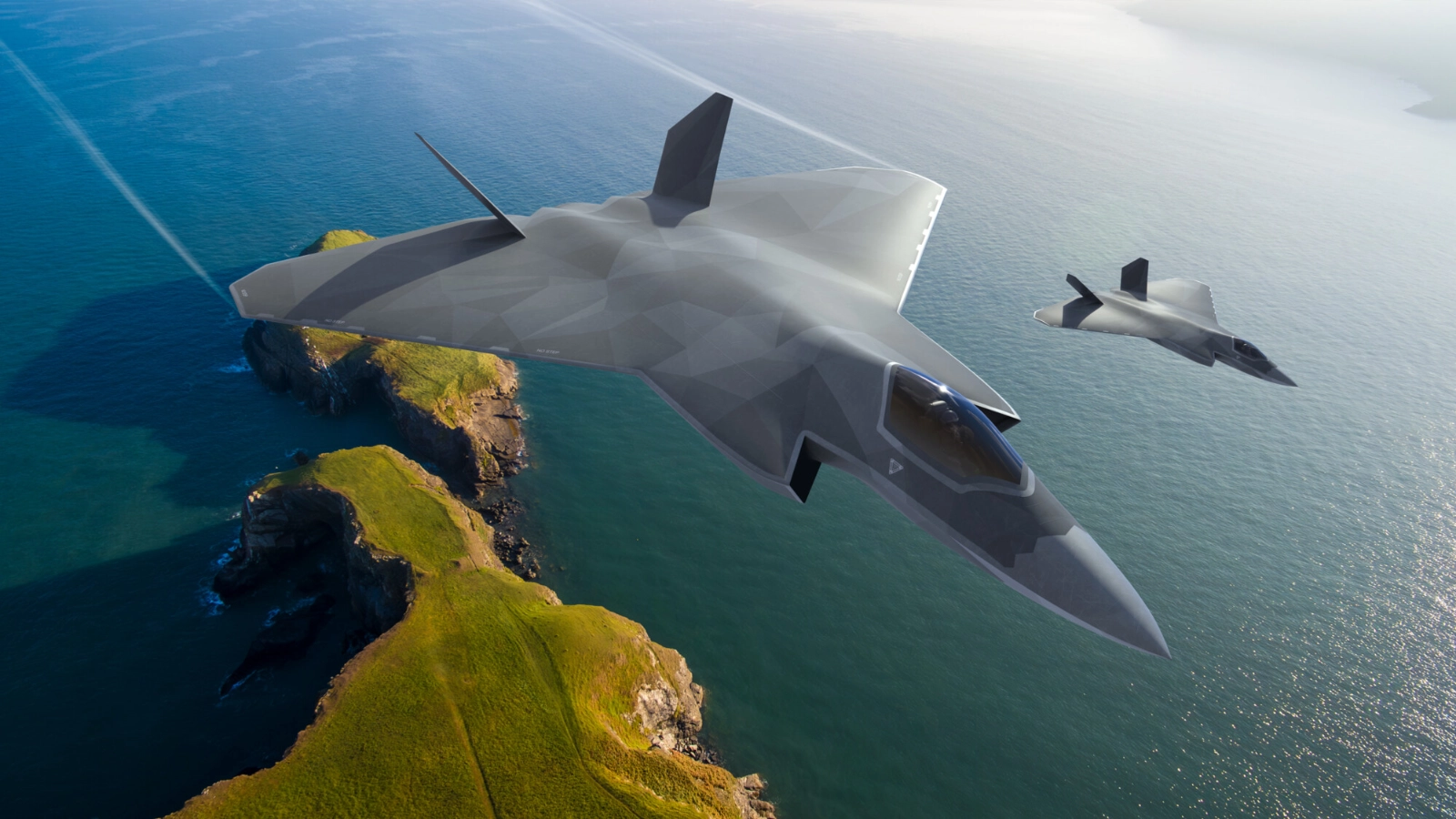
Valued at £686 million, the contract will cover design and engineering, ensuring the resources needed to meet deadlines. At the base, maximum collaboration and sharing between technicians from the United Kingdom, Italy and Japan
The sixth generation fighter which will replace the Eurofighters and defined as a “System of systems”, is moving forward and aims to build the first prototype within two years. Inside the project there is all the Italian and English experience accumulated in the management of programs such as that of the Typhoon and the assembly of the Joint Strike Fighter, commercial name of the Lightning II.
The experience accumulated between Eurofighter and F-35
As always, history teaches that the experience has not always been only positive or negative, but certainly the current times are not the nineties, when the Eurofighter was taking shape, nor the subsequent period which risked stopping the American project to which dozens of countries then joined and for which Italy built the assembly factory for the Europa models, the Faco in Cameri (No). In particular, engineering today is a much more standardized activity than it was thirty years ago; the Anglo-Saxon language is much better known by the new generations and design technology based on applications such as the CatiA program is used by 99% of aerospace companies on the Old Continent. These aspects alone make things much easier and quicker than they were back then.
The first international contract awarded on April 2
The good news is that on 2 April the first international contract for the Global Combat Air Program (Gcap) was awarded by the agency of the same name which manages the program on behalf of Italy, the United Kingdom and Japan. This has signed the first contract for the design and development of the program with the joint venture company Edgewing based in England (it is specially set up by Bae Systems, Leonardo and Japan Aircraft Industrial Enhancement).
The role of Edgewing and the Design Authority
In aeronautical technical terminology this company represents the “Design Authority”, i.e. the owner of the project and responsible for engineering, airworthiness and its military certification. This is a first order worth 686 million pounds (approximately 786 million euros) necessary to finance the activity for the 2026-2027 period by accelerating the implementation times, also because the shape of the airplane must be functional to the multiple sensors and systems that it will have to host, which makes the project very complex.
How program governance works
Above the Edgewing company is the Gcap agency which deals with the management, coordination and execution of all phases of the program. This in turn is directed by the Steering Committee of the “Gcap International Government Organization” (Gigo), established in 2024 to supervise the implementation of the program on behalf of the governments of the participating nations. At the signing of the contract, Masami Oka, managing director of the Gcap agency, said: “This contract represents an important moment as activities previously carried out under separate contracts of the three nations will now be carried forward as part of a fully structured international programme.” And this is one of the characteristics of the Gcap, that is, all the working groups are made up of technicians from the three countries, in order to fully share technologies and methods.
Prototype, certification and entry into service
Edgewing CEO Marco Zoff said: “The speed with which this company and Gcap Agency scaled up their operations was made possible by our shared purpose and strength of collaboration. We are proud to continue this momentum.” After the demonstrator, it will be the turn of the prototype and therefore the certification, with the entry into service of the weapon system scheduled for 2035. Gcap will also have to be created with an open architecture capable of allowing a great evolution of the on-board electronic systems, which will necessarily take place during the entire operational life of the aircraft, currently extended until 2070.