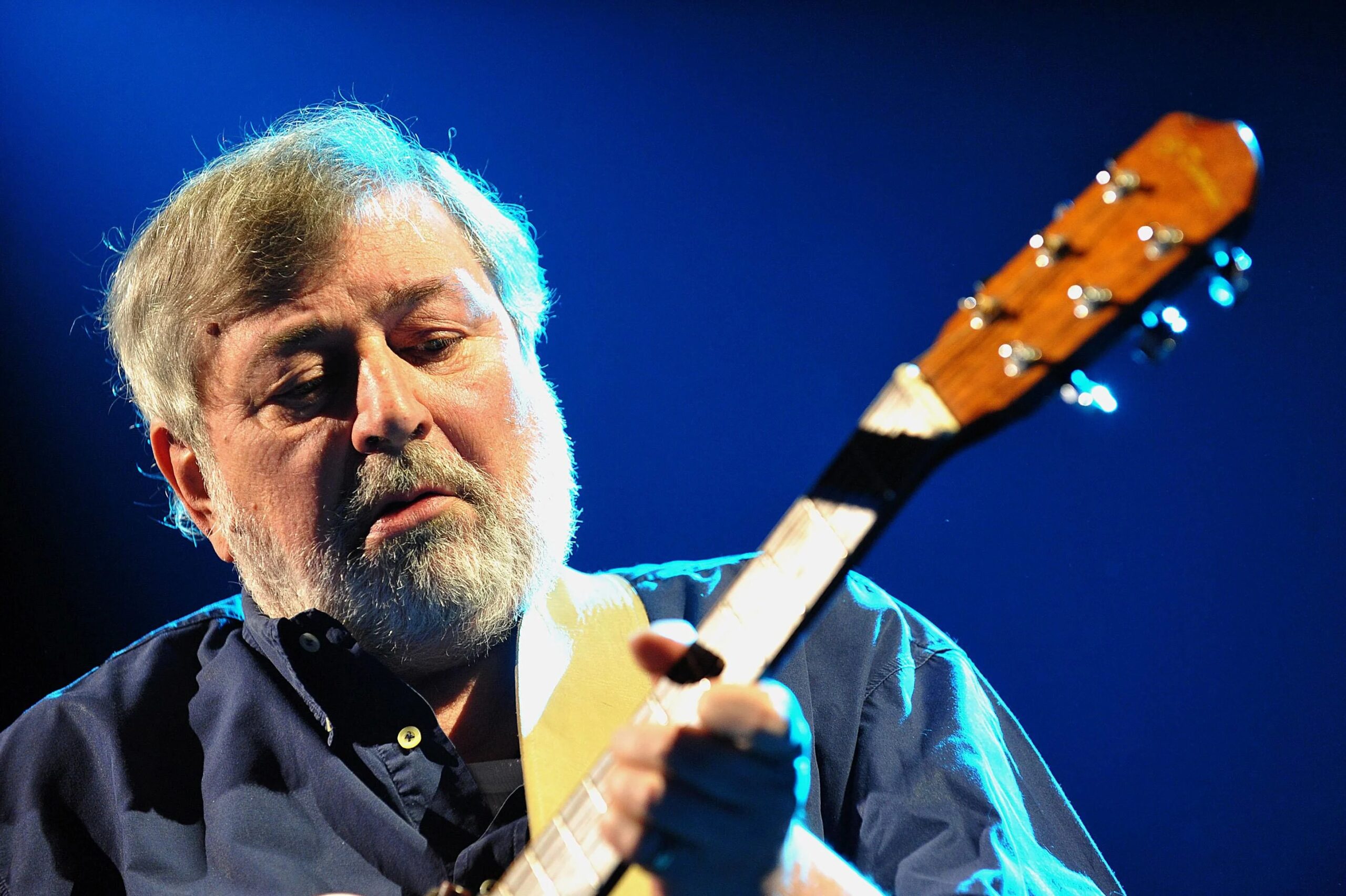
Francesco Guccini died at 86 years old. Singer-songwriter, poet and storyteller, he transformed song into a form of popular literature
Francesco Guccini he died at 86 in his home in Pavana. With him his wife, daughter and family. With Guccini, one of the last great authors of a season in which a song could allow itself to be long, irregular, full of words, characters and digressions disappears. He could even give up an easy refrain, as long as he had something to say.
Defining Guccini only as a singer-songwriter has always been reductive. His songs had the pace of a story, sometimes a confession, other times a monologue pronounced in front of a glass.
He did not have a smooth voice and never tried to have one. His singing was functional to the words: he followed them, underlined them, sometimes he almost seemed to chase them. In Guccini the music did not cover the lyrics. It left him space.
His poetry was born above all from concrete things. A station, a car stopped in a car park, a tavern, a provincial road, a room in which time seems to have settled. A detail was enough for the landscape to become memory and the memory to be transformed into a question about the present.
This is one of the reasons why his songs have aged less than many others. Even when they started from a specific episode, they did not remain prisoners of the news. They spoke of youth when it is already on the verge of ending, of lost friendships, of love observed without illusions, of the distance between what one wanted to become and what one has become.
Guccini knew the risk of rhetoric well and often defused it with irony, especially the one directed towards himself. He did not present himself as an inspired poet. He preferred the figure of the craftsman of words, of the provincial narrator, of the man who doubts even his own certainties. In his most successful compositions, greatness arises precisely from this balance: literary ambition never erases the tone of the conversation.
The cultured references, history, literature and sophisticated vocabulary did not become an exhibition. Culture, in his texts, was not a decoration: it was a way of looking at the world.
Guccini belonged to the generation of authors for whom song could engage with literature without imitating it. He didn’t write poems to which a melody was added: he wrote verses intended to be sung, matching rhythm, meaning and voice.
His legacy is found in this discipline of the word. In the idea that a popular song can be complex without becoming dark, cultured without being distant, sentimental without being saccharine.