Spring arrives and so does the sneezing of those who suffer from the presence of pollen in the air. But now the army of those who believe they are intolerant to milk, gluten and peanuts grows all year round. Too bad there are few who undergo real tests…
Gluten intolerant, or allergic to lactose, nickel, yeast. And also peanuts, milk proteins or cheeses – but only fresh ones – or only mature ones. Or to mold and birch trees. Allergy-mania is now rampant: even just organizing a dinner with friends, and let’s not talk about Easter lunch, can require something similar to the logistics of an allergy department.
If you sit on the plane and have snacks with you that “may contain nuts”, that is, practically all of them, be careful: if there is a person on board who is sensitive to peanuts (real or presumed) you will not be able to consume them, have you ever seen the offending substance spread through the air and hit him, perhaps 15 rows away from you. Suddenly, half the world has become allergic, and the other half has to live according to this.
But are we sure it’s all true? The numbers tell a different story: «The data tell us that serious reactions, such as anaphylactic ones from food allergies, concern a minority of cases, between 0.4 and 2 percent of the population» Federica Rivolta, allergist at the Irccs Policlinico Hospital in Milan, tells Panorama. «Magnifying the topic leads to the real risk of trivializing it: severe forms exist and can be dangerous or lethal, but they should not be confused with much more widespread situations, such as intolerances. Annoying conditions, of course, but which do not put lives at risk and which therefore must be brought back into the right context of reasonableness. Lactose intolerance can cause gastrointestinal disorders, but will never lead to anaphylactic shock.”
It is therefore not enough to struggle to digest pizza or feel a weight in the stomach after breakfast with a cappuccino to declare oneself intolerant or allergic to something: to have a diagnosis, structured analyzes are needed. «The diagnostic process does not end with the classic skin prick tests (the “tests” in which allergens are applied to the skin with a light sting: if a wheal appears it means that the immune system reacts to that substance, ed.): they are useful, but they are not enough», continues Rivolta. «Today we have tests available such as the ImmunoCAP or the Alex Test, which allow us to identify individual allergenic molecules and distinguish between heat-labile and heat-resistant proteins, therefore estimating the clinical risk. If the proteins to which one is sensitive are inactivated by cooking, the patient will be able to tolerate them in cooked or baked foods and should avoid only raw ones. The true allergy is IgE-mediated, the reaction of the immune system in which antibodies called IgE recognize a harmless substance as dangerous.”
This causes an immediate response, with the release of histamine, and everything else must be considered without creating alarmism: when we talk about authentic allergy, in fact, we are referring to oral itching, swelling, hives, up to more serious signs such as difficulty breathing, a sense of constriction in the throat and loss of consciousness. So far the data and scientific evidence: the rest is a gray area made up of influencers, self-diagnoses, questionable tests and fads. The paradox is that while real allergies deserve attention and diagnosis (because if you get something wrong you risk your life), by dint of mentioning them inappropriately they become inflated “labels”.
And what about the demonization of gluten? It would seem that Italy is now completely intolerant, while the consumption of expensive gluten-free products is growing even by those who don’t need them: celiac disease in fact affects only about 1 percent of the Italian population, no more than 265 thousand people. Many, however, self-diagnose it, often with imaginative means, and after being convinced they have the pathology they seek help from doctors. “It is not uncommon for the patient to arrive at the gastroenterological visit after having performed one, if not more, food intolerance tests which have no scientific basis,” says Paoletta Preatoni, head of the clinical gastroenterology functional unit of the Irccs San Raffaele Hospital in Milan. «The only two conditions that we need to confirm or exclude are gluten allergy understood as celiac disease, which has a diagnostic path based on serological and histological tests (such as duodenal biopsy), and lactose allergy, which is identified with the breath test. A correct classification of the symptoms is essential to arrive at an accurate diagnosis and therefore adequate therapy.”
And regarding the trend of consuming gluten-free foods even before having a diagnosis, well, it’s useless. «Following a gluten-free diet, in itself, does not involve particular risks, but it is important to make informed choices», concludes Preatoni. «Many industrial products aimed at celiacs are more processed and with a higher glycemic index than traditional equivalents. At the same time, it is essential not to eliminate gluten before a certain diagnosis: in celiac disease, in fact, the gluten-free diet represents the only therapy and must be followed for life, while in sensitivity alone, after a period of exclusion, a gradual reintroduction of gluten under medical supervision can be envisaged.”
At the same time, research is studying new molecules capable of reducing the immune response to gluten: prospects that are still distant, but which leave open the possibility, in the future, of alternative solutions for true celiac patients.
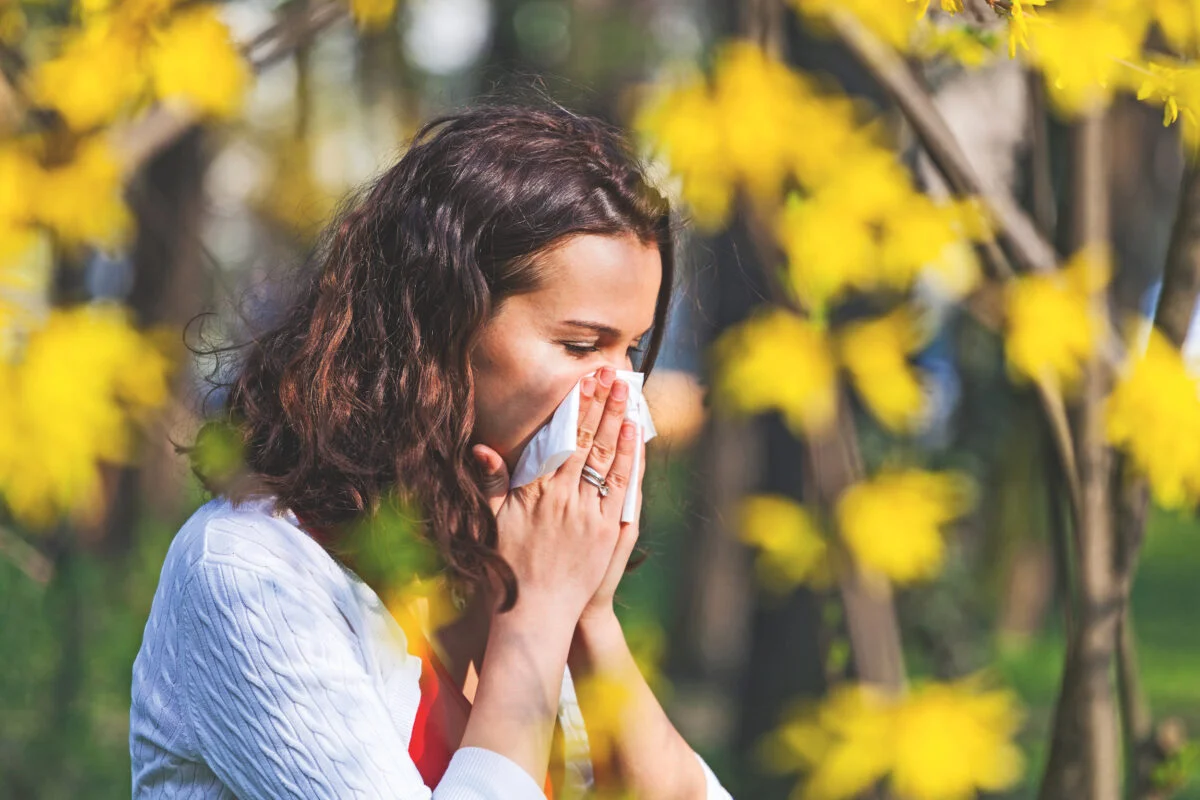
But obviously allergies don’t just feed on food: there’s also the climate. If you sneeze repeatedly and your eyes water and burn relentlessly even now that April has just begun, don’t worry: it’s normal. In this 2026 which is already quite challenging for many reasons, even pollen (thanks to a particularly mild winter) saw fit to arrive early. «For those who are allergic to pollen, parietaria, grasses, birches or ambrosia the prevalent symptomatology is oculorhinitis,» says Rivolta again. «Sometimes asthma is also present. To prevent symptoms we recommend airing the house early in the morning and late at night, using pollen filters in the car and keeping the windows closed. Outdoors, use sunglasses and possibly a mask. The only therapy capable of modifying the progress of the disease (apart from remedies that only alleviate the symptoms) is specific immunotherapy.” And always remember that if everything becomes an allergy, nothing is anymore. In the noise of excessive and fashionable self-diagnoses, the risk is losing sight of the few true clinical emergencies.