The Column – Human Styles
A woman enters the editorial office with an article signed Oriane. The following week another one arrives, signed Mariù. Then Geraldina Tron. The editor doesn’t yet know that they are all the same person.
That person is called Maria Vittoria Rossi. But no one remembers her by that name. They remember her as Irene Brin — the last of her disguises, the one she decides to keep forever.
Born in 1911, Irene Brin grew up in an Italy where elegance is still synonymous with rigor – with hierarchies held up by form. Women who write exist, but they write about flowers, recipes, good manners. Not of society. Not with irony. Not with that cutting precision that makes those described blush.
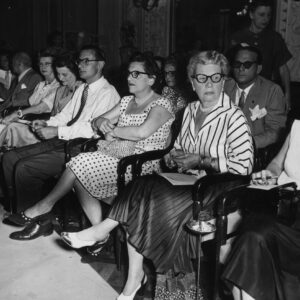
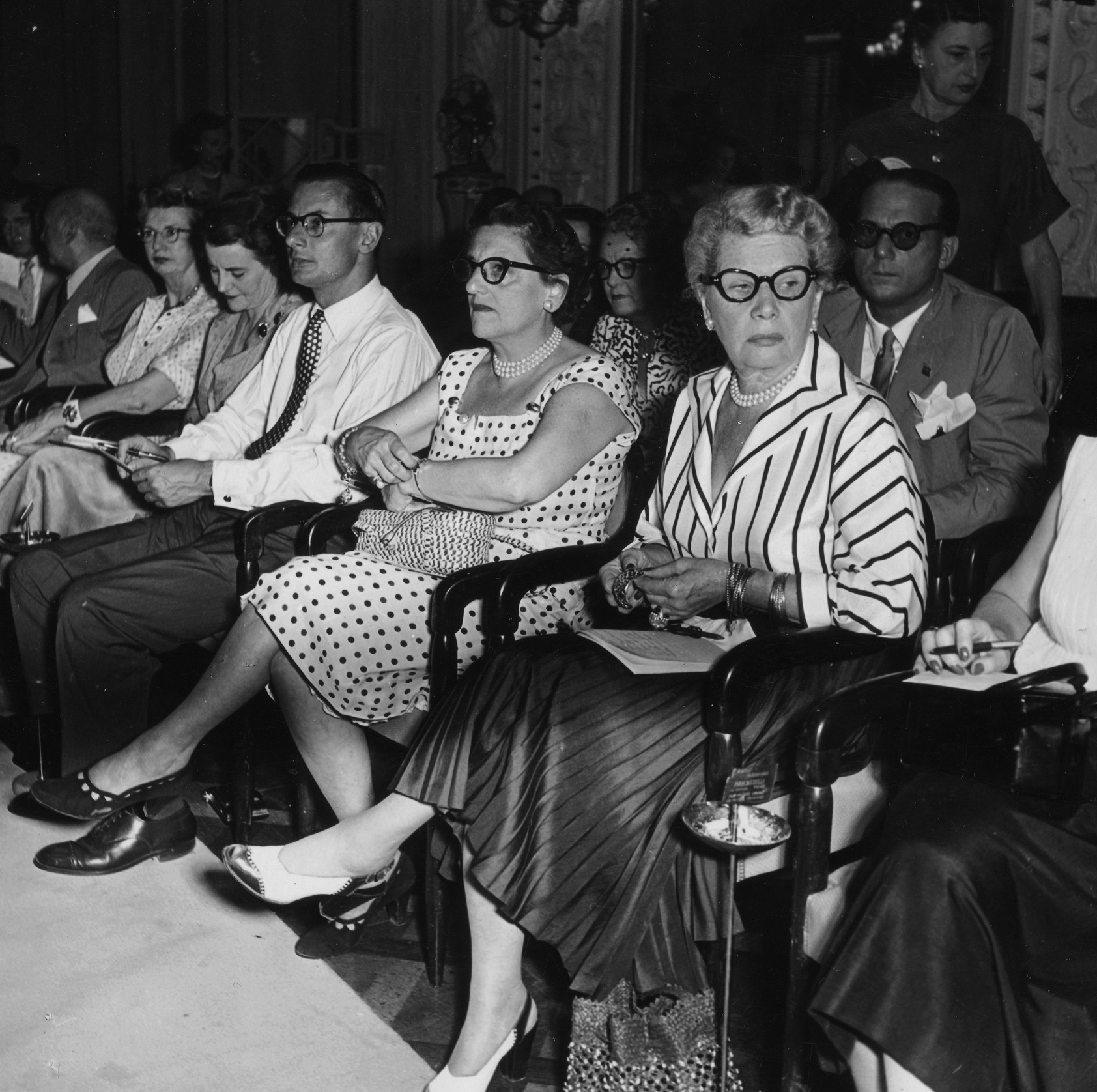
Irene Brin chooses another register. In his articles on customs – published in national and international magazines for decades – the social salon becomes a farce. The catwalk, a distorting mirror. A pompous gesture in three lines is transformed into comedy, without malice but with surgical precision.
Mariù, Oriane, Geraldina Tron: the pseudonyms of Irene Brin
His pseudonyms are not a whim, they are more like a strategy. Mariù comments on fashion. Oriane demolishes social clichés. Geraldina Tron challenges readers. Irene Brin collects all these voices: being herself is already a performance.
The name she chooses to keep, after all, isn’t even hers: Leo Longanesi sewed it on her in 1937, calling her to write about worldliness in «Omnibus». Maria Vittoria Rossi inherits Irene Brin like a tailor-made coat, and wears it better than anyone. From there the signature travels: in New York it conquers Diana Vreeland with a Fabiani suit and becomes the first Italian to sign on «Harper’s Bazaar». He writes everywhere, even in the bathtub — and from those lines post-war Italy learns how to wear beauty.
The Obelisk gallery with Gaspero del Corso
And he doesn’t just write. With her husband, Gaspero del Corso – cavalry officer, collector, traveler – she opened the L’Obelisco gallery in Rome, among the first in Italy to open its doors to the avant-garde. Pasolini passes between those walls as soon as he arrives in the capital. The journalist with many names is joined by the gallery owner: one more identity, this time off the page.
What he transformed isn’t just a tone. It’s a permit. Before her, a woman who makes fun of society is indiscreet. After her, he is an authoritative voice. Fierce irony – the kind that makes you smile and hurts at the same time – does not belong only to men of wit.
Irene Brin has never stopped changing her name. But his style has always remained unmistakable — like a thin needle that sews and unstitches the social fabric, leaving us wondering which side of the thread lies.