The fear of a Russian invasion pushes Lithuania to build and repair weapons and tanks on its territory, while Estonia wants to place 600 bunkers, dig a trench of more than three kilometers and implement the drone wall. With a new surge in military spending
Lithuania is preparing to reach record levels of defense spending next year and, with major purchases of tanks, infantry fighting vehicles and other equipment planned, the Vilnius government is implementing plans to create a state defense holding company that will coordinate weapons, equipment and ammunition production activities. In all likelihood it will be a company that will be part of the Epso-G group which deals with energy and which may also involve foreign technology suppliers. This company will acquire a 25.1% stake in Lithuania Defense Services, a joint venture established by Knds Deutschland and Rheinmetall Landsysteme for the assembly of 44 Leopard 2A8 tanks for the national land forces. The plant where the tanks will be assembled will be built in Kaunas, in the central part of the country, with an estimated investment of 50 million euros, and maintenance activities will also be carried out here.
In the meantime, the first deliveries of the one hundred CV90 infantry fighting vehicles produced by Bae Systems Hägglunds have been confirmed for 2028. The decision to purchase these vehicles was approved by the Lithuanian Defense Council with the condition of being able to carry out maintenance within national borders and joining the existing orders decided by Estonia, Finland, the Netherlands, Norway and Sweden. The purchased Leopard 2A8 tanks will instead be delivered to Vilnius between 2028 and 2030.
Again through its subsidiary Epso-G Invest, the energy group is also involved in the project to start a 155 mm artillery ammunition factory. The plant will be jointly owned with Rheinmetall and ammunition manufacturer AB Giraitės Ginkluotės Gamykla. The investment is expected to amount to at least 260 million euros. At the moment the increase in Lithuanian military spending has reached almost 5.4% of GDP, corresponding to approximately 4.8 billion euros. The current political will is to reorganize and modernize the entire defense system. For this reason, last month, the Lithuanian Ministry of Finance established a working group to coordinate strategic projects. However, the opposition believes that, with neighboring Russia engaged in war against Ukraine, the Baltic state has no time to waste in developing its military industry and that the incumbent government should further increase its efforts.
Estonia, bunkers and defense of the eastern flank
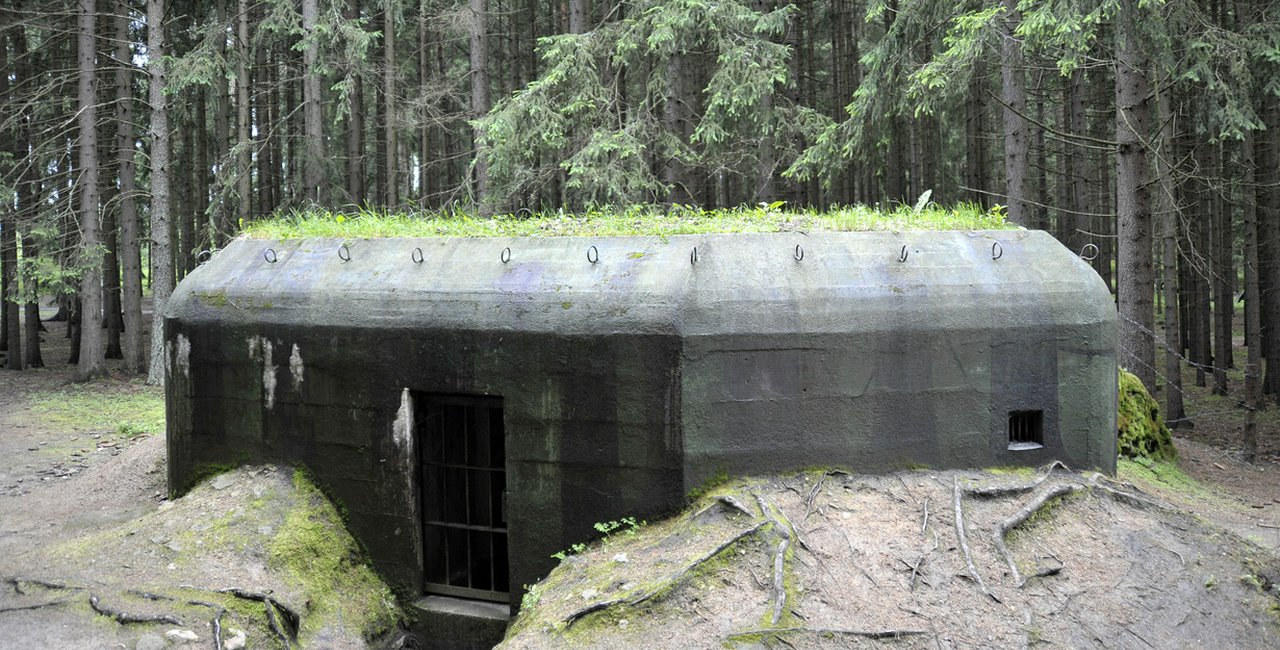
Meanwhile, further north, beyond Latvia, Estonia has begun installing the first concrete bunkers along the south-eastern border with Russia. This operation takes place as part of the new “Baltic Defense Line”. At the moment there are only five finished bunkers out of a planned total of 600, all designed to strengthen the eastern flank of the European Union and NATO. The bunkers, each approximately 35 square meters in size, are designed to withstand 152mm artillery shells and represent part of the defense system designed to stop a possible Russian invasion.
However, the works are going slowly due to expropriations and bureaucratic problems, given that to date only 500 meters of an anti-tank trench have been completed, the extension of which should reach 3.4 km, while further construction works have been postponed pending approval from the Border Guard, whose operational zone would pass through these areas. Despite the setbacks, Estonia remains ahead of Latvia and Lithuania even though Estonia’s budget of 60 million euros – with around 30 million euros spent – is significantly smaller than that of Lithuania and Latvia due to the shorter border length and the presence of natural obstacles, including Lake Peipus and extensive marshy areas. The Estonian project excludes air defense systems and advanced firepower that neighboring countries are installing, while the Estonian Border Guard has already implemented a detection system based on the “drone wall” architecture announced by the European Union.