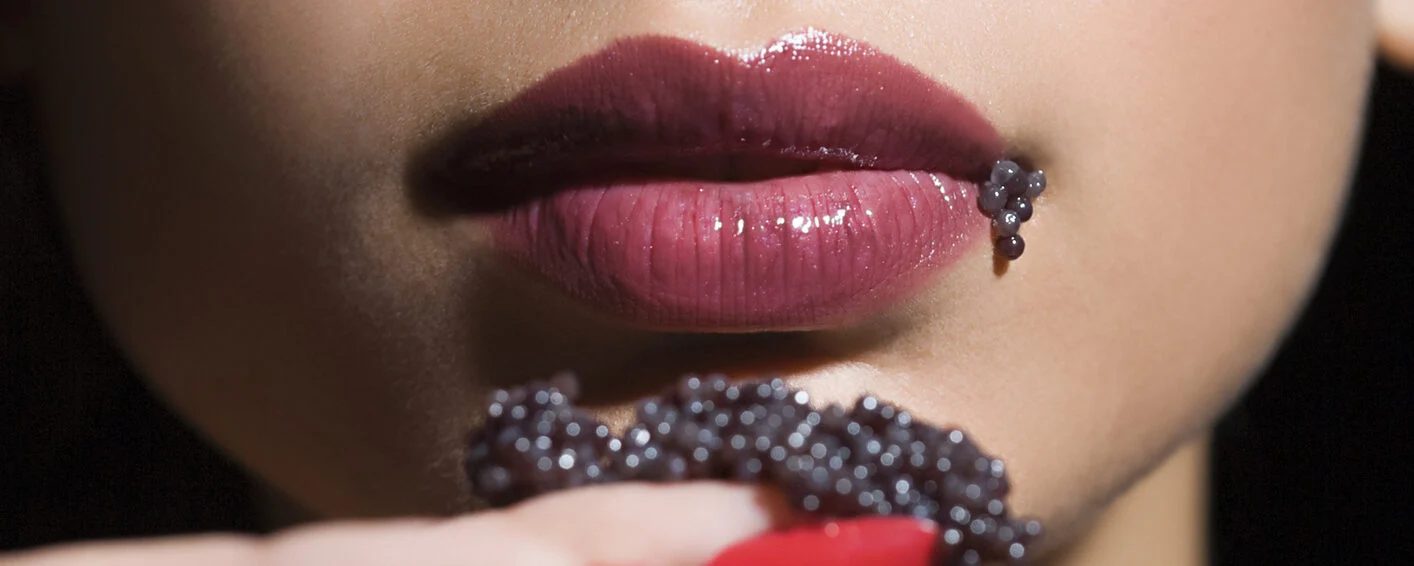
From caviar to foie gras, China expands the production of luxury food and conquers foreign markets, redefining the global balance of the agri-food sector
Luxury food is increasingly becoming made in China. Between caviar, foie gras and truffles, China has entered the global market, giving a hard time to those countries that have these high-end food products as their flagship. At the same time, the arrival of these delicacies directly on Chinese tables, despite the government’s crackdown on gourmet dishes, is slowly changing the habits of local people.
Caviar
In a rather short period of time, the majority of caviar production was concentrated in the land of the Dragon, with Beijing overtaking the main exporters. Today the largest supplier in the world, with a production of 260 tons of fish eggs in 2024 alone, is Kaluga Queen: it is a brand of caviar developed by experts from the Chinese Ministry of Agriculture. Production in China began in the 1990s and already in 2012 Beijing accounted for 14% of global caviar exports, worth 12 million dollars. In 2024, the Financial Times reports, also following the war in Ukraine, China’s exports reached 42% worldwide, worth 98 million dollars.
The export boom
One of the main reasons is to be found in the decline in local consumption of luxury food following the contraction of the real estate market which decreased spending capacity but also the Chinese government’s tightening of official lunches and dinners. Beijing, to combat the dining habits of public employees, which are considered over the top, has in fact banned gourmet dishes, cigarettes or alcohol during working lunches. A consultant specializing in Chinese agriculture, Ian Lahiffe, revealed to the British newspaper: «High-end food production is closely linked to public consumption. Domestic demand took a hit after restrictions were imposed on government banquets and manufacturers suddenly found themselves with stocks to sell abroad.” Among the elements that helped it leapfrog competitors, Lahiffe cited cheaper labor, faster production and supply chains, as well as softer animal welfare requirements.
Local consumption
Until twenty years ago, luxury food products were largely imported. The change began mainly when provincial governments in agricultural regions, including eastern Shandong, central Anhui and southwestern Yunnan, urged farmers to turn to higher-value crops. Suffice it to say that a farmer from the province of Anhui, Li Fengshan, interviewed by the Financial Times, produces 100 tons of foie gras every year, especially for the domestic market. He said that before “many consumers who could afford it were not aware of it, or did not know that it was available in China or Huoqiu county” but “now they love it”.
Macadamia nuts and cherries
Beijing is also the world’s second largest producer of macadamia nuts. And after having overtaken Australia, it now aims to oust South Africa from first place. The cultivation project was born in the 1990s: the food product was considered a high-value crop capable of increasing the incomes of rural farmers. Adverse weather conditions, with typhoons uprooting trees, did not slow down the initiative. In Yunnan, authorities offered subsidies and irrigation assistance to push the project forward. The deputy general manager of the Yunnan discovery group macadamia company, Hu Mingming, explained to the Financial Times: “Once the farmers understood that there was something to gain, they adapted.” But Beijing’s strategy also includes cherries, with China being the largest consumer in the world. In China’s Shandong province, authorities have already urged apple farmers to switch to the other fruit. Beijing does not aim to compete with Chile, but domestic production certainly makes the price lower. Again, weather conditions do not help, but thanks to cold storage, cheap electricity and water supply projects, cherry production becomes possible.