We spent a summer arguing about skin. Whether sunscreen is good or bad, whether protecting ourselves is prudence or paranoia and whether tanning is still sexy or now just irresponsible. It ended up in talks, videos and controversies, becoming a ground for (also) political conflict, with sunbathing becoming an ideological concept. Then the rapper thought about it Psalmwith his body tattooed (and sick of basal cell carcinoma), to remind us of the other side of history: skin is also spectacle, identity, language. Except that while we look at it, take care of it, photograph it, we continue to treat it for what it seems, that is, nothing more than a surface: instead it is an incredibly sophisticated organ, a social organ. Even before the eyes recognize it, the skin can do it.
Homer already knew this, almost three thousand years ago. When Ulysses returns to Ithaca disguised as a beggar, it is the old nurse Eurycleia who recognizes him: not by his face, but by a scar felt with his hands. Today science is beginning to give a new meaning to the skin: it is not just the “border” between us and the world, but rather it is the place through which the world enters into relationship with our mind. A sophisticated interface between body, brain and environment, a real external nervous system.
Beyond the surface: the biology of touch and the fibers of caress
This is the neurobiologist’s perspective Marta Paterliniin the book The skin that thinks (Codice), which invites us to look beyond the epidermis and consider touch as the sense that accompanies us even before birth, and the last one to abandon us. «For a long time we thought of touch above all as the ability to recognize what we touch, but today we know that there is also an affective dimension», says Paterlini, senior scientist at the Karolinska Institutet from Stockholm and science communicator. «In fact, particular nerve fibres, called C-tactile fiberswhich are stimulated above all by slow and delicate contact, such as a caress, at a certain temperature. Discriminative touch allows us first of all to understand that someone is touching us; the emotional one adds a different dimension, linked to the sensation of pleasure and well-being. They are two systems that coexist and which tell us how sophisticated the way the skin registers contact is. It’s as if our body does a double check: first it recognizes the touch, then it interprets its meaning.”
Not only that: physical contact stimulates the release of oxytocin and endorphins, reduces cortisol, promotes the emotional development of children, strengthens emotional relationships and even improves sports performance, as demonstrated by several studies on team rituals. «The first observations date back to the 1930s, when it was noticed that abandoned or hospitalized children, despite being fed normally, could grow less than children who, in addition, also received emotional care and physical contact», continues Paterlini. «Studies on animals and humans have then shown how contact can have concrete effects on the organism: precisely because the skin is a sensory organ through which we experience the world, a form of communication».
There is a tactile language, and this explains why the meaning of a “touch” can change so much depending on the person, the situation and the culture. «There are societies in which physical contact is very frequent and others in which it is much more limited. But, beyond cultural differences, this need seems to have a much deeper component, which concerns our biological functioning”, explains the neurobiologist. «We are just starting to understand how connected the skin and the nervous system are. There are studies, still in a very experimental phase, that are exploring the role of affective touch in conditions such as eating disorders, some neurodivergences and even schizophrenia.”
A window into the brain: skin biomarkers of neurodegenerative diseases
The progression of science does not stop here: recent research published in Jama and in Aging and disease tells us that some skin parameters could offer precious clues for the early diagnosis of Parkinson and other dementias. «In the small nerve fibers present in the skin, some studies have found anomalous forms of alpha-synucleina protein that tends to accumulate in a pathological way in Parkinson’s disease”, he says Andrea Arighidirector of the Neurodegenerative Diseases department of the Irccs Policlinico Hospital of Milan. «The most interesting fact is that these alterations can appear even before the most evident motor symptoms. In the future, therefore, a small skin biopsy could become one of the tools for recognizing the disease early: however, large studies and more standardized tests are still needed.” That’s not all: some laboratories study the presence of anomalous forms of tau proteinanother protein important for the functioning of nerve cells, which accumulates in diseases such as Alzheimer’s and other forms of dementia. «We are also observing alterations in the small nerve fibers and nerves that control automatic functions such as sweating», continues Arighi. «The basic idea is simple and fascinating: the skin could become a sort of accessible window on what is happening in the nervous system: but for now we are still mainly in the field of research». In the present, however, we all find ourselves at the end of August with skin that has been exposed to the sun, the sea, chlorine, air conditioning and the excesses of summer. One of the most common surprises after holidays, for example, are those white spots that suddenly appear after tanning. They should not be underestimated. «It could be pityriasisa superficial mycosis favored above all by humid heat”, the professor tells Panorama Angelo Marzanodirector of the complex dermatology structure of the Policlinico Hospital of Milan. «It usually appears on the trunk with small spots which can be pink or brownish and which, after healing, become more evident because those areas do not produce melanin. When the person exposes himself to the sun, the healthy skin tans while the areas with mycosis remain white: it does not necessarily mean that the infection is still active, but the pigmentation needs time to return to uniformity. This is why it is useful to intervene early, when the lesions are still few, by contacting a dermatologist.”
Returning from the summer: mycosis, false bio myths and clinical control of moles
The problem, however, is not just the stains. It’s also everything that ends up on your skin in the name of health. The summer of solar controversy has brought an old equation back to the fore: natural equals safe. But in dermatology things are more complicated, and this also applies to after-sun products, which we all use at the end of the season to try to remedy excessive exposure. «There is still the idea that a herbal product or one based on plant extracts is safer than a dermatological one», continues Marzano. «It’s not like that. Even substances of natural origin can cause irritative or allergic reactions, and in some cases they can be particularly important. The same goes for some scented products. The skin can react to a substance regardless of its origin.”
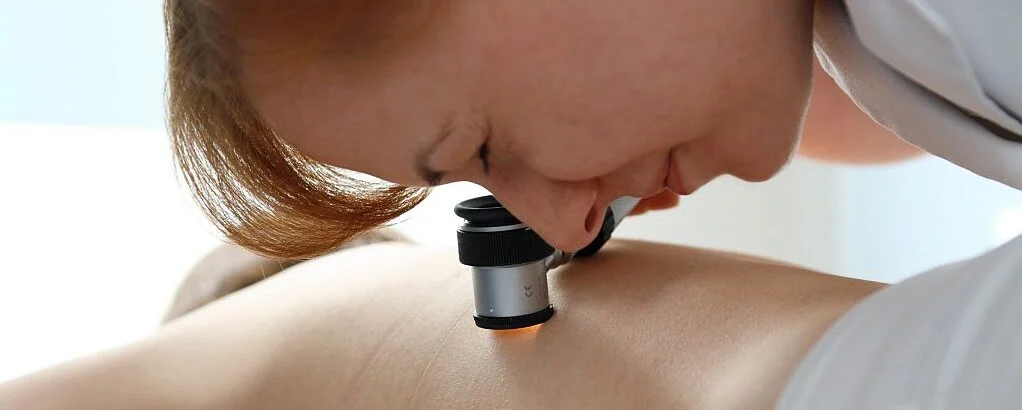
And in the case of moles that change appearance and that we may have noticed while applying sunscreen, the check (as well as their mapping, which has had important developments thanks to AI) is a must. «The parameters we use are those ofAbcde algorithmnamely asymmetry, irregular edges, non-uniform color, diameter and evolution”, says the dermatologist. “This last element is particularly important: if a mole changes rapidly, or a new lesion appears with suspicious characteristics, it is advisable to contact the specialist, who must distinguish what may remain from what must be removed.”
Much more important than a simple “barrier”, more delicate and more intelligent than we thought, the skin that we have transformed throughout the summer into a battlefield between sunscreens, tanning, tattoos and melanomas deserves a decisive “upgrade”. It is not form, but substance. An organ that feels, communicates and could even, one day, help medicine understand what happens inside us.