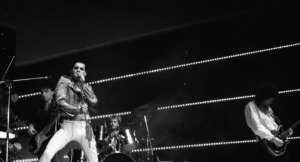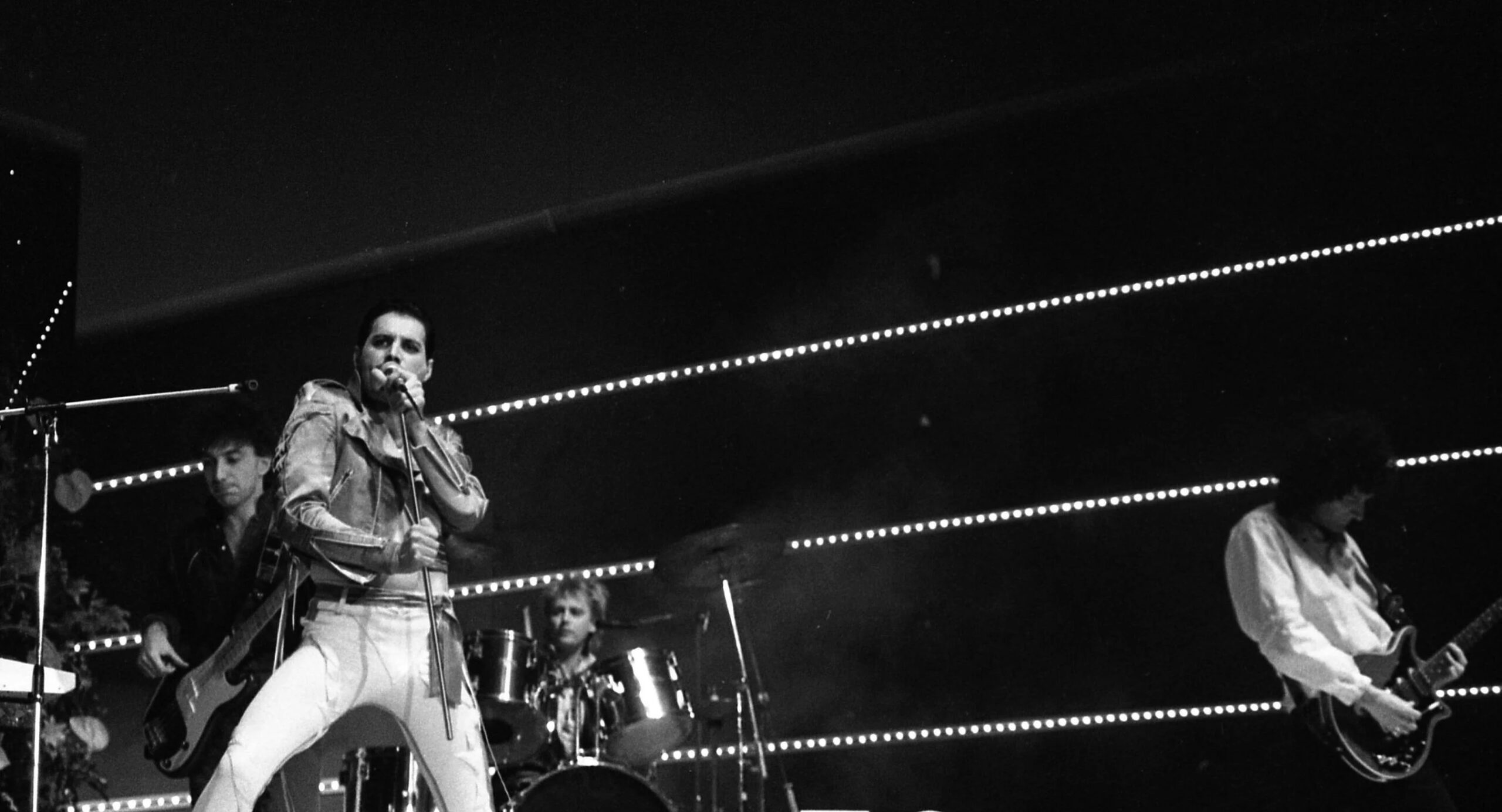
Forty years ago, in front of 120,000 fans, Freddie Mercury played for the last time
History, that evening, had not yet decided to be history. There was no farewell tour. There were no solemn communiqués, separation announcements or prepared words for the back page. And above all, there was no collective awareness that accompanies great farewells when everyone, on stage and in front of the stage, knows they are witnessing something that will never return.
Queen was there. In front of them, a human expanse estimated at around 120,000 peoplecollected in Knebworth Park for the last date of Magic Tour. That show would become Mercury’s last live appearance together with the classic lineup of Queen: a fact now inscribed in the history of rock.
To understand Knebworth you have to go back thirteen months.
The July 13, 1985, on stage at Live Aid at WembleyQueen and Freddie Mercury had condensed an almost perfect demonstration of their stage power into just over twenty minutes. That performance would become one of the most celebrated moments in the history of televised rock and would help to spectacularly reaffirm the group’s live centrality.
When Queen left for the European tour in 1986 linked to A Kind of Magictheir stadium dimension was now complete. The two London dates at Wembley, 11 and 12 July, were part of a tour in which the relationship between the band and the broad masses had reached an impressive scale. Knebworth was added to the final leg of the tour to meet public demand. The event on August 9th thus became a sort of enormous final appendix to Queen’s summer.
By 1986 Queen’s transformation into a big show machine was complete. In the Seventies they were a group capable of fusing hard rock, theatricality, opera, pop, glam and a highly sophisticated culture of the recording studio. Over the next decade they gradually learned to translate that complexity into a language suitable for gigantic spaces.
On Queen’s stage every element now had a dramaturgical function: the entrance, Mercury’s movement, Brian May’s Red Special, the physical scansion of Roger Taylor’s drums, the essentiality of John Deacon, the pauses, the lights, the audience’s choirs, the encores. A concert was no longer simply a sequence of songs. He had become mass architecture.
Knebworth was also built according to this logic: an event of colossal dimensions, with large screens intended to allow even the furthest spectators to follow what was happening on stage.”
The show begins as One Vision. Born in the period following Live Aid and released at the end of 1985, the song had become the ideal trigger for the Magic Tour shows. Soon after came Tie Your Mother Down.
Then the medley resumes In the Lap of the Gods… Revisited And Seven Seas of Rhye before entering Tear It Up. Then A Kind Of Magic. They follow Under Pressure, Another One Bites the Dust, Who Wants to Live Forever And I Want to Break Free. He arrives Now I’m Here and shortly after one of the most intimate moments that Queen paradoxically managed to produce in front of immense crowds: Love of My Life. Mercury sings, but the audience gradually takes over the song. Then Is This the World We Created…?.
The rock’n’roll medley follows until the final explosion with Bohemian Rhapsody, Hammer to fall, Crazy little thing called love and Radio Ga Ga. And finally the sequence destined to transform the last minutes of the concert into liturgy: We Will Rock You, Friends Will Be Friends, We Are the Champions.
History, that evening, had not yet decided to be history: no one knew that this would be Freddie’s last farewell to his audience. Only years later did the world understand that an era was over.