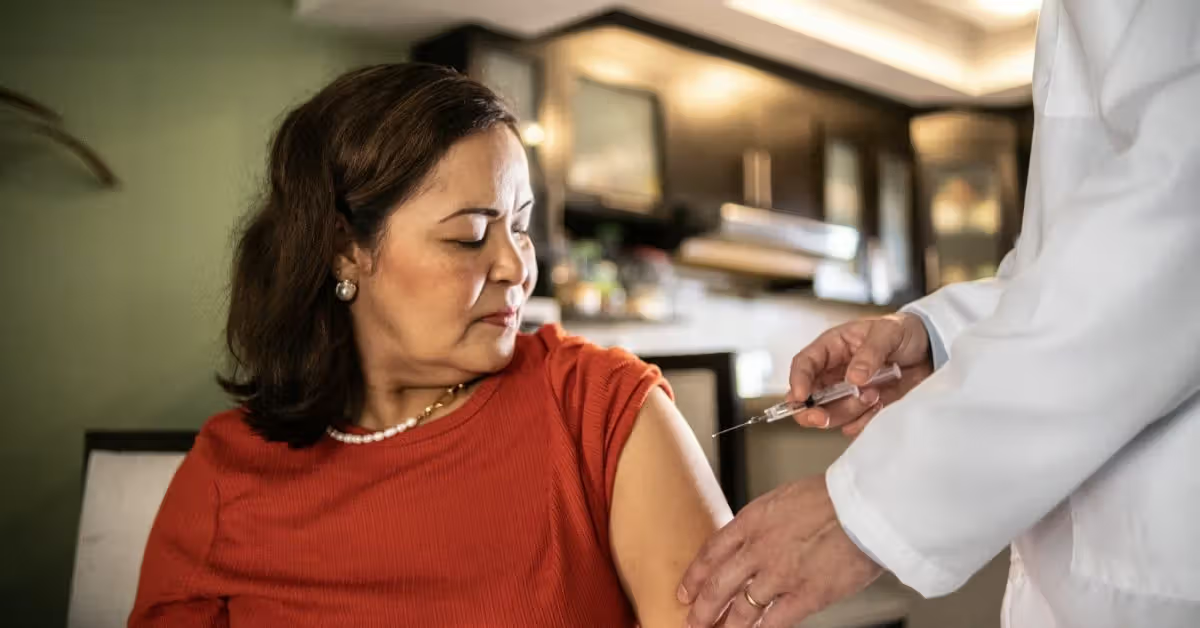
- In 2017, the Food and Drug Administration (FDA) approved the use of the recombinant zoster vaccine Shingrix for shingles to eventually replace the live-virus vaccine Zostavax.
- Over the last few years, researchers have found Shingrix may help in other areas of a person’s health, including lower cardiovascular disease risk.
- A new study found people who receive Shingrix have a 9% reduction in cardiovascular burden during the 7 years after receiving the vaccine.
In 2017, the Food and Drug Administration (FDA) approved the use of a new shingles vaccine called a recombinant zoster vaccine (brand name Shingrix) to eventually replace the use of the live-virus shingles vaccine Zostavax.
The Centers for Disease Commission and Control (CDC)
Over the last few years, researchers have examined how Shingrix may help in other areas of health. Past studies show evidence that the recombinant zoster vaccine may also lower a person’s risk for dementia and cardiovascular disease.
Now, a new study published in the journal
Scientists found that people who receive Shingrix have a 9% reduction in cardiovascular burden during the 7 years after receiving the vaccine.
Shingrix vaccine lowers heart disease burden by 9%
For this study, researchers analyzed medical data from the USA TriNetX electronic health records network for 72,920 people: 36,460 who had received Shingrix, and as many again who had received the Zostavax vaccine.
Scientists focused on cardiovascular disease risk over the seven years following adults ages 60 and older being vaccinated with either Shingrix or Zostavax.
At the study’s conclusion, researchers found that people who received the Shingrix vaccine had a 9% decrease in cardiovascular burden in the seven years after being vaccinated, when compared to those receiving Zostavax.
“Cardiovascular diseases affect millions of people every year and are the
“An intervention with the potential to reduce the risk of cardiovascular diseases would therefore have an enormous impact on public health,” said Taquet.
Shingles vaccine lowers heart failure risk by 12%
Scientists also discovered that people vaccinated with Shingrix had 10% lower burden of ischemic heart disease and 12% lower burden of heart failure.
Specifically, men receiving Shingrix also reduced their burden of stroke by 12%, and both men and women reduced their burden of atrial fibrillation by 7%.
“This is important because strokes are associated with particularly high mortality,” Taquet said. “It seems that shingles vaccination — and the recombinant vaccine in particular — may have unsuspected benefits on health conditions other than shingles prevention.”
”If confirmed, these findings would make shingles vaccination an important and relatively cheap intervention,” he added.
“Our study remains observational and therefore findings need to be confirmed in randomized clinical trials. We now need to run clinical trials (two are underway), conduct mechanistic studies to understand how the shingles vaccine may protect against cardiovascular disease, and better understand at what age these additional benefits are most seen and thus at what age it would be most pertinent to be vaccinated.”
– Max Taquet, PhD
How would Shingrix lower heart disease risk?
Heather Johnson, MD, director of Preventive Cardiology for Women’s Services at Baptist Health Heart & Vascular Care at Baptist Health Christine E. Lynn Women’s Health & Wellness Institute, part of Baptist Health South Florida, who was not involved in this study told MNT There are a couple of possible explanations as to how the shingles vaccine could help lower cardiovascular disease risk,
“One possibility is simply preventing shingles,” Johnson explained. “Shingles cause significant inflammation and have previously been associated with
“But this study suggests there may be more to the story,” she continued. “Shingrix uses an adjuvant, called
“One pathway highlighted in the study involves
Potential for a substantial impact on population health
MNT also spoke with Kevin Shah, MD, a board-certified cardiologist and Program Director of Heart Failure Outreach at MemorialCare Heart & Vascular Institute at Long Beach Medical Center in Long Beach, CA, who commented he found these findings both intriguing and encouraging.
“Shingrix is already widely recommended to prevent shingles and its complications, so the possibility that it may also be associated with a lower risk of cardiovascular events raises an important and unexpected public health benefit,” Shah, who was also not involved in this study, told MNT.
“While these results do not prove cause and effect, they certainly warrant further study,” he noted.
“Vaccines are among the most effective public health interventions we have. If a vaccine can provide benefits beyond preventing the targeted infection, such as reducing cardiovascular risk, the impact on population health could be substantial. Given that cardiovascular disease remains the leading cause of death worldwide, understanding these potential broader benefits would be extremely important.”
–Kevin Shah, M.D.
Another reason to advocate for adults getting the shingles vaccine
MNT also spoke to Renato Apolito, MD, medical director of cardiac catheterization and assistant program director of cardiology fellowship at Hackensack Meridian Jersey Shore University Medical Center in New Jersey, who was not involved in this study.
Apolito said this study’s results are another positive direction in advocating for patients to receive this vaccine.
“It’s an interesting finding to consider that cardiovascular events and heart failure may be reduced,” he told us. “I am a recipient of the vaccine and I already advocate strongly for it to my eligible patients, just for the reduction in suffering I see in some people. This is an exciting potential additional benefit.”
“I think irrespective of the vaccine’s reduction on cardiovascular events, it has a clear beneficial role in reducing episodes of shingles,” Apolito continued. “If it can, additionally, reduce adverse cardiac outcomes as well, this would be another great reason to sway people towards receiving this vaccine.”