To fly from Italy to Australia you need many hours, a good dose of organization and a motivation strong enough to justify a trip to the other side of the planet. For sports fans, that motivation is becoming easier and easier to find.
Australia is no longer limited to hosting a succession of international tournaments and competitions. It is building a complete tourist offer around sport, in which the match, race or Grand Prix becomes the center of a much broader itinerary. You come to see your team, you stay to discover beaches, creative neighborhoods, restaurants, port cities, Aboriginal culture and landscapes that are difficult to find elsewhere.
For the Italian public, the 2026 and 2027 calendar contains at least two very concrete reasons to look towards Perth: the return of the national rugby team to Australia and a week entirely dedicated to the great Italian football, with four historic clubs ready to transfer rivalries and fans to the capital of Western Australia.
The Azzurri of rugby have returned to Australia
The first meeting has already taken place, with a decidedly bitter result for Italy. On Saturday 18 July the Azzurri faced the Wallabies at HBF Park in Perth, returning to play on Australian soil after almost ten years.
The match, included in the first edition of the Nations Championship, ended with a clear victory for Australia 57-10. The Wallabies scored nine tries, while those from Michele Lamaro and Monty Ioane were not enough for Italy. For the Azzurri it was the third defeat in the competition after those against Japan and New Zealand.
However, the sporting outcome does not erase the significance of the event. For Perth it was the Wallabies’ first home match against Italy and, according to Rugby Australia, the match attracted the largest crowd ever at HBF Park for an Australian national team test.
The match also represented a preview of what awaits the country in 2027. From 1 October to 13 November, Australia will host the men’s Rugby World Cup, expanded for the first time to 24 teams and 52 matches. The opening match will be played in Perth, while the final is scheduled for Sydney.
For Italian fans, the World Cup thus becomes a possible great sporting journey: six weeks in which following the matches could mean moving between Perth, Melbourne, Brisbane, Sydney and the other cities involved, transforming the tournament into an itinerary across the continent.
Milan, Inter, Juventus and Palermo: the Italian week in Perth
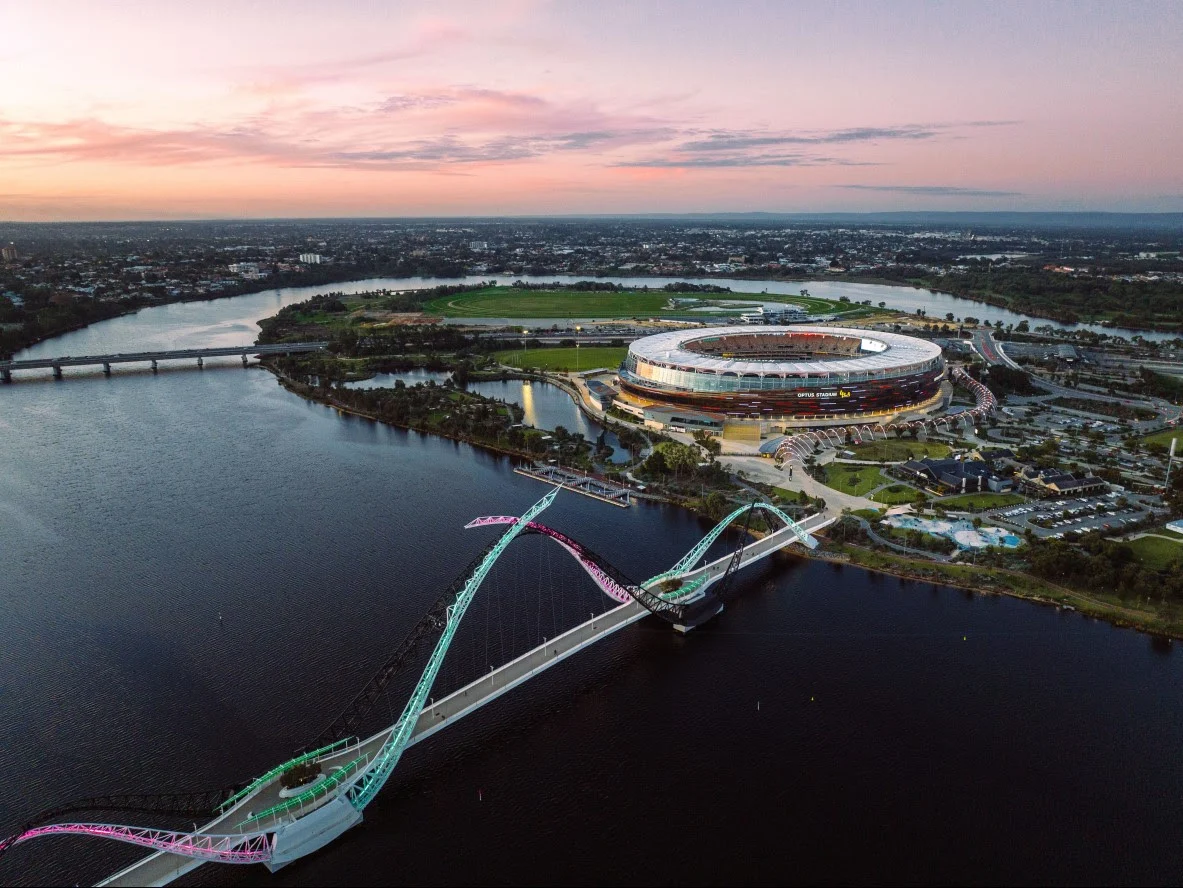
Once rugby is over, Perth is preparing to speak even more Italian. It will arrive from August 5th to 11th Italian Football – Only in Perthan event that will bring AC Milan, Inter, Juventus and Palermo to Western Australia.
The program includes three meetings. It starts on Wednesday 5 August at the Optus Stadium with the derby between Milan and Inter. Saturday 8 August will be the turn of the Italian Derby between Juventus and Inter, again at the Optus Stadium. The conclusion is scheduled for Tuesday 11 August at HBF Park, where Juventus and Palermo will face each other.
They won’t be simple summer friendlies. Around the matches there will be training sessions open to the public, opportunities to meet fans, initiatives dedicated to local football communities, entertainment and events linked to Italian cuisine and culture.
The operation evidently focuses on the global strength of the Serie A brands, but also on the importance of the Italian presence in the history of Western Australia. Palermo, on their first Australian tour, will have Fremantle as their “home” during the week, with events that will combine football, music and Sicilian tradition.
It is difficult to imagine a more effective synthesis between sports tourism and Italian identity: seeing the Derby della Madonnina almost 14 thousand kilometers from Milan, in a stadium ideally overlooking an international audience, and then finding outside the venue a community that has preserved rites, recipes and ties with our country for generations.
Perth, much more than the stadium
Sport offers the excuse, but Perth has enough arguments to extend the journey. Western Australia’s capital combines beaches, parks and outdoor spaces with an urban scene of small bars, creative restaurants and street art. It is a city that lives at a less frenetic pace than the large metropolises of the east coast, but which in recent years has strengthened its cultural and international vocation.
Elizabeth Quay, on the Swan River, is one of the symbols of its urban transformation. The Northbridge neighbourhood, close to the centre, concentrates clubs, restaurants and cultural spaces, but also preserves part of the memory of Italian immigration. The Casa d’Italia was born right here in 1934, created to help newly arrived migrants find relationships, support and opportunities.
That experience continues today in WA Italian Clubone of Western Australia’s longest-running social clubs. Born to accompany Italians in building a new life, it has become a center dedicated to the preservation and sharing of Italian culture through cuisine, meetings, music and community activities.
For those wishing to move away from the centre, the natural stop is Fremantle, a port city marked by Victorian-era architecture and a strong gastronomic identity. Its South Terrace is known as Cappuccino Stripa walk of cafes and restaurants linked in a particular way to the Italian presence.
The tradition of outdoor tables began in 1977, when the Italian Nunzio Gumina obtained the first city license for outdoor catering for his restaurant. That gesture contributed to changing the way of experiencing the streets of Fremantle, introducing a Mediterranean habit destined to become one of the distinctive features of the city.
When a game becomes a journey
The Australian bet starts from a simple principle: a major sporting event does not generate value only during the hours spent in the stands. It brings visitors, fills hotels and restaurants, creates opportunities to explore the area and can convince the public to reach places that would otherwise have remained off traditional tourist itineraries.
Perth, in particular, uses international events to strengthen its position as Australia’s western gateway. The match between the Wallabies and Italy was also presented by the local authorities as a tool to support tourism during the southern winter and consolidate the image of the city as a venue for major events.
The August football calendar follows the same logic. Exclusivity matters: to see Milan, Inter, Juventus and Palermo gathered in a single week you will have to go to Perth. Not one stage among many, therefore, but a destination chosen specifically to build a festival around the teams.
This is the element that can convince even the Italian fan most accustomed to following their club in Europe. In Australia the trip isn’t just about replicating an experience already had at San Siro or the Stadium. It offers the chance to see family rivalries in a completely different context, meet Italian communities born from emigration and add a destination to the mix that, alone, is worth the trip.
The 57-10 defeat suffered by the Azzurri of rugby left few happy memories on the field. Outside the stadium, however, it showed how ready Perth is to use sport as an international language. In August it will be football’s turn. The Rugby World Cup will arrive in 2027. And as we approach the Brisbane 2032 Olympic and Paralympic Games, Australia will continue to present itself not just as the place where major events are played, but as the journey that begins when the game ends.