At the beginning of the last century, Giulio Gianelli wrote an iconic, if forgotten, fairy tale: a life in reverse that ends with youth. The same impulse that drives our senile society which, however, lacks poetry
What is the greatest dream of a senile society like ours, inhabited increasingly by old people? Going back to being kids, if not even children. There is a now forgotten book that tried to tell the fabulous story of a life lived in reverse, of an old man who grew younger over the years until he became a child. It is the Story of Pippin who was born old and died as a child, published in 1911 after it had been published in installments in a magazine, L’Avvenire. The author was called Giulio Gianelli, from Turin, poet, writer and journalist of little fortune, collaborator of period magazines such as The Countess’ Friday and The Modern Artist. In the wake of D’Annunzio, Gianelli also attempted to write subjects for the cinema. He was one of those crepuscular and “pathetic” writers of the early twentieth century, such as Sergio Corazzini and Marino Moretti, a friend of Guido Gozzano and Giovanni Cena, of Sibilla Aleramo and Eleonora Duse. Of poor health, short-lived, solitary and painful, prone to tears and tenderness, they called him Gianellino because he was small in stature, with a pipe always in his mouth and a hat on his head. His work on inverse life should be a best seller today, in a time populated by old people in search of youth.
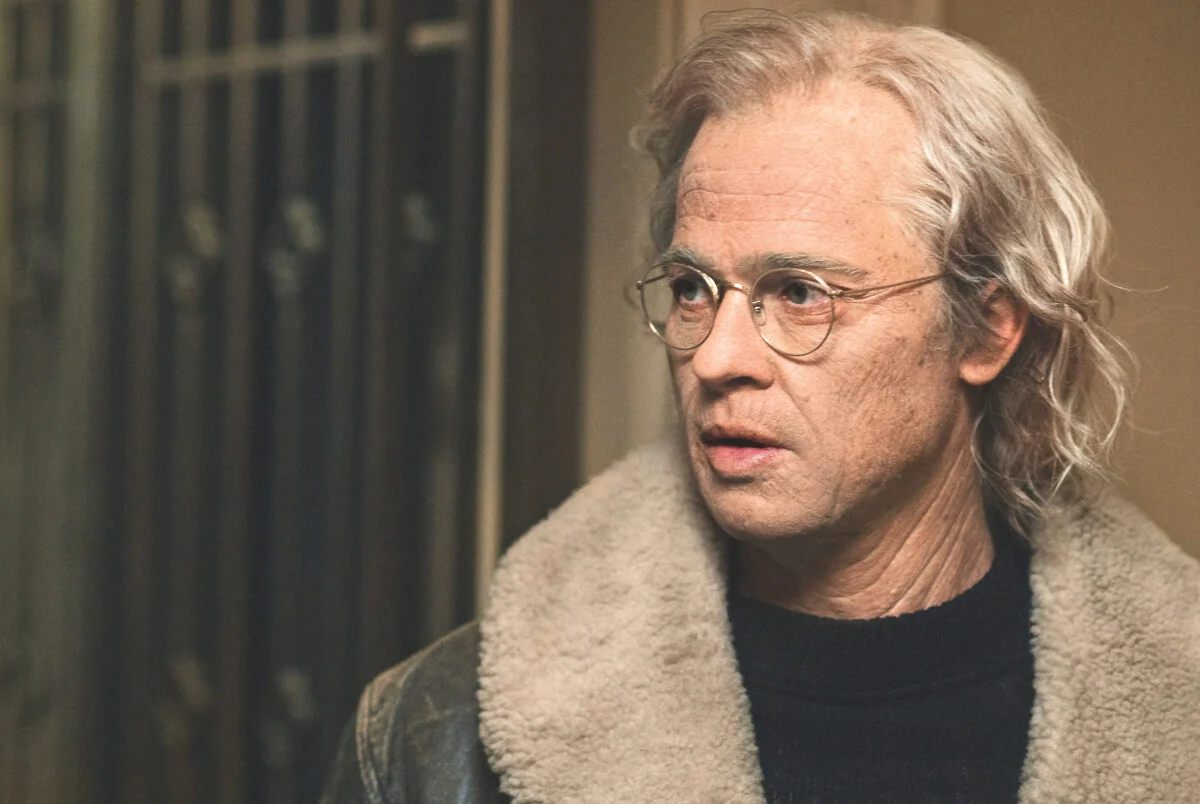
Gianelli touched on the hidden dream of humanity, since the time of Plato, who described the reverse path from old age to youth in a famous myth. Perhaps Francis Scott Fitzgerald was inspired by him in telling The Strange Case of Benjamin Button, which later became a film by David Fincher with Brad Pitt which told the parable of an old man who undergoes a reverse degenerative process and dies as a child. The story of Pippin did not have the fortune of Pinocchio, Gianelli was not Carlo Lorenzini, he did not have his magical and creative fervor. But Pippin recalls Collodi’s puppet, it is the metaphor of an initiatory journey, the myth of life regenerated and turned upside down. Pippin is halfway between the imaginative and symbolic adventures of Pinocchio and the historical-lyrical epic of the Heart by De Amicis, of which he shares the religious, moral and patriotic thrill, the sentiment and the educational intent. Pipino is in the vein of the Italian popular and pedagogical novel of the late nineteenth century.
«You will become a man like the others, then a young man, then a child, then a child; in the end we will give you up as a wet nurse and you will end your existence in a cradle.” This is how Pippin’s reverse parable and his journey into the enchanted world of fairies, dragons, crickets and pomegranates, armies of fantasy, masters who magically reinvent the alphabet are described at the beginning. In his transfiguration there is the spirit of the age: there are the strikes that the author opposes, there is love of country and its denigration, there is the controversy with positivism and scientism in the name of the spirit and poetry: «The world needs poetry, but good, true, holy, which springs from the moved heart, which is sweet like prayer, strong like the centuries-old oak, beautiful like the sea, joyful like the water. Poetry inspires charity and patience… consoles pain, makes death sweet. Be poets, but not of words, but of the ideal (…) Go, children: bring into the world the gift that men had lost.” Tender words, a little cloying, but of lively spirituality and sincere ideal impulse.
The work also reflects the author’s life, his search for his lost mother and father when he was a child; there is his generous soul that led him to help the earthquake victims of Messina and adopt two children who escaped the tragedy, Ugo and Mario, who reappear in the novel with the names of Ughé and Mariù, “two beautiful souls”, alongside Pipino until his death. Pippin began as a domestic tale to tell them; then it became a novel, “and the imagination became bread”. He moved with them to Rome and had them study at the Nazarene College. On this journey back towards childhood and death, Pippin said he was happy to “see himself shrinking and rejuvenating” and “the desire to rest in peace pricked him”, in the womb of eternal life. It occurred three years after his Pippin, due to tuberculosis. «His body gradually disappeared, but not his soul, alive and great, present in all his works», they wrote of him, now identifying him with his character. Life copied from literature, Oscar Wilde would say. Gianelli left with his Pipino. The epigraph for his tomb at Verano in Rome was written by Giovanni Cena: «Orphan, he had all men as brothers/ companions poverty and poetry/ vast human soul/ in the body of a child/ was shattered by the fullness of ardor/ those who knew him/ felt better».
Soon all traces of his style and his ideal and religious fervor, of his childish soul, were lost. But the myth of a life turned upside down remained in the air, that dream of rediscovering the golden age of childhood in extremis, the Puer Aeternus, and of starting over, having another chance, going towards Life, in reverse. Having lost the prospect of eternal life, the dream of a small immortality moved to earth and the desire to rejuvenate passed from poetry to technoscience. The dream of reversing the march of old age returns, through drugs and biotechnology, miracles of genetics and plastic surgery. But in the claim of our time to live longer, healthier and younger, the fabulous leaven of poetry and the backward, initiatory and nostalgic journey towards the childhood of Pippin are lost.