The former underground warehouse “La Carona” in Fornovo di Taro becomes a training ground for the war of the future: tunnels, darkness, smoke and the absence of GPS recreate the scenarios of Gaza and Ukraine
After the “Cerberus” and “Stix” military exercises last April, which Defense Minister Guido Crosetto visited, now other armed forces of NATO nations want to use the Italian sites of Fornovo di Taro (Pr) and Scalo Po (Pc) for their training maneuvers. In particular, the Fornovo site, or the “La Carona” centre. This is the former underground aeronautical fuel depot built in the 1930s for the Royal Air Force and decommissioned in 2000, designed to resist various types of attacks but also bombings. It certainly would not withstand current anti-bunker bombs, however it is able to offer a scenario similar to that of the tunnels in Gaza, underground stations in Ukraine and urban industrial contexts. It is an environment made up of five enormous cylindrical tanks, once used for fuel, and a two kilometer network of connecting tunnels. Thus both Israel, whose military was not trained to act in this similar context, and the military of other nations such as Belgium, Turkey, France, Germany, Greece, the Netherlands and Poland, asked to be able to carry out training operations there. In the past “La Carona” had also been used by the Green Berets (USA), as well as by the men of our Folgore.
La Carona, the Italian bunker that recreates the Gaza tunnels
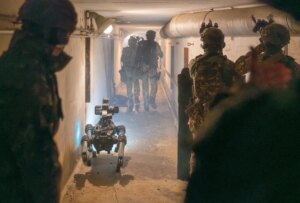
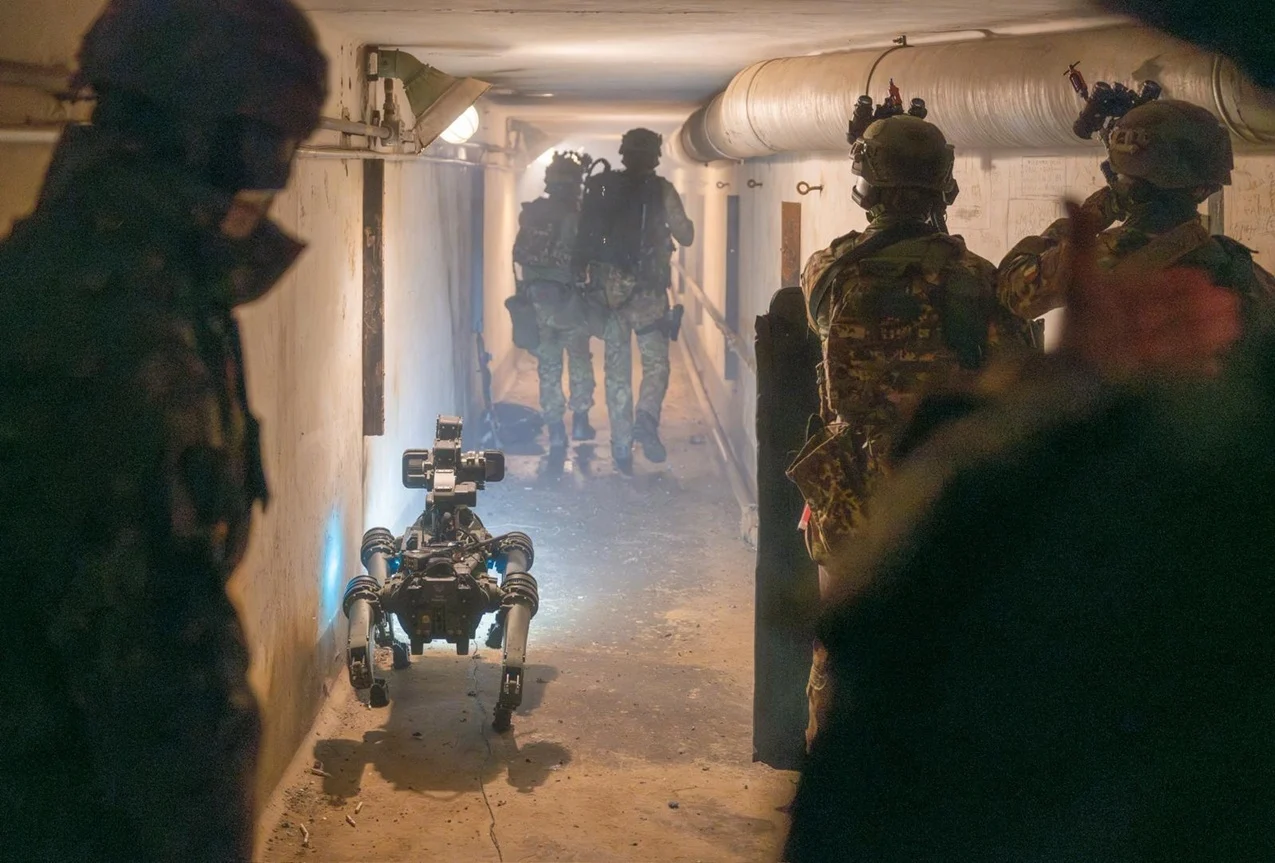
The space available under the Fornovo woods recreates the conditions and limitations of tunnel combat, from the persistent darkness to the limited use of radios, up to the absence of GPS signals. Today, in the second life of “La Carona” a control room allows instructors to generate sounds, including the sound of explosions, as well as saturate the environments with smoke and deactivate the lighting on command.
How to fight underground: darkness, smoke, explosives and no GPS
Operations in tunnels and bunkers are increasingly frequent around the world, where narrow corridors have earthen walls supported by wooden props, concrete slabs or rusty metal sheets. In these places the lighting consists of electric ceiling bulbs and battery-operated lanterns that alternate with shadowy corners. On the ground there may be debris and equipment, bodies, crates, communication cables, bombs and explosives placed to cause collapses. The atmosphere may be borderline breathable, with thick dust, fumes and gases; floors may be filled with puddles of water.
Two kilometers of tunnels to train special units
In practice, the soldiers of the special departments practice starting from mapping unknown spaces; the cylindrical tanks measure approximately twenty meters in diameter by seven meters in height and are connected by tunnels which were used to convey the fuel. Finally, there is still a second tunnel, about a kilometer long, which was used to transport fuel to and from the nearest railway station.
From Ukraine to Gaza, the war of the future goes underground
These sites, as well as abandoned industrial ones, offer the possibility of replicating underground but above all urban scenarios, i.e. those where the majority of people live and which increasingly become the theaters of armed clashes.
Crosetto: «The subsoil has become a decisive space for maneuver»
Minister Crosetto, during his visit last April, declared: “It is not enough to prevent risks or predict scenarios: events must be anticipated. We live in particularly complex times. Perspectives have changed, the international context has changed, and we must have the ability to adapt and face it with clarity and responsibility (…). The subsoil has become a decisive space for manoeuvre, which hosts vital infrastructures such as water, energy and telecommunications networks. In this context, the Army demonstrates the ability to look ahead, and Today’s exercise is clear evidence of this. We need to maintain niches of excellence and at the same time progressively raise the overall level of preparation.”