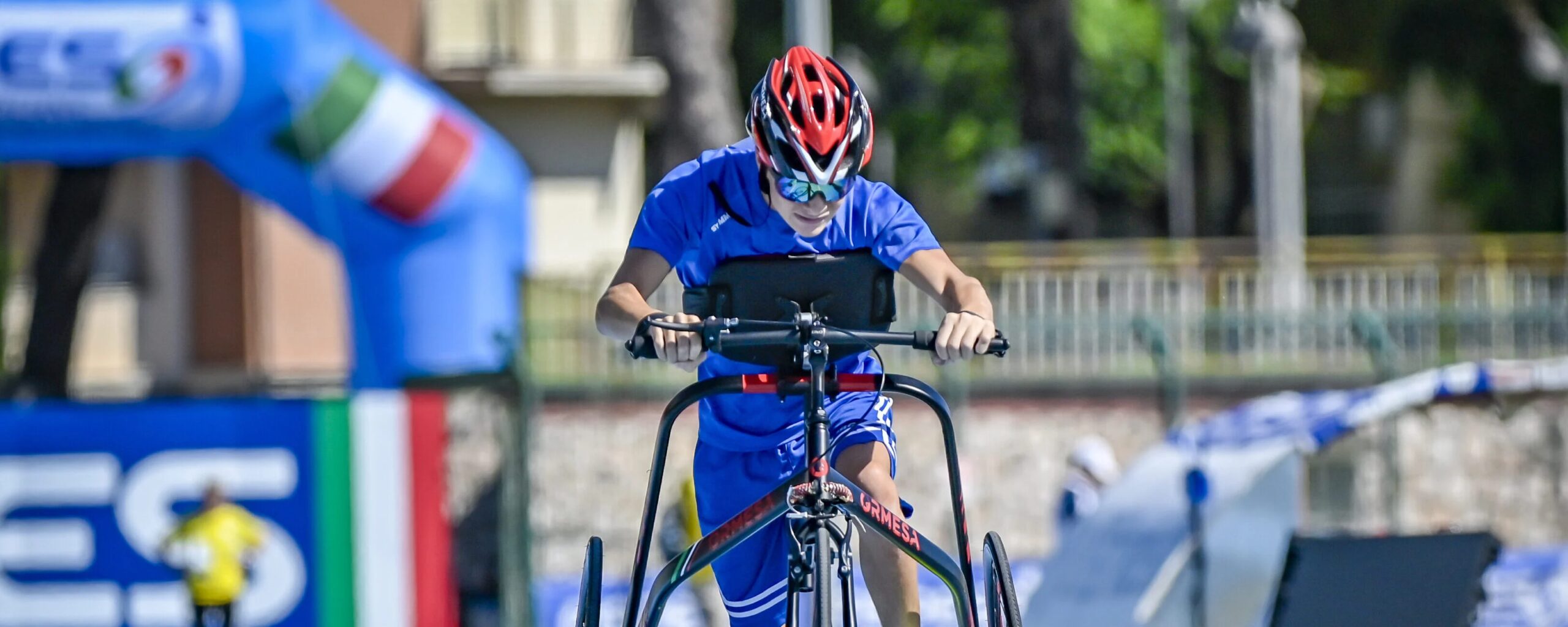
At the Milan Cortina 2026 Paralympics, a story is told that goes far beyond sport: it is the story of an Italian industry of excellence, that of medical devices and technological aids, which transforms precision engineering into an instrument of freedom. Boots modeled on the cast of the stump, biathlon sleds built around the three-dimensional scan of the athlete’s body, sports wheelchairs designed to withstand the intensity of para ice hockey: these are products born in Italy, in a sector that is worth almost 19 billion euros and has over 4,600 companies and 130,500 employees.
And the Paralympics are also an opportunity to raise urgent issues, such as updating the nomenclature of aids and essential levels of assistance, still stuck in outdated technologies while innovation runs ever faster. Leading this battle is Confindustria Dispositivi Medici, through its association of assistive technology companies. We talked about it with Elena Menichini, president of the association, who explained to us how Paralympic technology is rewriting the boundaries of the possible: not only for elite athletes, but for everyone.
The medical device sector in Italy is worth over 18 billion euros. What are the technological “flagships” produced by your companies that we saw on the field at the Paralympics?
Italian MedTech is worth almost 19 billion euros and has over 4,600 companies that employ around 130,500 people – an ecosystem that at the Milan Cortina 2026 Paralympics is told through products with high technological content and high customization. On the slopes we have seen ski boots adapted to the cast of the athlete’s stump, capable of merging prosthetics and sports equipment into a single kinematic that allows descents at over 100 km/h. In snow races, we have seen biathlon sleds made from a three-dimensional scan of the athlete’s body, with carbon fiber shells shaped millimeter by millimeter to optimize the biomechanics of the pushing gesture. On the ice rinks, latest generation sports wheelchairs, designed to withstand the intensity of para ice hockey. These are all technologies that are also born in Italy, where the production of aids companies reaches 80% of the total.
How do you transform the technology of an everyday prosthesis into a high-performance “competition” one? What cutting-edge materials are you experimenting with?
Until the 1960s, prostheses were made in the traditional way, with wooden components. Thanks to advanced technologies borrowed from automotive and aerospace, companies in the sector have developed more comfortable, resistant and lightweight materials, combined with more sophisticated construction techniques. Today the distance between a daily prosthesis and a competition one is measured in terms of tolerances, materials and customization. Carbon fiber has replaced metal where extreme lightness is needed. The modular connection systems allow you to move from the prosthesis for everyday life to that for racing with a single load-bearing structure adapted to different needs. The real innovation, however, is not just in the material: it is in the process. For each athlete we start with a body scan, build a digital model, and print or mill components to absolute measurement. It is haute couture with the tools of precision engineering. As happens in Formula 1 – where we study to win the world championship, but then the innovations are brought back to production cars – what is experienced by Paralympic athletes becomes, over time, accessible to everyone.
A collaboration with the Milano Cortina Foundation aims to amplify the message of empowerment. What are the concrete projects that Confindustria Dispositivi Medici intends to implement to leave a “technological legacy” after the event?
For us, the Milan Cortina Paralympics are not an event to watch: they are a platform to inhabit. The legacy we want to leave has three dimensions. The first is visibility: bringing the faces of the companies that produce these devices to the Olympics means giving a name and an identity to a supply chain that the general public does not know, but which touches the lives of millions of people. The second is the network: we want to build a network of sports facilities equipped with aids and prostheses accessible to all, with orthopedic technicians, physiotherapists and specialized instructors, because technology without the skills to use it is not enough. The third – and most urgent – is institutional: using the visibility of the Paralympics to forcefully reopen the debate on the reimbursement of sports aids and the need to update the nomenclature to make innovative technologies accessible to all through the essential levels of assistance. Today in the LEAs there are still outdated or no longer used devices, while many innovative technologies that can improve autonomy, participation and quality of life are not yet accessible through the Health Service. It is important to distinguish: in high-level Paralympic sport, technologies are often customized and designed for the athlete’s maximum individual performance; but there is an equally fundamental level, which precedes and nourishes the highly competitive one. It is about the introduction to sport through dedicated associations, schools, scientific communities, in which the aids are designed to be highly adaptable in order to follow the athlete in his growth or to be used by multiple athletes, each with his own needs, thus making sport truly accessible to everyone.
Milan Cortina can be an opportunity to accelerate this update: innovation must become a right for everyone, not an opportunity reserved for those who can afford it.
Sport is described as a powerful tool for inclusion. How can a technologically advanced aid radically change the social life of a person with disabilities, even outside of competition?
In Italy, out of over three million people with severe disabilities, less than 10% practice sport. Yet, sporting activity is one of the most effective tools of inclusion: it helps to break down physical and cultural barriers and represents a powerful driver of psychophysical recovery and development.
Technology plays a decisive role. A technologically advanced aid does not just restore a motor function: it restores possibilities. The possibility to move, to participate, to be with others, to test oneself – even just with oneself. In other words, it restores a social role.
Mobility means autonomy, and autonomy is the prerequisite for dignity and participation in daily life. This is why it is essential that the most advanced technologies are truly accessible. Today, however, many innovative aids, as well as aids for competitive and non-competitive sports, are not yet adequately recognized or reimbursed by the Health Service: updating the essential levels of assistance and the nomenclature of aids is therefore a necessary step to guarantee the same opportunities to all people with disabilities.
Sport is the context in which this change becomes more visible, but its value goes far beyond competitive spirit: it concerns the possibility of living one’s life fully.
Every disability is different. How do your companies manage to combine industrial production with the need to create tailor-made aids, almost like high-tech tailoring products?
It is a question that explains the specificity of our sector well. When it comes to complex aids, there are no standard solutions: each person has a different clinical history, morphology, level of autonomy and life goals. For this reason, adaptability and possible customization are not optional, but the starting condition.
Companies in our sector manage to combine industrial and tailor-made production thanks to a unique model that integrates technological innovation and highly specialized professional skills. On the one hand there is the industrial scale, which allows the development of components, advanced materials, extensive adjustments to make the device adaptable and long-lasting and therefore to contain its costs; on the other hand there is individual adaptation work; in both cases there is a team that involves not only technicians and engineers, but also healthcare professionals, clinicians and rehabilitation specialists.
Each aid for competitive sport arises from an in-depth evaluation of the person: physical characteristics, pathology, lifestyle and functional objectives are analysed. From there, customized solutions are designed and assembled, with tests, adaptations and checks until the best balance between comfort, safety and performance is found. It is a process that recalls, in some respects, haute couture: advanced technologies and industrial components combine with precision work that makes each device unique.
It is precisely this ability to combine engineering, innovation and attention to the person that makes the Italian assistive technology industry an internationally recognized excellence. A wealth of skills that deserves to be valorised in our country too, guaranteeing people with disabilities faster access to technologies to improve the quality of life, through constant updating of the essential levels of assistance.