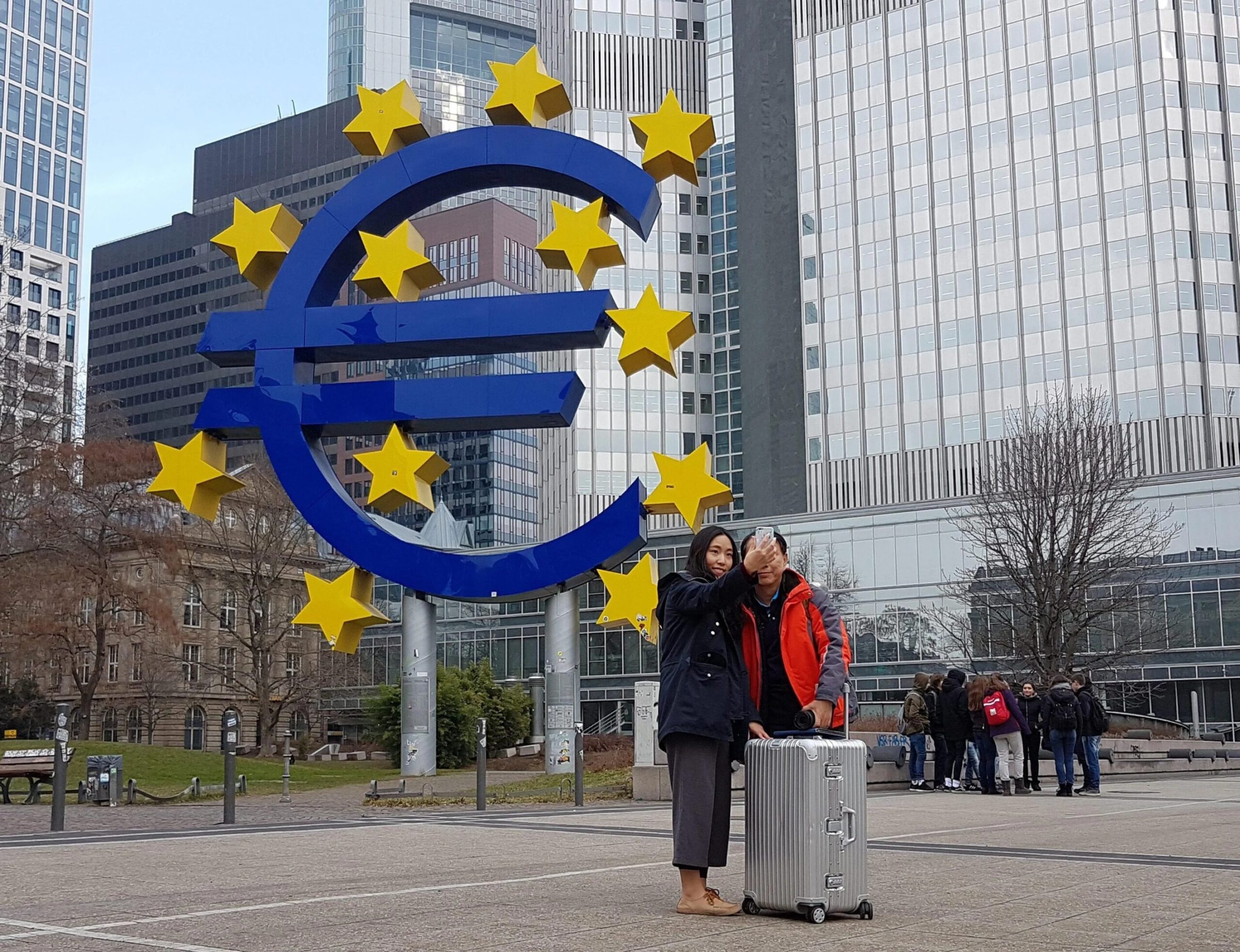
From 1 January 2026 Sofia will adopt the euro after almost twenty years of waiting. Between low inflation and minimal debt, fears remain about prices, widespread corruption and social tensions on the eve of the currency exchange
Bulgaria will become the twenty-first member of the Eurozone from January 2026. A milestone that has been awaited for almost twenty years, but which comes for 6.4 million inhabitants at a delicate moment: mass protests, resignation of the prime minister, corruption perceived as endemic and an economy that remains the most fragile in the European Union. What really changes with the euro in Bulgaria and what will happen in the coming months?
Eurozone: Bulgaria will adopt the euro from 2026
Bulgaria’s entry into the Eurozone is not a sudden surprise, but the culmination of a process started in 2007, when the country entered the European Union and also committed to adopting the single currency. Since then, however, the path has proven to be tortuous. Sofia had to deal with structural fragilities of the economy, chronic political instability and strong internal opposition, fueled by Eurosceptic and pro-Russian sentiments. Bulgaria has progressively satisfied all the required convergence criteria: inflation under control, limited deficit and public debt (the debt remains the lowest in the EU), stability of interest rates and participation in the European Exchange Rate Mechanism from 2020. The conversion rate was set at 1.95583 levs for one euro, the same ratio that the Bulgarian currency has had in practice for years to the single currency.
In reality, the monetary independence that many citizens fear losing has already been limited for some time. The lev has been pegged to the euro for decades and the European Central Bank already supervises a significant part of the Bulgarian banking system. The euro, therefore, formalizes an existing situation, but it is still politically symbolic because it means entry into the “living room” of European integration.
Bulgaria: on the eve of joining the euro with a fragile economy, fear of prices and street protests
On the eve of entry into the Eurozone, the climate in Bulgaria is anything but serene. The country remains the poorest in the European Union: almost 30% of the population is at risk of poverty, the minimum wage is the lowest in the EU and the average wage stops at around one thousand euros. In this context, the euro scares many citizens, who fear an increase in prices, as has already happened elsewhere. The protests that erupted in recent months against the 2026 euro budget soon expanded into a protest against the government and a political system perceived as corrupt. In Sofia, hundreds of thousands of people, especially young people, took to the streets to demand the resignation of Prime Minister Rosen Zhelyazkov, who was then forced to leave office. At the center of popular anger is corruption, embodied by the opaque power of the oligarchs: in this context, the euro risks appearing not as an opportunity, but as an imposition far from the daily life of families.
Bulgaria: what will happen after January 1, 2026
The transition from the lev to the euro will be accompanied by a transitional phase designed to limit shocks and abuse. Double exposure of prices for twelve months, preventive distribution of euro cash, adaptation of ATMs and strengthened price monitoring is envisaged. According to European estimates, the inflationary impact of previous changes to the euro has been limited, but the challenge will be to protect the most vulnerable segments of the population. In the medium to long term, the euro promises important benefits: greater financial stability, reduction in exchange costs, more transparency in prices, easier access to financial markets and greater attractiveness for foreign investments. For a country that accounts for just 0.67% of the Eurozone’s GDP, the systemic risks are limited, while the potential advantages in terms of economic integration are significant.
Bulgaria’s entry into the euro also opens up new opportunities for Italy. A larger and more homogeneous Eurozone can encourage investments, production relocations and trade, especially in a country that still offers low labor costs. But everything will depend on Bulgaria’s ability to accompany the single currency with credible reforms, the fight against corruption and political stability.
The euro, alone, will not solve the country’s structural problems. It could be an anchor of stability or a detonator of new social tensions. The real game will be played after 1 January 2026: if the benefits remain on paper, Euroscepticism risks growing further; if, however, the euro is accompanied by growth, transparency and trust in the institutions, Bulgaria will finally be able to close the long transition that began almost twenty years ago, with its entry into the Union.