The US government granted damage to the people affected by the radioactive wind caused by nuclear tests in New Mexico, in 1945. 80 years passed …
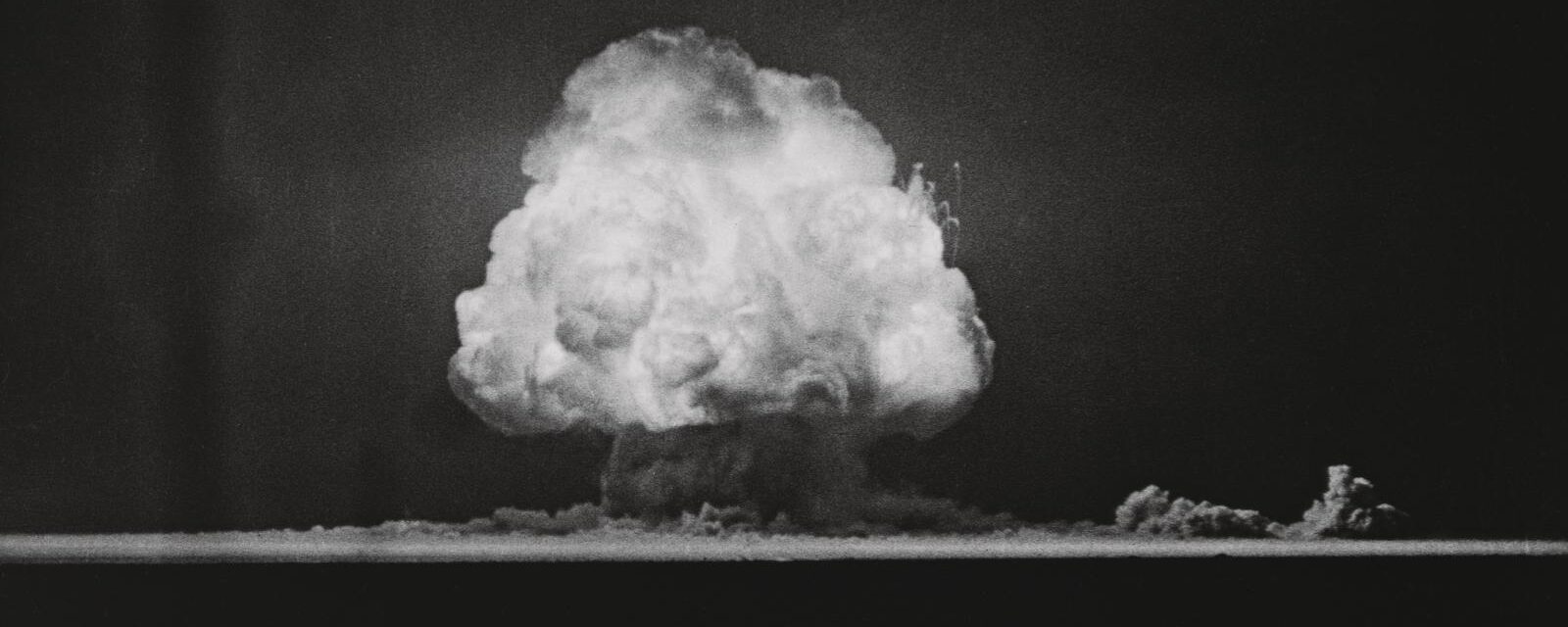
The show that welcomed the thirteen year old Barbara Kent that morning was unforgettable: candid flakes fell gently on the ground. She and her teammates of the campsite thought it was snow: “We grabbed the white flakes and we spread on them, pressing them on the face,” Kent said. «But the strange thing is that instead of being cold, they were warm. And we all thought: “Well, the reason is because we are in summer” ». It was July 16, 1945. The girl and her teenage friends were on vacation in Ruidoso, in New Mexico. Less than 150 kilometers away, in the desert called Jornada del Muerto (travel of the dead), at 5.29 in the morning the scientists and soldiers of the Manhattan project had made an atomic bomb explode for the first time in history, nicknamed “The Gadget”. It was the Trinity test, a fundamental step for the final point of the two devices that on 6 and 9 August 80 years ago they were detached respectively on the Japanese cities of Hiroshima and Nagasaki. The explosion of “The Gadget” created a gigantic column of fire and gases in the shape of a mushroom which rises up to 12 kilometers: then the cloud divided into three parts, one drift to the east, another part to the west and north-west and the last third in the north-east.
Even if the test site had been chosen for its alleged isolation, in reality almost half a million people lived within a radius of 240 kilometers from the explosionAnd some even just 20 kilometers away. The authorities were aware of the risks that the civilian population ran and some scientists appealed to Robert Oppenheimer, scientific director of the Manhattan project, and to General Leslie Groves, military manager, to warn and remove the inhabitants. But in the face of the need to keep the experiment very secret, the answer was negative.
The detonation was seen over 250 kilometers away. Several people close to the site, stunned by the powerful explosion, thought they were faced with the end of the world. And many assisted the fall of radioactive ash, without knowing what it was. Aware that an event of this dimensions, visible from the moon, could not be kept secret for a long time, Groves had prepared a coverage story to go down to the newspapers: the explosion of a storage of ammunition had occurred, “… containing a considerable amount of explosives with high potential and pyrotechnic”, reported an article by the Associated Press.
When the news of the bombing of the two Japanese cities came, people understood what really happened. But nobody knew what the consequences of that atomic test would have been from the health point of view. Not only for contact with ashes, but above all through the ingestion of contaminated food, milk and water. Some inhabitants of the area later reported that their pets and breeding, such as chickens and dogs, had died after the radioactive Fallout.
In the years following the Trinity Test, the people who lived in the counties of Lincoln, Socorro, Otero and Sierra began to report health problems. Diseases such as heart disease, leukemia and other tumors occurred in families without a previous story. The people who reported these episodes became known as “Downwinders” (underground inhabitants) because they lived near or leeward compared to the experiment site.
Barbara Kent, who had played with the ash that fell from the sky, saw her camping companions sick of that summer. When he reached 30 years of age he was the only survivor of the girls in that field and she herself had several tumors, including skin cancer.
For the “downwinders” a long battle began to obtain justice. Battle that had its last development just a few weeks ago. In 1990 the American Congress approved the Radiation Exposure Compensation Act (Reca) to provide partial compensation to those who had been damaged by the United States nuclear weapons program.
Uranium miners would have been compensated, the participants in the on -site tests and the “downwinders” of a Nevada site, inexplicably excluding those of the first nuclear test of New Mexico. Only in recent weeks was an enlarged version of the provision was approved, contained in the famous “Big, Beautiful Bill” wanted by President Donald Trump, which covers the entire state of New Mexico and a period from 24 September 1944 to 6 November 1962.
The amount of the flat -rate compensation for “downwinders” has been increased from 50 thousand to 100 thousand dollars. Not only that. In addition to the monetary sum, the sick will also have access to health care. In the end justice is made, but it took 80 years. Too many.