Lindsey Vonn’s shock fall in Cortina reopens the debate: how far can an athlete go? Analysis after the displaced fracture
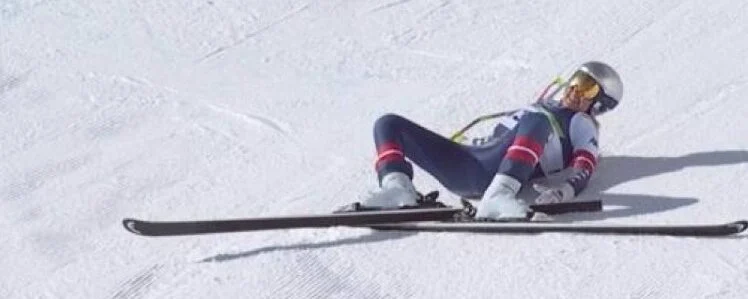
“In my opinion he is exaggerating a bit because exceeding certain limits is dangerous for your health.” Paolo De Chiesaa former Italian skier, interviewed by Mimmo Cugini last February 6, had not minced his words when speaking about Lindsey Vonn and Federica Brignone (who was seriously injured on April 3, 2025, fracturing the tibia, fibula and anterior cruciate of her left leg, and recovered in record time for Milan-Cortina). Referring in particular to the American champion, De Chiesa added, almost disturbingly prophetic: «Maybe he should have managed himself better, going down to Crans-Montana was dangerous and seeing as the race was just a few days away from the Olympics, he could have done without taking part in that race.” Words spoken before the Cortina downhill race on 8 February turned into tragedy. Twelve seconds of the race, then the flight, the screams, the helicopter, the compound fracture in his left leg.
The thin line between heroism and recklessness
The queen of the Dolomites screams in pain as the winch lifts her upthe same track where he had triumphed twelve times was transformed into the theater of his umpteenth physical martyrdom. But is it really heroism, or rather a gamble that borders on irresponsibility?
Because this is not a team sport, where the pressure of the coach or the group can influence risky choices. In alpine skiing the decision is solitary, personal, unquestionable. Lindsey Vonn wanted to ski with a torn cruciate ligament, with a knee brace, just ten days after the Crans-Montana crash. At 41 years old, with a titanium prosthesis on his right knee and the left one already devastated by multiple fractures and reconstructions. And instead, he wanted to believe he was immortal, to challenge the laws of a body that had long been screaming enough. The ancient Greeks called it hubrisproud arrogance. And unfortunately, “divine punishment” has also arrived.
The cult of invincibility and its prices
The myth of the Wonder Woman of the snow was nourished by bloody videos, by operations shown on social media, by grueling exercises shared to demonstrate that only she could go beyond the boundaries of the possible. A media epic that transformed fragility into spectacle and pain into heroic narration. But when some colleagues (Goggia and Brignone among others) express doubts upon seeing her skiing, when even former champion Tina Maze speaks of “madness”, perhaps we should stop and reflect.
Skiing is not football, it is not basketball. Here there is no coach who sends you onto the pitch, there is no club that demands sacrifice. The choice to go down is yours, yours alone. And so the question arises: when does courage become madness? When does determination turn into denial of reality? In Cortina, the compression on my legs was terriblethe displaced fracture made it necessary to be urgently transferred to the Ca’ Foncello hospital in Treviso.
Perhaps, in an individual sport where every choice falls entirely on the athlete, we should question ourselves about the limits that separate courage from recklessness. Because if it is true that no one can stop a champion from chasing his dreams (and rightly so), it is equally true that certain dreams are paid for with the body. And, unfortunately, they come at a very high cost.