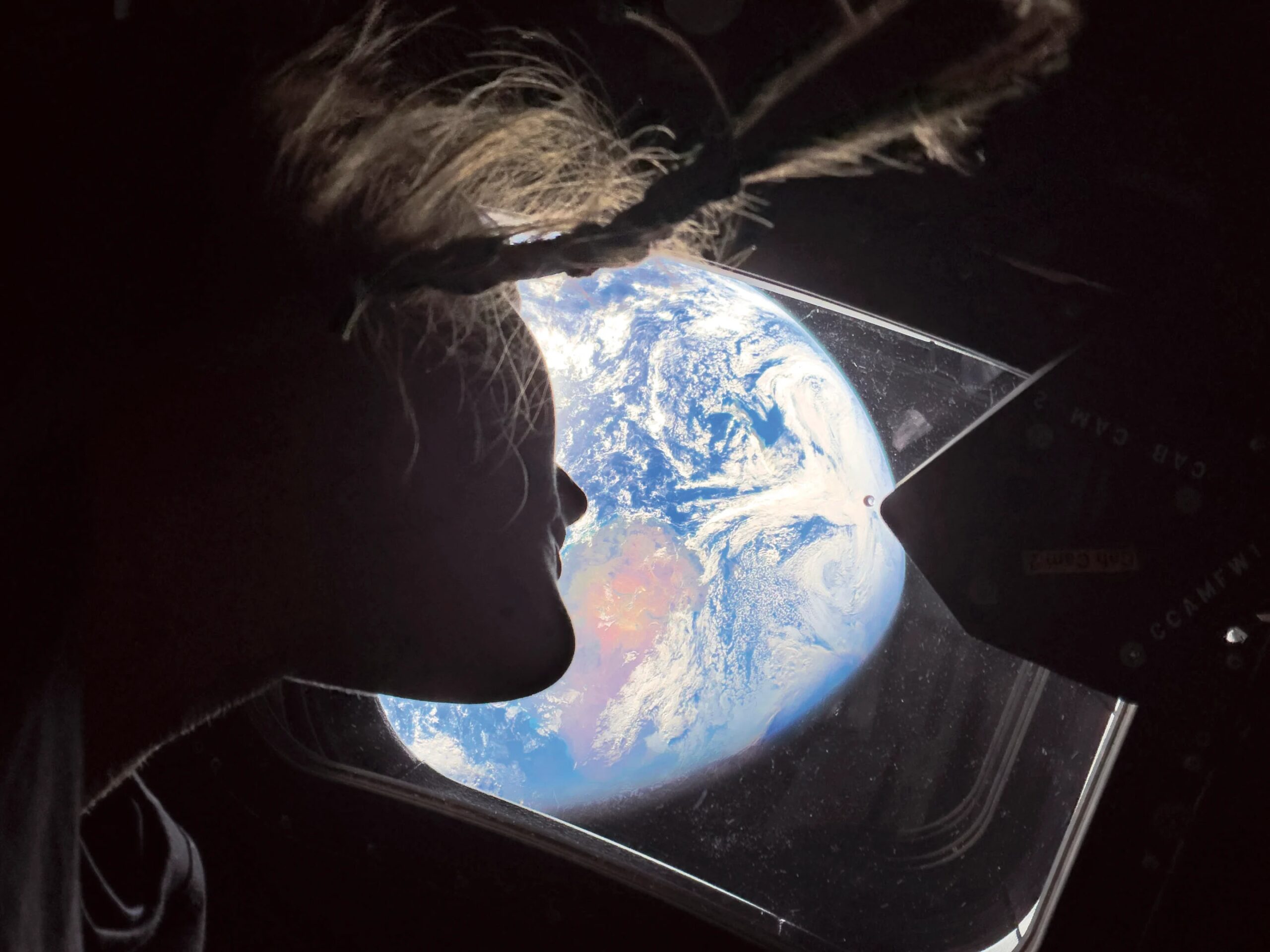
Artemis II reignited excitement about space endeavors. Not like the pioneers of the 1960s but, nevertheless, we have distracted ourselves from earthly miseries. If we could do like Astolfo and regain the sanity of many who ended up on the satellite…
Now that we have discovered, for the first time in the history of humanity, the other side of the moon, are we happy, have we increased our knowledge or even discovered the hidden truth of things? The Artemis II space venture was a breath of fresh air in the days of hatred, war and crazy announcements of annihilating thousand-year-old civilizations such as the Persian one. Looking elsewhere, seeing other worlds and other ways of conquering and resuming a discussion interrupted more than half a century ago, when we were convinced that at the end of the millennium or in our days we would have inhabited the Moon and Mars and transferred colonies of Earthlings into space. The future, however, remained only a desire from the past, we returned down to earth. Technology made giant strides but in small ways: we did not conquer remote places from Earth but we discovered the wonders of the PC and smartphones, and the disturbing ones of artificial intelligence. We did not conquer the distant but revolutionized the near.
Therefore we were struck by this resumption of adventures in space, right where it was interrupted many years ago: from the Moon, the closest destination for our trips out of orbit. Which is said to have been born in a cosmic twin birth with the Earth, following a trauma caused by the collision with a mysterious celestial body, Theia. But the mother died during childbirth and they remained like orphans lost in space: a planet that then came to life and a smaller gray but shiny star due to the sun, the father who illuminates it from afar.
The impression that strikes us today is the opposite of that of the late 1960s: then, seeing the first cosmonauts on the Moon, we thought of populating the silvery star and making it almost similar to the Earth. Today, the first thought that comes to us, observing it in its dark side, is that the Earth risks returning to being ghostly and uninhabited by life like it. In fact, images of our planet seen from the back of the star, which sets like a Moon, small and naked, stripped of every trace of civilization and life, have circulated throughout the world. Almost an omen.
The Moon, the precise ones say, moves away by almost 4 centimeters a year, it takes billions of years to talk about abandonment. The four explorers on the Orion spacecraft only regained confidence with space and with the first significant oasis, without touching the lunar soil. There is no comparison between the hopes and dreams that ignited the mythical precursors who descended on the Moon who walked, planted flags, in a climate suspended between reality and fantasy, between myth, magic and science, mystery and revelation. It was a moment of humanity’s confidence in itself and in the future; indeed, it was the last moment of trust fueled by science that united people, especially in the West. Then the descent began, the disenchantment, the energy crisis and everything else, the stops to space companies, the decline in birth rates and more wars and then wars.
But what remains of their undertaking is a feeble awakening of all the thoughts on the Moon that we have accumulated in poetry, literature and philosophy. The primitive invocations to it, the first lunar hints in myths, religions and traditions flow as in a rapid trailer of the human journey; the civilizations that described her as a maternal figure alongside the Father Sun; then the mother discovered herself as daughter, handmaid, or more modestly a reflection of the Sun. Then came the Moon of the romantics, of Leopardi and Beethoven, the Moon of languid songs or the star outraged by Marinetti. Even its deniers came, Ennio Flaiano, Antonio Delfini and Gaio Fratini, for whom the Moon does not exist, it is only a will-o’-the-wisp, a game of reflections, a delusion, a mirror for deceivers…
And there came the apocalyptics who attempted the extreme defense of the satellite, like Guido Ceronetti, against the desecration of the astronauts. Or the worried considerations of the philosophers Martin Heidegger and Gunther Anders, regarding that dominion of technology which was depriving man and his thought even as it gave the impression of strengthening him and equipping him with more formidable means. Heidegger followed the moon landing in terror, Anders noted that with the conquest of its soil the Earth became small, provincial, relative. The more languid ones dissociated themselves from the triumphalism that accompanied the descent of Armstrong and Aldrin, and preferred the poetic enchantment of the third astronaut, Collins, who – while his colleagues strolled on its surface – remained on board to keep in touch with the Earth and the spacecraft. They loved in him, like Gozzano, the Moon that he did not catch, despite being there, just a stone’s throw away.
Recently, some notes from a lunatic thinker on the sidelines, Andrea Emo, have emerged from the era of lunar exploits, collected by Massimo Donà and Raffaella Toffolo with the title Paesaggi dell’anima (ed. InSchibboleth). Emo defines the Moon as a deceased star, a ghostly presence that emanates the light of death, a silvered memory of the Sun. For him it is a pure death in the heavens. In reality, everyone projects into the Moon what is in their mind. As in Orlando furioso, man’s wisdom ended up on it. Will future astronauts succeed in the undertaking of the champion Astolfo and Saint John the Evangelist, to recover the human sanity lost on the Moon? At least Trump’s sanity…■