In August the motorways are filled with cars heading south, trains cross Italy with suitcases crammed in the corridors and in the airports of the islands the dispersed geography of families is recomposed, arrival after arrival. There are children who return to the homes they left behind for work, grandchildren who travel across the country to hug their grandparents again and friends who find themselves in the same bar every summer, at the same time, as if another year hadn’t passed in the meantime.
Their Ithaca is not an exotic beach nor a location built to become the perfect backdrop for a photograph. It is a house with the shutters half open against the heat, a chair placed in the cool in front of the door, the sound of dishes being set and a grandmother waiting without asking what time they will arrive.
In the summer of 2026, the journey most desired by Italians seems to lead right there: to their country of origin, among lifelong friends, the flavors of childhood and that part of themselves that remained intact while everything else changed.
According to monitoring carried out by the Polara Observatory on over 1,500 conversations and testimonies published online, 75% of the people analyzed express, openly or indirectly, the desire to return to their homeland during the holidays. 39% have already actually organized the trip, while many others are still trying to combine holidays, work, family commitments and travel costs. Only 5% believe it is now impossible to return during the summer.
It is a small contemporary Odyssey, made not of monsters and storms, but of corporate calendars, train connections, queues on the motorway and overly expensive flights. The call, however, remains the same: to return not simply to a place, but to the precise point where you still have the feeling of being awaited.
Summer no longer only takes you far
For years the ideal holiday has been told through exotic destinations, resorts, festivals and beaches to be shared on social networks. The journey seemed to have value especially when it led to a new place, distant and recognizable in the eyes of others.
The monitoring of the Polara Observatory, however, shows a different trend. 54% of the people observed explicitly express the desire to return to their country of origin, while a further 21% express it indirectly, through references to relatives, friends, local habits and childhood memories. Only 18% say they do not feel this need, while for the remaining 7% it was not possible to determine a precise position.
It is not necessarily a desire to move back to the place from which one left. The country becomes rather an emotional destination: the place to return to for a few days to recover relationships, rituals and rhythms that daily life in big cities has progressively distanced.
“It’s not true nostalgia, but the need to rediscover real, healthy emotions, capable of generating that well-being that everything artificial cannot provide,” explains Giuseppe Polara, general manager of the Sicilian beverage company of the same name which commissioned the monitoring.
According to Polara, those who undertake the journey are not just looking for a holiday, but “that humanity and those typical flavors of their land”, rediscovered in the gaze of loved ones, in the slowness of the country and in the rituals of a shared table.
Generation Z is rediscovering its roots
What is especially surprising is the participation of the youngest. For Generation Z, summer no longer seems to coincide only with an international trip, a crowded party or a location to show off online.
31% of the young people involved in the monitoring say they return to their origins above all to meet their grandparents, while 24% return to see their old friends. A choice that seems to contradict, at least in part, the representation of a generation interested exclusively in novelty, speed and the digital construction of its image.
Returning to the friends of adolescence means meeting people who knew a previous version of one’s identity, often before the move, the career and the need to continually talk about oneself through social media. Returning to your grandparents instead allows you to enter a dimension of time less linked to productivity, appointments and objectives.
The country of origin does not need to offer great attractions. Its value lies in the possibility of not having to organize every moment, because the programs have been the same for years: the evening walk, the appointment in the square, swimming in the sea in the afternoon and dinner with an overly full table.
Between holidays and work, the return becomes a challenge
However, the desire to return must face a reality of limited vacation days, family commitments, ticket prices and distances. 39% have already planned the trip, but 31% continue to consider it only desired and 17% consider it probable. A further 8% have not yet defined their plans.
The percentage of those who give up completely stops at 5%. A fact that shows how strong the call of origins remains even when reaching the country means facing hours of driving, crowded trains, changes and complex flight connections.
The Odyssey of the Return is therefore not just symbolic. It is also that of those who try to make their calendar coincide with that of their partner, children and relatives, or are looking for a flight that does not cost as much as the entire holiday.
Every summer this movement crosses Italy from the large cities of the Centre-North towards the small towns, inland areas, islands and southern territories from which entire generations have left to study and work.
The stress of work is the first thing to abandon
Also pushing Italians home is the need to leave behind, at least temporarily, the pressure of everyday life. 26% indicate work stress as the first thing they want to get away from, followed by routine, chosen by 22%.
17% are looking for a break from schedules and commitments, while 14% want to escape city traffic. This is followed by the desire for a respite from responsibilities, indicated by 10%, loneliness, cited by 7%, and digital frenzy, chosen by 4%.
The return therefore does not arise only from nostalgia for the past. It is also the search for a less fragmented present, in which the days are marked by more immediate relationships and gestures that do not need to be planned weeks in advance.
Simple signals often trigger desire. For 31% it is the arrival of summer, while for 22% it is the approaching holidays. In other cases, a sudden memory, a photograph of the town or a phone call with the family is enough.
Even social networks can produce the opposite effect than expected. Seeing the photographs of those who have already returned, the square lit up for the patronal festival or the sea of one’s childhood can reactivate a sense of belonging that seemed dormant. For some, the spark is instead a flavour, a song or the story of someone else who is preparing to leave.
Grandma is the Penelope of Italian holidays
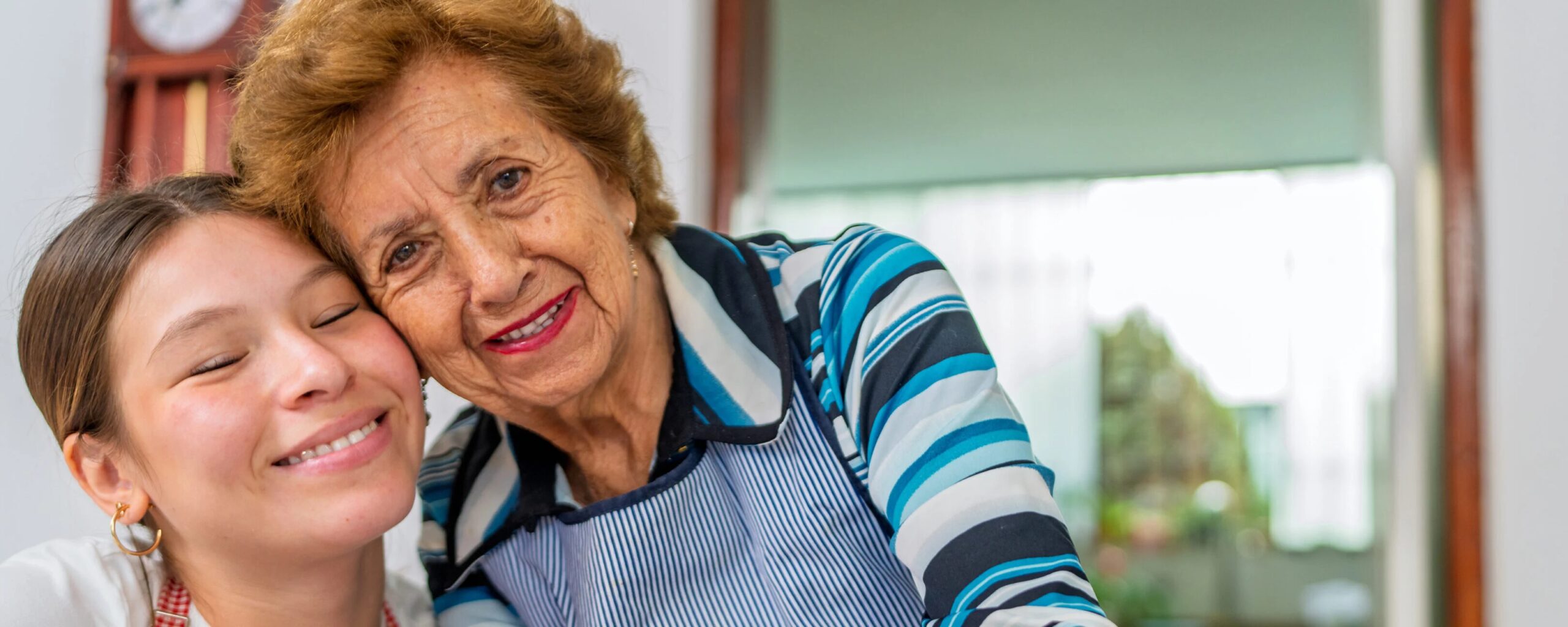
If the country is the destination, the grandmother remains the emotional center of the journey. 42% of the people involved indicate her as the main figure who motivates their return. Followed by parents, chosen by 31%, and childhood friends, who collect 19%. The remaining 8% return mainly to meet other relatives or to reconnect with the local community.
The grandmother thus becomes a contemporary Penelope, a presence left waiting while her children and grandchildren have moved away to build their lives elsewhere. His role focuses on family memory, care and the continuity of gestures passed down without needing to be explained.
It is not surprising that for 24% of Italians the moment in which they truly feel at home coincides with the table being set for the whole family. For 19% it is instead the embrace of grandparents, while 17% recognize the return to the first evening spent with old friends.
This is followed by the first swim in the sea of one’s own land, chosen by 13%, the dessert prepared by the grandmother, indicated by 10%, and the walk in the square or in the streets of the centre, which represents the return for 8%.
Then there is the bar where we meet every summer and the village festival, ordinary moments that become important precisely because they are repeated. They are not experiences built to surprise, but rituals capable of reassuring through their apparent immutability.
The lifelong friends and the rituals that endure
Among the summer habits that they most want to relive, 22% indicate evenings with friends, while 18% choose meals with the whole family.
This is followed by five-a-side football on the beach, indicated by 13%, swimming in the sea until the evening, chosen by 11%, and walking in the square, cited by 10%. 8% want to go back to the bar with friends, 7% want to participate in traditional parties and 5% want to play cards with relatives and acquaintances.
The value of these moments does not depend on their exceptionality. On the contrary, it consists of the possibility of rediscovering something that you already know, but which has become inaccessible during the year.
Even the sunset over the sea, family barbecues and an impromptu game can transform into elements of a private geography, in which every place corresponds to a relationship and every gesture to a memory.
The flavors of childhood become a time machine
The return inevitably passes through the table. 22% associate their country with the dessert prepared by their grandmother, while 20% think of Sunday lunch with the family. 16% choose the typical dish of their land.
The images most linked to childhood also include granita, indicated by 13%, and the local drink, chosen by 9%. This is followed by ice cream from your own city, freshly baked bread and coffee drunk in the town’s historic bar.
Taste becomes an immediate form of memory. A recipe cooked in the same way, a bottle seen on the table for years or the scent that comes out of an oven can bring back memories that language is not always able to reconstruct.
It is no coincidence that the most frequently remembered period of life is adolescence, chosen by 46% of the people analyzed. Childhood follows with 29%, while 15% think above all of the years of youth. Only 2% link the return mainly to adult life.
Nostalgia, indicated by 28%, remains the dominant emotion, but it is not the only one. The journey home also generates joy, serenity, anticipation, emotion and a sense of belonging. It is not just the regret of something that no longer exists, but the desire to verify that a part of that world is still reachable.
The most desired journey does not always lead far
The observed phenomenon does not, of course, mark the end of international holidays or exotic destinations. However, it tells of a change in the meaning attributed to travel, especially in a phase marked by economic uncertainty, work pressure and the constant presence of the digital dimension.
The most desired destination is not always the one that allows you to see something new. Sometimes it is the one that allows us to recognize what seemed lost: a familiar voice, a road traveled hundreds of times, a recipe prepared without precise doses or a chair left in the cool in front of the door.
The 2026 holidays thus bring Italy’s intimate geography back to the centre, made up of small towns, family homes and departures that turn into returns. After years spent searching for increasingly distant places and ever more perfect images, for many, summer really only begins when someone opens the door and says, “You’re back.”